

Home staging is defined as the strategic preparation and styling of a property to attract potential buyers and maximize sale value. The process goes well beyond tidying up. It uses furniture arrangement, neutral decor, and deliberate room presentation to help buyers picture themselves living in the space. According to the National Association of REALTORS®, 83% of buyers’ agents say staging makes it significantly easier for buyers to visualize a property as their future home. That single statistic explains why staging has become a standard step in competitive real estate markets, not an optional extra.
What is home staging and what does the process involve?
Home staging is a marketing technique applied to real estate. Its goal is to present a property in the most appealing way possible to the broadest range of buyers, not to reflect the current owner’s personal taste. The industry term used by real estate professionals is “property presentation” or simply “staging,” and it covers everything from physical furniture placement to digital photo preparation.
The staging process typically follows a clear sequence:
- Declutter first. Remove personal items, excess furniture, and anything that makes rooms feel cramped or too specific to one lifestyle. Professional stagers recommend sorting belongings into three categories: keep for staging, store, or sell and donate.
- Depersonalize the space. Take down family photos, personal collections, and bold artwork. Buyers need to see the home, not the homeowner’s life.
- Arrange furniture for flow. Pull sofas and chairs away from walls to create conversation areas. This technique, called floating furniture, makes rooms feel larger and more purposeful.
- Focus on key rooms. The living room is staged in 91% of homes, the primary bedroom in 83%, and the kitchen in 68% of staged properties. These three rooms drive buyer decisions more than any others.
- Add neutral, inviting decor. Fresh towels, simple throw pillows, and a bowl of fruit on the kitchen counter cost almost nothing and photograph well.
Virtual staging is a separate option where digital software adds furniture and decor to photos of empty rooms. It costs far less than physical staging, but virtual staging requires disclosure if the images materially alter the property, such as adding features that do not exist. Skipping that disclosure creates legal and trust problems when buyers arrive for a showing.
Pro Tip: Book a one-hour staging consultation before spending money on new decor. A professional stager will tell you exactly what to move, remove, or replace using items you already own.
How does home staging impact sale price and time on market?
Staging produces measurable financial results. The National Association of REALTORS® reports that staging increases final sale price by 1%–10% compared to non-staged homes. On a $400,000 property, that range equals $4,000 to $40,000 in additional proceeds. The return depends on the quality of staging, the local market, and how well the property was presented before.
Time on market drops significantly with staging as well. About 50% of seller’s agents report that staging reduces the time a home sits on the market, with 31% reporting a significant reduction. Fewer days on market means lower carrying costs for sellers and a stronger negotiating position.
| Factor | Staged homes | Non-staged homes |
|---|---|---|
| Sale price impact | Up to 10% above list price | Typically at or below list price |
| Time on market | Reduced moderately or significantly (50% of agents) | Standard or extended market duration |
| Buyer visualization | 83% of agents say it helps buyers | Buyers must imagine potential independently |
| Listing photo quality | Higher appeal, more showings generated | Often flat or uninspiring online presentation |
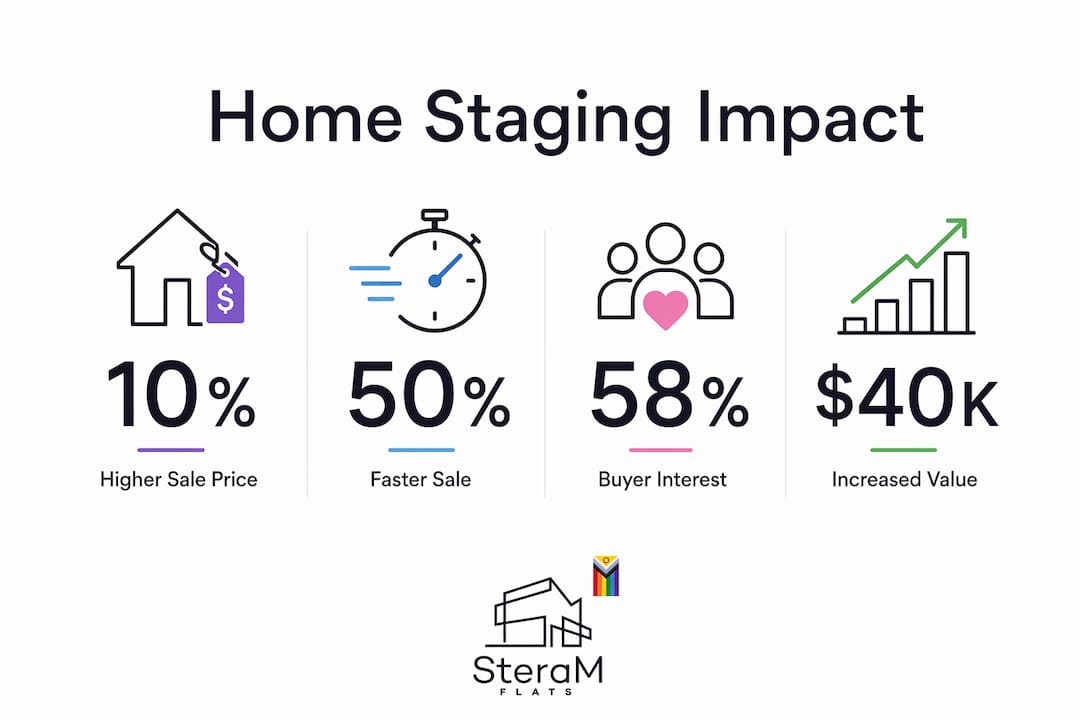
Staging also shapes how buyers feel before they walk through the door. About 58% of real estate professionals say buyers feel disappointed when a home does not live up to the polished photos they saw online. That gap between expectation and reality kills offers. Staging closes that gap by making the physical property match the listing photos.
For sellers working in competitive markets, the importance of home staging extends beyond aesthetics. It directly affects how many showings a listing generates and how quickly those showings convert to offers.
What are practical home staging tips for homeowners and agents?
The most effective staging approach starts with subtraction, not addition. Removing what does not serve the space does more than buying new decor. Here is a practical sequence any homeowner or agent can follow:
- Walk through with fresh eyes. Stand at the front door and look at each room as a buyer would. Note anything that draws attention away from the room’s best features.
- Clear every counter and surface. Kitchen counters, bathroom vanities, and coffee tables should hold no more than two or three objects. Cleared surfaces make spaces feel larger in photos and in person.
- Float the furniture. Pull seating away from walls by at least six inches. Group pieces to define conversation areas rather than lining them up around the perimeter.
- Fix the small things. Scuffed baseboards, burned-out bulbs, and loose cabinet handles signal neglect. Buyers notice these details and mentally add repair costs to their offer calculations.
- Stage for the camera, not just the showing. Listing photos drive the first impression. Staging improves listing photos by creating clean lines, balanced color, and a sense of scale that flat, cluttered rooms cannot achieve.
- Use light aggressively. Open every blind, replace dim bulbs with daylight-spectrum options, and add a lamp to any dark corner. Bright rooms photograph larger and feel more welcoming.
Avoid the common mistake of over-staging. Filling a room with rented furniture and accessories that do not match the home’s style or price point looks artificial. Buyers sense it immediately. The goal is to highlight the home’s features, not to create a showroom that has nothing to do with the property’s actual character.
Pro Tip: Avoid common selling mistakes like skipping outdoor staging. Curb appeal sets the buyer’s emotional tone before they step inside. A clean entry, trimmed plants, and a fresh doormat cost almost nothing and change everything.

How does home staging differ from interior design?
Home staging and interior design share some tools, but they serve completely different purposes. Interior design is about creating a space that reflects the owner’s personality, lifestyle, and long-term comfort. Staging is a psychological marketing technique designed to create a neutral, inviting space that appeals to the widest possible pool of buyers.
The key distinctions are:
- Audience. Interior design serves the homeowner. Staging serves potential buyers who have never met the homeowner.
- Timeline. Interior design is permanent or semi-permanent. Staging is temporary, lasting only until the property sells.
- Budget logic. Interior design often involves significant investment in custom pieces. Effective staging, as noted in real estate project management practice, prioritizes using existing items and low-cost neutral additions.
- Color and style choices. Interior design can be bold, personal, and specific. Staging uses neutral tones and broadly appealing styles so buyers from different backgrounds can project their own vision onto the space.
- Goal. Interior design creates a home. Staging creates a product ready for the market.
A staged home should feel like it belongs to no one in particular, which is exactly what makes it feel like it could belong to anyone. That psychological shift is what drives offers.
Key Takeaways
Home staging is the single most cost-effective marketing step a seller can take, directly increasing sale price, reducing time on market, and improving buyer emotional connection from the first online photo.
| Point | Details |
|---|---|
| Staging boosts sale price | Staged homes sell for 1%–10% more, adding up to $40,000 on a $400,000 property. |
| Fewer days on market | 50% of seller’s agents report staging reduces market duration moderately or significantly. |
| Key rooms drive decisions | Prioritize the living room, primary bedroom, and kitchen above all other spaces. |
| Staging is not decorating | Staging depersonalizes and neutralizes a space to appeal to buyers, not to reflect the owner’s taste. |
| Virtual staging needs disclosure | Digitally altered listing photos must be disclosed to avoid legal and trust issues with buyers. |
Why staging is the most underrated tool in real estate marketing
Most sellers think about staging too late and too narrowly. They tidy up the day before photos and call it done. That approach misses the point entirely. Staging is not cleaning. It is a deliberate act of marketing that shapes how buyers feel about a property before they ever set foot inside.
What I have seen consistently in real estate markets is that the homes generating the most competitive offers are not always the largest or the most recently renovated. They are the ones where buyers walk in and immediately feel at home. That feeling does not happen by accident. It is engineered through furniture placement, light, neutral color, and the deliberate removal of anything that anchors the space to someone else’s life.
The other thing most people underestimate is the impact of staging on listing photography. Buyers today arrive at showings with strong opinions already formed from the photos they saw online. If the photos show a cluttered, poorly lit room, the showing rarely happens at all. If the photos show a clean, well-proportioned space, buyers arrive already emotionally invested. Staging is what creates that gap between a listing that gets scrolled past and one that gets saved and shared.
My honest advice: spend money on a staging consultation before spending money on anything else. A good stager will tell you in one hour what to move, what to store, and what to fix. That hour pays for itself many times over in the final sale price.
— YellowRock
List your staged property with Steramflats
A professionally staged home deserves a listing that matches its presentation. Steramflats offers homeowners and agents a platform to list properties for free and reach buyers actively searching in Spain’s most competitive markets, including the Costa del Sol.

Steramflats combines property marketing with full real estate services, from valuation and legal documentation to project management and buyer advisory. If you have invested in staging your home, the next step is putting it in front of the right audience. Steramflats gives you the tools to do exactly that, with no listing fee and support from a team that understands both local market dynamics and international buyer expectations.
FAQ
What is home staging in simple terms?
Home staging is the process of preparing and styling a property to appeal to potential buyers before it goes on the market. The goal is to help buyers visualize living in the space by creating a clean, neutral, and inviting presentation.
Does home staging actually increase sale price?
The National Association of REALTORS® reports that staging increases final sale price by 1%–10% compared to non-staged homes. On a $400,000 property, that can mean up to $40,000 in additional proceeds.
What rooms should you stage first?
The living room, primary bedroom, and kitchen are the highest priorities. The living room is staged in 91% of homes, the primary bedroom in 83%, and the kitchen in 68%, according to NAR data.
How is home staging different from interior design?
Staging is a temporary marketing technique designed to appeal to buyers broadly, using neutral tones and depersonalized decor. Interior design is a permanent investment in a space that reflects the owner’s personal taste and lifestyle.
Is virtual staging legal?
Virtual staging is legal but requires clear disclosure when digitally altered photos materially change the property’s appearance. Failing to disclose can create legal liability and damage buyer trust at the showing stage.


