
Property marketing is the strategic process of promoting real estate listings to attract qualified buyers, tenants, and investors, driving faster sales and stronger prices. The importance of property marketing shows up in every transaction: SEO drives approximately 53% of all website traffic for real estate businesses, and listings with virtual tours receive about 30% more clicks than those without. These numbers reflect a simple truth. Visibility is not accidental. It is the direct result of deliberate, multi-channel promotion. Real estate professionals who treat marketing as a core operational function, not an afterthought, consistently outperform those who rely on passive listing placements alone.
What are the key benefits of property marketing?
Effective real estate promotion delivers four measurable outcomes: higher sale prices, shorter time on market, better quality leads, and stronger brand reputation. Each of these compounds over time when marketing is executed consistently.
Higher asking prices and faster sales are the most direct benefits. Properties with professional photography command up to 31% higher asking prices and sell faster than poorly marketed listings. That gap is not about the property itself. It reflects how buyers perceive value before they ever walk through the door.

Increased reach and lead quality follow from multi-channel exposure. A listing promoted across search engines, social media, email campaigns, and property portals reaches a far wider pool of buyers than a single platform post. Wider reach does not automatically mean better leads, but targeted campaigns, built around buyer personas and location data, filter for serious inquirers.
Reduced time on market is a direct result of demand creation. When a property is positioned well and promoted actively, it generates competing interest faster. Competing interest shortens negotiation cycles and reduces the risk of price reductions.
Brand and trust building matter more than most sellers expect. Buyers and investors return to agents and agencies they recognize. Consistent, professional marketing signals competence and reliability. Over time, that reputation becomes a lead source in itself.
- Professional photography and video increase perceived value before a showing
- Multi-channel campaigns reach buyers at different stages of their decision process
- Targeted digital ads filter for high-intent buyers, reducing wasted inquiries
- Consistent branding across all materials builds long-term recognition
- Metrics tracking lets professionals refine campaigns and cut underperforming spend
Pro Tip: Commission professional photography before listing, not after. First impressions form online, and low-quality images cost you clicks before a single buyer calls.
What are the most effective real estate marketing strategies in 2026?
The most effective real estate marketing strategies in 2026 combine long-term organic growth with short-term demand capture. No single channel wins alone. The professionals who generate the most consistent pipeline use a coordinated mix.
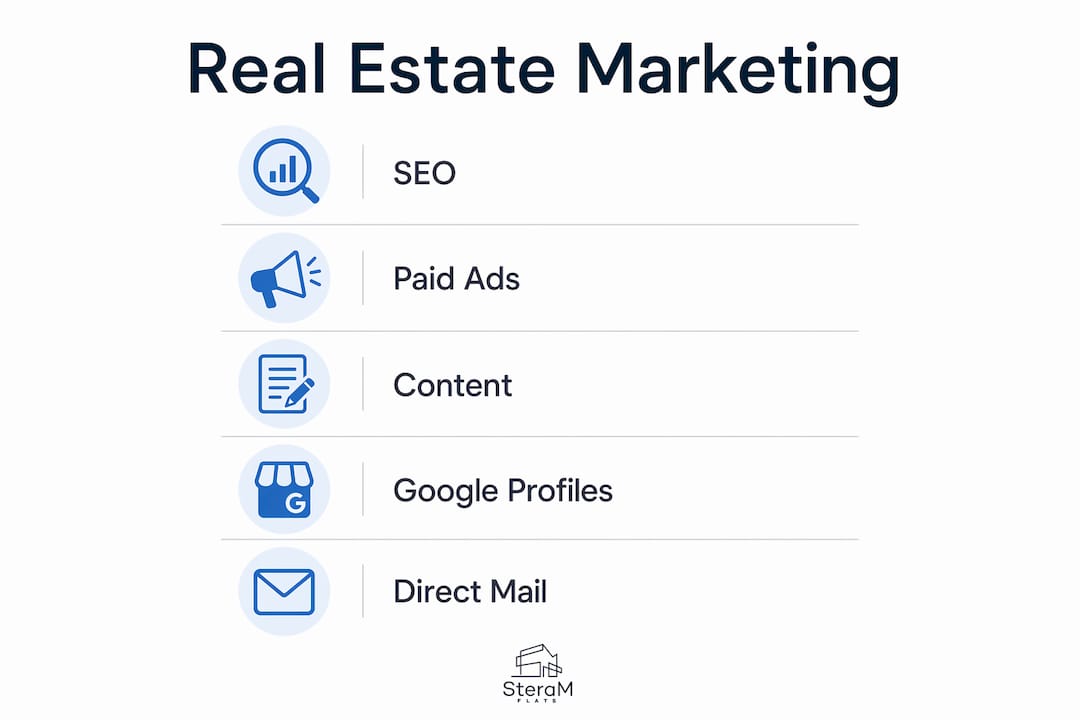
1. Search engine optimization (SEO)
SEO is the foundation of long-term digital visibility. SEO requires a 6–12 month investment period before significant returns appear, but the payoff compounds. Unlike paid ads, organic search traffic does not stop when the budget runs out. Long-term investment in SEO builds market authority and lowers client acquisition costs over time. For property professionals, this means optimizing listing pages, neighborhood guides, and blog content for the search terms buyers actually use.
2. Paid advertising
Paid search and social ads provide immediate demand capture. Paid ads act as bridge financing for pipeline while organic channels mature. Google Ads, Meta campaigns, and retargeting sequences reach buyers who are actively searching or have recently shown interest. The trade-off is cost. Paid campaigns require active management and clear conversion goals to stay profitable.
3. Content marketing and educational video
Educational content that addresses common client concerns builds trust faster than any promotional message. Blog posts, neighborhood walkthroughs, and explainer videos answer the questions buyers and investors ask before they contact an agent. This positions the professional as a credible resource, not just a salesperson.
4. Google Business Profiles and virtual tours
A complete Google Business Profile increases local search visibility at zero cost. Pairing it with virtual tours amplifies results. Listings with virtual tours receive about 30% more clicks, which means more inquiries from buyers who are already engaged.
5. Direct mail
Direct mail campaigns typically cost $500–$5,000 per month, with lead acquisition costs ranging from $30 to $150. The ROI varies significantly by market and targeting quality. Direct mail works best for geographic farming, where consistent presence in a specific neighborhood builds name recognition over months.
| Channel | Primary role | Time to results |
|---|---|---|
| SEO | Demand capture (organic) | 6–12 months |
| Paid ads | Immediate demand capture | Days to weeks |
| Content marketing | Trust building and education | 3–6 months |
| Virtual tours | Listing engagement | Immediate |
| Direct mail | Geographic brand presence | 3–6 months |
Pro Tip: Assign each channel a specific job before you spend. SEO captures existing demand. Paid ads create new demand. Content builds trust. Mixing these roles without clarity wastes budget and produces noisy data.
How does strategic marketing differ from simple listing placement?
Listing a property is a visibility act. Marketing a property is a demand creation act. The distinction matters because passive listings attract only buyers who are already searching. Strategic marketing reaches buyers who did not know they wanted your property until they saw it positioned correctly.
“In commercial real estate, marketing creates demand by telling a unique property story and positioning it strategically, going beyond passive listings to attract qualified buyers.” Strategic outreach and narrative building result in more qualified leads and better outcomes.
Positioning starts with the property’s story. What makes this address different? Proximity to schools, renovation quality, rental yield potential, or lifestyle appeal all become marketing angles when framed correctly. A listing describes features. Marketing explains why those features matter to a specific buyer.
Professional materials reinforce the story. Drone photography, floor plan renders, and printed brochures signal that the seller is serious. Buyers and investors interpret production quality as a proxy for property quality. Cutting corners on visuals sends the wrong message before a word is read.
Targeted outreach amplifies reach beyond portals. Sending property briefs directly to brokers, investor networks, and relocation specialists puts the listing in front of buyers who may not be actively searching. This proactive approach shortens the time between listing and offer.
Tracking inquiry rates and tour conversions allows professionals to adjust messaging dynamically. If inquiries are high but tours are low, the listing description is not converting interest into action. If tours are high but offers are low, the pricing or presentation needs work. Metrics make these problems visible before they become expensive.
What practical steps build an effective property marketing plan?
A property marketing plan works when it assigns clear roles, sets realistic timelines, and tracks the right metrics. The following steps apply whether you are marketing a single listing or managing a portfolio.
Define your target audience. Identify whether the property appeals to first-time buyers, investors, families, or vacation renters. Each segment responds to different messages and uses different channels. Mixing audiences without segmentation dilutes every campaign.
Assign channel roles. Assigning marketing channels with clear jobs, such as demand capture, demand creation, and conversion support, reduces budget waste and clarifies accountability. SEO and Google Business Profiles capture existing demand. Paid ads and direct mail create new demand. Email sequences and follow-up calls convert leads into appointments.
Commission high-quality visuals and copy. Professional photography, video walkthroughs, and well-written descriptions are not optional for competitive markets. They are the first filter buyers apply. Weak visuals eliminate a listing from consideration before any other factor is evaluated.
Set phased budgets and timelines. Paid ads deliver results in days. SEO takes 6–12 months. Plan for both. Allocate short-term budget to paid channels while building organic assets in parallel. Avoid the common mistake of cutting SEO investment before it has time to compound.
Track visibility, conversion, and revenue metrics. Effective marketing tracks visibility metrics such as search presence and reviews, conversion metrics such as lead-to-tour rate and response time, and revenue metrics such as pipeline sourced and customer acquisition cost relative to deal value. Tracking all three levels prevents the trap of optimizing for clicks while ignoring closed deals.
Build a lead nurturing sequence. Most buyers do not convert on first contact. A follow-up sequence, combining email, phone, and retargeting ads, keeps the property in front of warm leads until they are ready to act. Focusing on high-intent signals rather than vanity metrics like social media likes produces better revenue outcomes over a 6–12 month horizon.
Review and adjust monthly. Marketing plans that are set and forgotten underperform. Monthly reviews of channel performance, lead quality, and conversion rates reveal what is working and where budget should shift.
Pro Tip: Measure client lifetime value against customer acquisition cost at least quarterly. A channel that looks expensive per lead may be cheap per closed deal. The ratio, not the raw cost, tells you whether to scale or cut.
Key Takeaways
Effective property marketing combines professional presentation, multi-channel distribution, and disciplined metric tracking to generate faster sales, higher prices, and better-quality leads.
| Point | Details |
|---|---|
| Professional visuals drive price | Properties with professional photography command up to 31% higher asking prices than poorly marketed listings. |
| SEO compounds over time | Organic search builds authority and lowers acquisition costs, but requires a 6–12 month runway before significant returns. |
| Listing and marketing are different | Passive listings attract existing searchers; strategic marketing creates demand from buyers who were not yet looking. |
| Channel roles reduce waste | Assign each channel a specific job: capture, creation, or conversion. Mixing roles without clarity produces noisy data. |
| Metrics must cover all three levels | Track visibility, conversion, and revenue metrics together. Optimizing for clicks alone misses the full picture. |
Why I think most real estate professionals underinvest in marketing
The most common mistake I see is treating marketing as a cost to minimize rather than an asset to build. Professionals who cut photography budgets, skip SEO, or rely entirely on portal listings are not saving money. They are paying for it in longer market times and lower offers.
The second mistake is chasing vanity metrics. Social media followers and post impressions feel like progress. They rarely correlate with closed deals. The professionals who consistently outperform their market focus on high-intent engagement: tour requests, direct inquiries, and referral introductions. Those signals build organic trust over time and produce compounding returns that no ad spend can replicate.
The third mistake is siloing marketing from sales. A well-run campaign generates leads. If no one follows up within 24 hours, the lead goes cold. Marketing and sales must operate as one function, with clear handoff protocols and shared accountability for conversion rates. When they do, the results are not incremental. They are structural.
— YellowRock
How Steramflats helps you market and sell property effectively
Steramflats operates as a full-service real estate agency and property management platform in southern Spain, with deep expertise in the Torremolinos market and the broader Costa del Sol region. For sellers, investors, and landlords who want more than a basic listing, Steramflats provides end-to-end support: property valuation, professional presentation, legal documentation, and targeted promotion across the right channels.
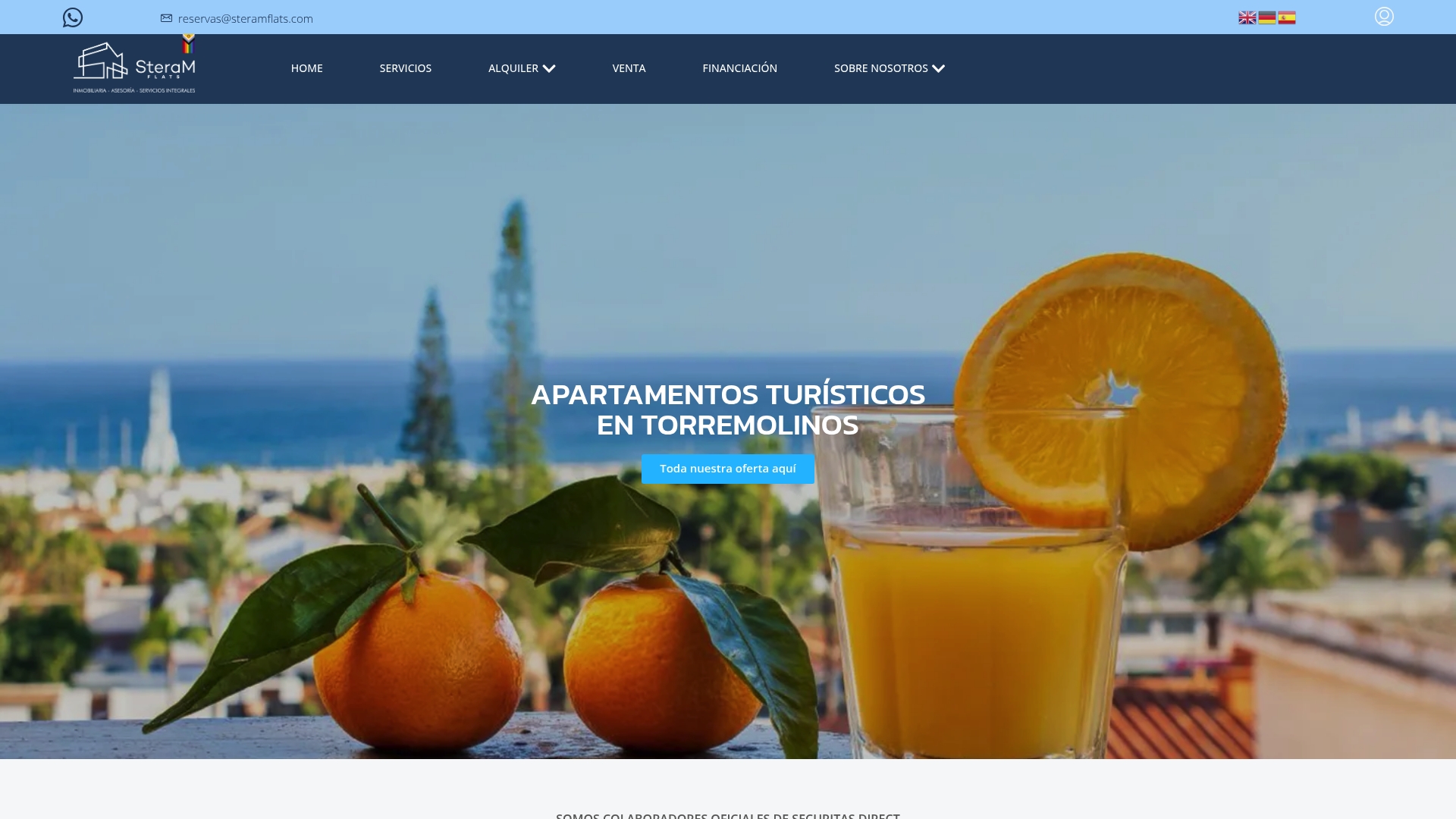
Whether you are selling a residential property, managing a vacation rental, or building an investment portfolio, Steramflats brings the marketing discipline and local knowledge that competitive markets demand. Read the buyer and seller guide to understand how professional representation and structured marketing combine to deliver better outcomes. You can also explore the full range of real estate services Steramflats offers to find the right fit for your goals.
FAQ
What is property marketing in real estate?
Property marketing is the targeted promotion of real estate listings through digital, print, and direct channels to attract qualified buyers, tenants, or investors. It goes beyond listing placement to include professional visuals, SEO, paid advertising, and lead nurturing.
Why does property marketing matter for sellers?
Effective marketing directly increases sale price and reduces time on market. Properties with professional photography command up to 31% higher asking prices compared to poorly marketed listings.
How long does real estate SEO take to produce results?
SEO typically requires a 6–12 month investment period before delivering significant organic traffic. The returns compound over time, lowering acquisition costs and building long-term market authority.
What metrics should real estate professionals track?
Track three levels: visibility metrics such as search rankings and reviews, conversion metrics such as lead-to-tour rate, and revenue metrics such as customer acquisition cost relative to deal value. Tracking only one level produces incomplete and often misleading conclusions.
How do I choose the right marketing channels for a property?
Assign each channel a specific role. Use SEO and Google Business Profiles to capture existing demand, paid ads to create new demand, and email or follow-up sequences to convert warm leads. Mixing channel roles without clear assignments wastes budget and makes performance difficult to measure.