Your municipality decides a cambio de uso in Andalucía, not the regional government. Depending on local ordinances, you will need either a municipal licence or a Declaración Responsable, and the answer often turns on whether the conversion adds dwellings. Either way, the Código Técnico de la Edificación and the local PGOU still apply to your project.
TL;DR:
- Check the local development plan before commissioning drawings: Málaga bars some ground floor commercial conversions on designated streets and plazas.
- A conversion that adds dwellings generally needs a permit and explicit approval before work; other qualifying projects may start under a declaration of responsibility.
- Málaga requires 2.50 m clear height below the slab, 2.30 m above it, and at least 8.75 m² for a room.
- A declaration of responsibility lets qualifying projects start earlier, but municipal inspectors can later demand legalization if completed work differs from submitted plans.
- Málaga lists a municipal fee of €7.5 per square meter, but local charges vary and building code upgrades are usually the largest uncertain cost.
Table of Contents
- Who decides and which laws you must use
- Feasibility checklist: check the PGOU and municipal limits first
- Technical requirements that commonly drive the scope of works
- Licence or Declaración Responsable: how the two routes differ
- Typical fees, timeline and a municipal reference
- How to prepare the paperwork and who to hire
- What happens after approval
- A pragmatic view from practice
- How we help you convert with fewer surprises
- FAQ
- Sources
Who decides and which laws you must use
Authorisation sits with the town hall. Each municipality can set whether a given conversion needs a licence or can proceed by Declaración Responsable, which is why the same project may follow different paths in different towns. Málaga’s procedural ordinance published in the BOPMA is a good example: it asks for a formal licence when a change increases the number of dwellings.
Regional policy points the same way as demand. Decreto-ley 1/2025 encourages residential conversions in Andalucía, yet it does not take away municipal competence, so local conditions still decide your case.
Technical rules come from Madrid. Any change of characteristic use must show compliance with the basic requirements of the CTE for structural safety, fire protection and accessibility, either in a project or in a justified technical report. Think of it this way: the municipality picks the procedure, the PGOU sets what is allowed, and the CTE sets how the building must perform.

Feasibility checklist: check the PGOU and municipal limits first
Before you pay for drawings, run these checks. They can help filter out dead ends.
- Read the PGOU for your street and building category. Málaga’s modified plan can bar ground-floor commercial premises from becoming housing on certain primary and secondary streets or plazas.
- Count the dwellings. If the conversion increases the number of homes, expect a licence, as the municipal annex of actions lists.
- Confirm the building’s legal status. A building that is out of ordination or irregular usually complicates a Declaración Responsable, as the municipal change-of-use form implies.
- Test habitability minimums. Clear height, room area and depth-to-facade limits vary by town, so measure before you contract works.
- Ask for a pre-check. A short feasibility report from a local architect, or a municipal consultation, is cheap insurance.
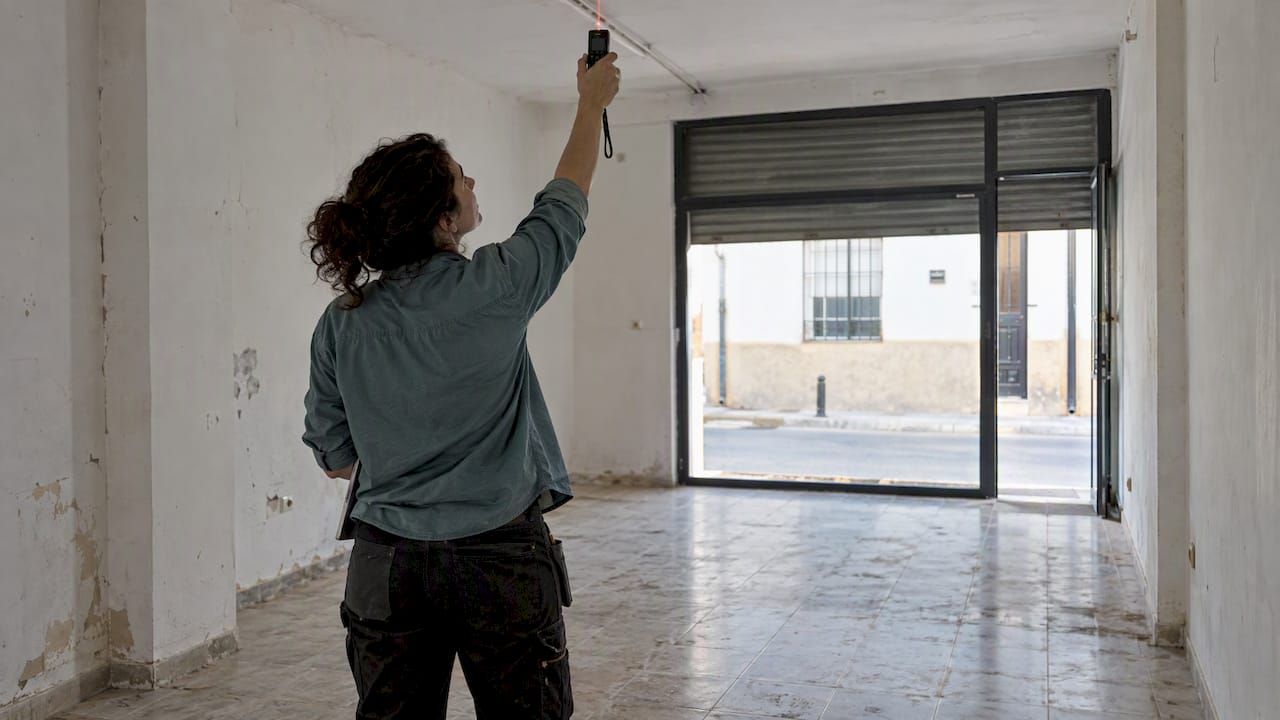
Pro Tip: Photograph and measure the premises (clear heights, facade length, depth) before your first meeting with the architect, so the feasibility answer can be more efficient.
Technical requirements that commonly drive the scope of works
The CTE is the main driver of cost. When use changes, you must demonstrate compliance with its basic requirements, and older premises often need structural or accessibility upgrades to get there. Fire separation, escape routes, ventilation and step-free access are the usual suspects.
- Project or technical report: the signing technician documents how the building meets each requirement.
- Local habitability rules: these differ by municipality and can be stricter than the national baseline.
- Where full compliance is not feasible: the technical report must justify alternatives and limits, under the responsibility of the technician who signs it.
Local rules can be very specific. Málaga’s plan sets, for example, minimum clear heights of 2.50 m under the slab and 2.30 m above, and a minimum room surface of 8.75 m², plus depth-to-facade limits for light and ventilation.
Málaga’s rules show how specific habitability minimums get: they set a minimum clear height under the slab. Premises that fall short on height or facade often fail before any design work starts, so check these numbers first.
Licence or Declaración Responsable: how the two routes differ
The two routes differ in timing, risk and paperwork, not in the standards the building must meet.
- Licence (licencia): generally required when the conversion increases the number of dwellings, per the municipal annex. You wait for explicit approval before starting works, and you end up with a formal administrative authorisation.
- Declaración Responsable: usable when the use and works conform to planning and do not add dwellings, subject to local practice. Regional guidance on which cases qualify clarifies the boundary. You can start earlier, but the administration keeps its power of later inspection and retroactive control, so you carry the compliance risk.
- Documents: both routes rely on the municipality’s own checklist and a technician’s signed project or memoria.
Andalucía has pushed Declaración Responsable for years, yet municipal uptake has been uneven, so never assume your town works like the next one.
Typical fees, timeline and a municipal reference
Fees vary by town, so treat any figure as a starting point. One Málaga declaration form for change-of-use works cites a rate of 7.5 €/m², which is useful for an early budget but not a quote for your property.
Municipal fee example: 7.5 €/m² in Málaga’s change-of-use declaration form. Your own town may charge differently.
On timing, licences generally take longer than a Declaración Responsable, and review can run from several weeks to months depending on the municipality and the complexity of your file. Build your budget around these lines:
- Technician fees for the project and site direction.
- Municipal fees and taxes.
- Mandatory CTE upgrades, which are usually the largest and least predictable item.
- A contingency for adaptation work that only appears once walls are opened.
How to prepare the paperwork and who to hire
- Hire a registered architect or competent technician to prepare and sign the project or memoria and certify compliance where required.
- Collect the base documents: cadastral and registry extracts, plans, photographs, and any earlier licences or habitability certificates.
- Obtain sectoral reports early if environmental or heritage restrictions apply, as the regional guide explains.
- Use the municipal model form, or the Emprende en 3 platform where your town takes part, as the regional rules allow.
- Submit a complete dossier, because missing documents are the most common cause of delay.
Pro Tip: Ask your technician for a one-page index of every document in the dossier. Clerks reject incomplete files faster when they can see at a glance what is missing.
What happens after approval
When works finish, you present final certificates and any completion declaration needed to trigger first use. Our guide to first-occupancy practice in Andalucía covers that step, and the habitability certificate rules explain what applies now.
If you used a Declaración Responsable, expect that the administration may inspect later and demand legalisation if the work does not match what you declared. Keep your project, certificates and CTE evidence together. You will need them when you sell, rent or face a municipal check.

A pragmatic view from practice
Common mistakes include the following. Owners skip the PGOU check and discover the street category blocks them. They underestimate CTE upgrades and blow the budget. And they assume a Declaración Responsable ends the compliance question, when it only moves the first check onto them. Our checklist is short: confirm PGOU limits, confirm whether the dwelling count changes, get a technical memoria, price the CTE works, choose licence or Declaración Responsable, then submit. If you are buying a property to convert, pay for a feasibility study before you sign.
— YellowRock
How we help you convert with fewer surprises
We run the process end to end, so you are not coordinating architects, clerks and builders alone. For a conversion we offer:
- Feasibility reviews of the property, the PGOU and the likely procedure.
- Technical project coordination and licence or Declaración Responsable handling.
- Renovation project management through to final certificates.
Our workflow is simple: feasibility, technical project, municipal submission, works supervision, final certificates. Current pricing details are on our website. See our full services overview and ask us for a feasibility review of your property.
FAQ
Who authorises a cambio de uso in Andalucía?
The municipality does. Local ordinances decide whether a licence or a Declaración Responsable is the right route, as Málaga’s ordinance shows.
When do I need a licence instead of a Declaración Responsable?
Generally when the conversion increases the number of dwellings or changes buildability. Smaller changes that fit the planning may qualify for a Declaración Responsable, but your town’s rules decide.
Do I have to meet the CTE when changing a property’s use?
Yes. The CTE requires compliance with basic structural-safety, fire-protection and accessibility requirements, demonstrated in a project or technical report.
Can a PGOU stop my conversion even if the building is suitable?
Yes. Local plans can bar certain conversions on specific streets or plazas, regardless of how suitable the interior is, so check the PGOU first.
Sources
- Edicto 5158/2025 – Publicado en el BOPMA 247 del 29 de diciembre de 2025
- Real Decreto 314/2006, de 17 de marzo, por el que se aprueba el Código Técnico de la Edificación.
- Formulario Declaración Responsable de Obras Cambio de usos GMU v.1.1.
- Decreto-ley 1/2025, de 24 de febrero, de medidas urgentes en materia de vivienda.
- El Ayuntamiento continúa blindando y potenciando el uso residencial sobre el turístico a través de la modificación de la normativa del Plan General