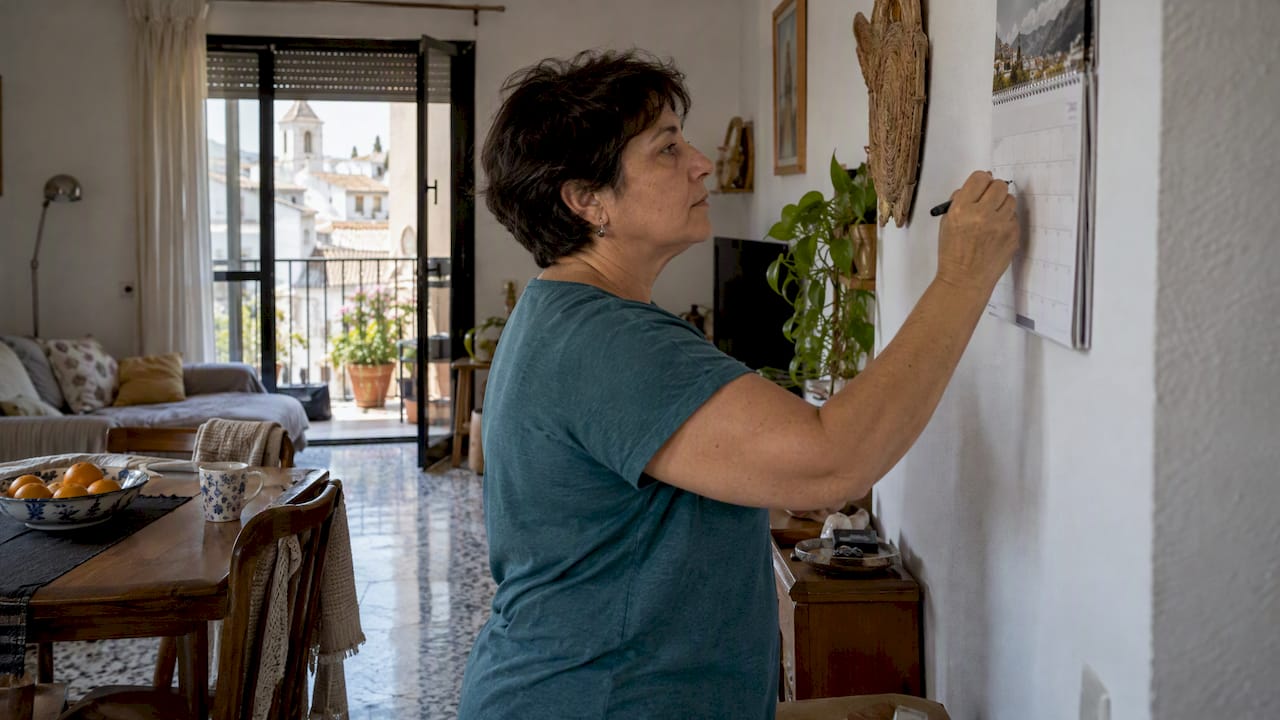
The best time to sell a flat in Spain is when three things line up: your property is priced to its real local market, your personal tax position is settled, and buyers in your area are actually looking. Nationally, spring and autumn are the classic windows. On the Costa del Sol, summer is often just as strong. And in 2026 the market is cooling in volume while prices stay high, so pricing matters more than the calendar.
Below we go through the season question, what the latest official data says, the tax dates that can cost or save you money, and how to decide for your own flat.
TL;DR
- Spring and autumn are traditionally the best seasons nationwide, but local conditions and correct pricing outweigh the month you list.
- Tourist coasts such as the Costa del Sol and Costa Brava often stay busy in summer, because buyers combine a holiday with viewings.
- In 2026 transactions are falling (-5.7% in Q2) while the average price per square meter is up 8.9% year on year, so overpriced listings sit.
- Check your tax position before you list: sellers aged 65 or over selling their habitual residence are exempt from declaring the gain, and reinvestment can give a partial or full exemption.
- Allow three to five months for a typical sale, and start preparing at least two to three months before your target listing date.
Table of Contents
- What the calendar really tells you
- Summer on the coast: a different rule
- The 2026 market: fewer sales, still high prices
- Your flat matters more than the month
- Tax timing: where the calendar costs real money
- Signs it is the right moment for you
- Our perspective
- A practical timeline
- How Steram Flats can help
- FAQ
- Sources
What the calendar really tells you
Most Spanish real estate content gives the same answer: spring and autumn are considered the best times of year to sell. The reasoning is practical. Spring light makes homes look better, and September brings people back to their routines and their decisions after the holidays.
The same analysis adds an important caveat: there is no single ideal moment. Seasonal trends are secondary to how your flat’s price and condition compare with the other homes on offer in your neighborhood.
Here is how we would summarize the year for a typical flat:
| Period | What usually happens | What to do |
|---|---|---|
| January to February | Buyers come back after the holidays and start searching again | List early if the flat is ready and priced correctly |
| March to June | Better light, more viewings, active decisions | The most reliable window for most inland and city flats |
| July to August | Slower in many cities, busy on tourist coasts | Coastal owners can list; city owners often wait for September |
| September to November | Routine returns and buyers want to close before year end | A strong second window |
| December | Fewer viewings, holiday distraction | Prepare the flat, documents and photos for January |
Treat the table as a tendency, not a rule. A well-priced flat in January can sell faster than an overpriced one in May.
Summer on the coast: a different rule
If your flat is in Torremolinos, Benalmádena, Fuengirola or anywhere similar, the “slow summer” idea needs adjusting. Idealista reported in August 2026 that, although many consider summer unattractive for property deals in Spain, on the coast operations keep moving thanks to growing foreign interest. That article is about the Costa Brava, but the mechanism is the same on the Costa del Sol: international buyers are physically in town, with time to view several properties in a week.
That has two practical consequences:
- Your flat must be viewable in June. If you want to catch summer visitors, photos, documents and pricing should be ready before they land, not after.
- Your agent must speak the buyer’s language. A British, Dutch or German buyer on a four-day trip will not wait for a callback in a language they do not read. Multilingual handling is part of the timing question.
One caveat we want to be honest about: the evidence we have for summer strength is from the Costa Brava and general professional commentary, not a Torremolinos-specific dataset. Ask any agent for recent local closings in your building or street, not just generalities.
The 2026 market: fewer sales, still high prices
The national picture has changed during 2026. Registradores reports that housing sales fell for a second consecutive quarter, down 5.7% in the second quarter to 167,934 transactions, the lowest in seven quarters. Their provisional data for July show a 7.7% year-on-year fall in housing sales, the biggest annual drop in more than two years.
Prices have not followed. The same registry body reported that the average price per square meter rose 8.9% year on year in the first quarter of 2026.
What does that mean for a seller?
- Your flat probably has gained value if you bought a few years ago. That is the argument for selling now.
- Fewer buyers are closing, so the competition between listings is tougher. That is the argument for pricing carefully and presenting well.
- Waiting for “a bit more” is a bet. Prices could keep rising, but falling volumes are often an early sign of buyers reaching their budget limit.
We would not call this a reason to rush or to wait. It is a reason to stop treating the asking price as an opening bid you can lower later.
Your flat matters more than the month
Pricing at launch
Professional commentary is consistent: pricing correctly at launch is the most important step. The same piece warns that a prime address does not guarantee a quick, high sale. A well-priced flat in a secondary location can be more liquid than an overpriced one in a prime area.
A listing that starts too high usually spends its freshest weeks, when it gets the most attention, being ignored. When you drop the price later, the flat has a stale label.
A homologated appraisal is a solid anchor. We explain how we deliver one in about a week on our page about a homologated property valuation in Spain.
How long a sale takes
The Solvia Market View for 2022, quoted by Idealista, put the national average at roughly five months to sell a home, reduced to about three months in high-demand cities such as Madrid. That is an older study, so use it as an order of magnitude, not a promise.
Work backwards from it. If you want to close before the end of the year, you should realistically be on the market by early summer. If you want to hit the spring window, preparation starts in the winter.
Type of flat
Idealista’s analysis of third-quarter sales found that three-bedroom flats sold fastest, ahead of studios and homes with four or more bedrooms. If you own a studio or a very large flat, do not expect to match that speed. Price to the narrower buyer pool and give yourself more time.
Tax timing: where the calendar costs real money
For many owners, taxes should influence the date more than the season does. This is general information, not tax advice. For your situation, talk to a gestor or asesor fiscal before you sign anything.
Age 65 and over
The Spanish tax agency states that you do not have to declare the capital gain from selling your habitual residence if you are over 65. The same page covers people in a severe dependency situation. The exemption applies whether you take the money as a lump sum or as a life annuity.
If you are close to 65, this is the clearest case where waiting a few months can change your net proceeds. Also, the tax agency’s guidance notes a window for homes that have stopped being your habitual residence: confirm the exact conditions on that page with your advisor before relying on it.
Reinvesting in a new main home
If you are under 65, you may get a partial or total exemption if you reinvest the proceeds in a new habitual residence within two years. That means your buying plan and your selling plan should be one plan, with dates on paper.
Non-resident sellers
If you live abroad, your tax treatment is different from that of a Spanish resident, and the residence-based exemptions above may not apply in the same way. Get written advice from a Spanish tax professional before choosing a date. We can introduce the process, but we do not replace that advice.
Signs it is the right moment for you
Instead of asking “what month,” ask these questions:
- Is your price based on closed sales, not on what neighbors are asking? Ask for recent comparable closings, not listings.
- Is your paperwork ready? Energy certificate, habitability certificate (cédula), community fee statement and property tax receipts should be in a folder before the first viewing.
- Do you have a reason that sets a date? A move, an inheritance, a tax threshold, or a mortgage ending are all stronger drivers than the season.
- Can you afford to wait? If you need the money within three months, price for speed. If you can wait six, you can test a higher price for a defined period.
- Is the flat ready to be photographed? Good photography decides whether buyers call. Our 7-day home staging plan shows what to change in a week.
Our perspective
We work in southern Spain, with a lot of international and non-resident clients, and what we see is that sellers ask about the month and should be asking about the buyer. A Dutch couple visiting in July and a Madrid family deciding in September are different buyers with different timelines, and a plan that targets one of them will not reach the other.

We also see the cost of the wrong anchor. Owners fix on a price they heard from a neighbor, wait for the “right season,” and by then the flat has been listed twice at different prices. In a year when sales volumes are falling, we advise starting with an honest valuation and a clean document folder, then choosing the launch date around that. We would rather list a prepared flat in a quiet month than an unprepared one in the best month.
And we keep the commercial side simple: our fee is only charged when a sale or rental is completed, with no hidden charges and no permanence contracts. If you want to understand what that means in euros, our guide to real estate agency fees in Spain lays it out.
— YellowRock
A practical timeline
If you want to list in spring, this is a realistic schedule:
- Four to five months before: Get a valuation, decide your minimum price, and talk to a tax advisor about the timing of the sale and any reinvestment.
- Three months before: Gather the documents. Order the energy certificate and the cédula if you lack them.
- Two months before: Do small repairs, declutter, and stage. Book professional photography.
- Launch month: Publish the listing with complete photos, floor plan and a price you will hold for at least four to six weeks.
- After four to six weeks: Review the viewings-to-offers ratio with your agent. Many viewings and no offers point to price. Few viewings point to presentation or visibility.
Our property marketing checklist and the full owner’s guide to selling property in Spain go step by step through the rest.
How Steram Flats can help
We handle sales, valuation, legal documentation and the certificates a sale needs, with multilingual support for international and non-resident owners. We also work with off-market listings, which can be useful if you prefer a discreet sale. If you are weighing a sale against renting the flat out, we manage both long-term and holiday rentals.
Our commission on a property sale is 3-5%, paid only when the sale completes. If you would like a first conversation about timing and price, see our services or contact us through our site.
FAQ
Is it a good time to sell a flat in Spain in 2026?
Prices are still high: the average price per square meter was up 8.9% year on year in the first quarter. But sales volumes have fallen for two quarters in a row, so buyers are more selective. It is a good time for a well-priced, well-presented flat, and a harder one for an overpriced flat.
Which is the best month to sell a flat?
Spring (roughly April to June) and autumn (September to November) are the traditional favorites across Spain. On tourist coasts, summer can also be active because buyers visit on holiday. Your price and the condition of the flat will matter more than the month.
When do you not pay tax on the sale of a flat?
If you sell your habitual residence at 65 or older, you do not have to declare the gain. Under 65, you may be partially or fully exempt if you reinvest in a new habitual residence within two years. Confirm your case with the Agencia Tributaria or a tax advisor before signing.
How can I sell my flat quickly?
Price it on recent closed sales, present it professionally and have all documents ready before the first viewing. Average sale times are around three to five months, and high-demand areas can be quicker. Starting with a realistic price is the single most effective step.
Sources
- Idealista: ¿Cuál es el mejor momento para vender una casa?
- Idealista: El verano, la época con mayor volumen de operaciones en la Costa Brava
- Registradores: compraventas de vivienda, segundo trimestre de 2026
- Registradores: compraventas de vivienda en julio
- Registradores: precio medio por metro cuadrado
- Idealista: Factores para vender más rápido una vivienda
- Idealista: Los pisos de tres habitaciones fueron los que más rápido se vendieron
- Agencia Tributaria: transmisión de la vivienda habitual por mayores de 65 años
- Agencia Tributaria: manual IRPF 2025, vivienda habitual y mayores de 65 años