Maximizing rental income is defined as the practice of growing net cash flow from a rental property through pricing discipline, tenant retention, cost control, and ancillary revenue, not simply charging the highest possible rent. Property owners who understand this distinction outperform those who chase top-line rent alone. The most effective landlords in 2026 prioritize efficiency and retention over aggressive rent hikes, because replacing a good tenant costs far more than a modest discount. This guide covers the specific strategies, tools, and risk controls you need to grow rental profits sustainably.
How to maximize rental income: the essential prerequisites
Strong rental returns start before a tenant ever signs a lease. The foundation is market knowledge, legal clarity, and financial discipline. Without these three elements in place, every other tactic produces diminishing results.

Market-aligned pricing is the single most important starting point. Pull comparable listings in your area monthly and price within 5% of the median for your property type and condition. Overpricing by even 10% can extend vacancy by weeks, wiping out any rent premium you gained.
Tenant screening separates consistent performers from landlords who cycle through defaults and disputes. A thorough referencing process covers income verification (typically 2.5x monthly rent), credit history, and prior landlord references. Clear lease agreements that spell out payment terms, late fees, and maintenance responsibilities reduce disputes before they start.
Financial tracking is non-negotiable for anyone serious about increasing rental profits. Use a dedicated account for rental income and expenses, and reconcile monthly. This gives you accurate data for rent reviews and tax filings.
Key tools and processes every landlord needs:
- A rent comparables tracker updated monthly
- A standardized tenant application and referencing checklist
- A written lease reviewed by a local property attorney
- A separate operating account with a maintenance reserve
- A digital system for logging maintenance requests and repairs
Pro Tip: Set up a shared digital folder for each tenancy containing the signed lease, referencing documents, and all maintenance records. This single habit saves hours during disputes and makes rent reviews far easier to justify.
| Prerequisite | Why it matters |
|---|---|
| Market pricing analysis | Prevents overpricing vacancies and underpricing lost income |
| Tenant referencing | Reduces default risk before a tenancy begins |
| Enforceable lease | Provides legal recourse and sets clear expectations |
| Financial tracking | Enables accurate rent reviews and expense control |
| Maintenance reserve | Avoids cash flow crises from unexpected repairs |
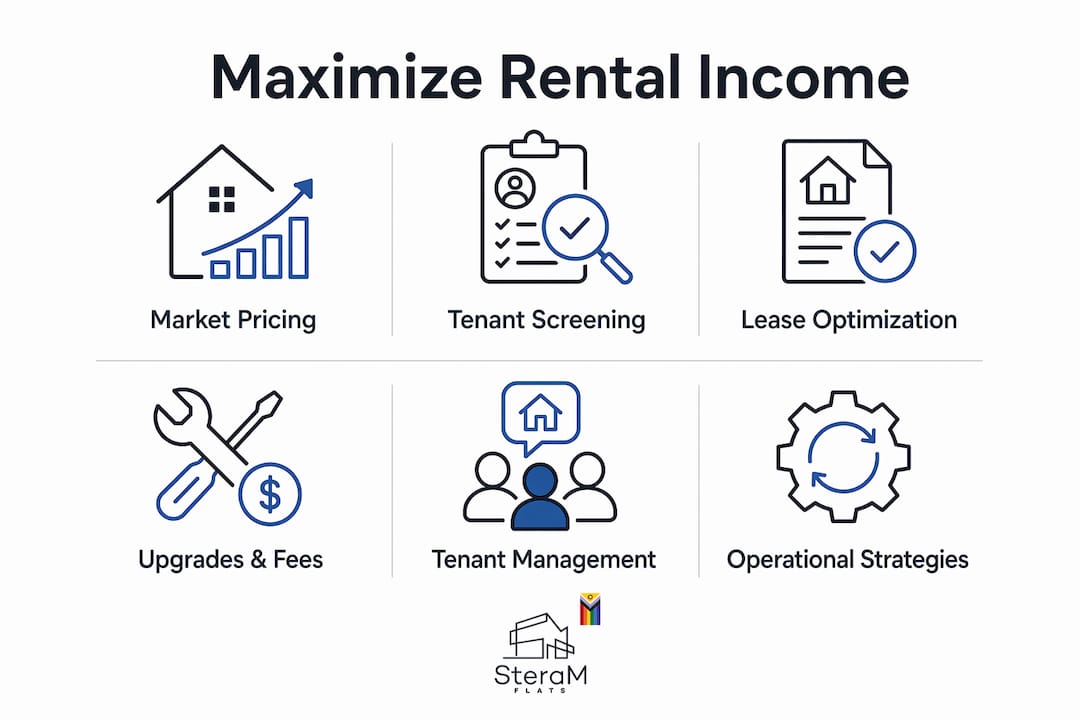
How can landlords optimize rent pricing and lease terms to boost income?
Rent pricing is not a set-and-forget decision. The landlords with the highest rental returns treat pricing as a quarterly discipline, not an annual afterthought.
Consistent annual increases of 2–5% where legally permitted keep rent aligned with inflation without triggering tenant turnover. A large, sudden increase often costs more in vacancy and re-letting fees than the extra rent it generates. Small, predictable increases are easier for tenants to accept and easier for you to defend legally.
Four pricing and lease strategies that work:
- Align rent with local comparables. Review at least five comparable active listings before each lease renewal. Price within the market range to minimize vacancy risk.
- Charge a premium for shorter leases. A six-month lease carries higher turnover risk for you. Price it 8–12% above your standard twelve-month rate to compensate.
- Time lease renewals to peak demand seasons. Leases expiring in spring or early summer give you the widest pool of prospective tenants if a vacancy does occur.
- Use dynamic pricing for short-term rentals. Real-time market data and local event calendars let you adjust nightly rates to capture demand spikes. This is standard practice in short-term rental management and directly increases revenue per available night.
Pro Tip: Never raise rent and reduce services at the same time. If you increase rent, pair it with a visible improvement, even something as simple as a fresh coat of paint or a new appliance, so tenants feel the increase is justified.
What revenue-boosting upgrades and ancillary fees can landlords implement?
Property upgrades do not need to be expensive to generate returns. The highest-ROI improvements are cosmetic and functional, not structural.
Fresh interior paint, updated light fixtures, and modern cabinet hardware cost relatively little but photograph well and justify higher asking rents. Smart locks and programmable thermostats appeal to quality tenants and reduce maintenance call-outs. These upgrades also reduce vacancy time because the property stands out in listing photos.
Ancillary revenue sources like parking fees, pet rent, storage unit fees, and on-site laundry can increase net cash flow significantly, especially where rent control laws cap base rent increases. These add-ons often fall outside rent control regulations entirely. That makes them one of the most practical ways to boost rental income when the base rent is legally constrained.
High-impact ancillary revenue options:
- Parking: Charge separately for assigned spaces, especially in urban areas where parking is scarce.
- Pet rent: A monthly pet fee of $25–$75 per pet is standard in many markets and reflects real wear-and-tear costs.
- Storage: Unused basement or garage space can generate consistent monthly income with minimal management.
- Laundry: Coin-operated or app-based laundry in multi-unit buildings adds revenue and tenant convenience.
Ancillary fees must be applied uniformly and documented clearly in the lease. Inconsistent application creates legal exposure and damages tenant trust. Every fee should have a written policy that tenants sign at the start of the tenancy.
Pro Tip: Bundle ancillary services into a “premium package” option at lease signing. Offering parking, storage, and pet permission as a single monthly add-on simplifies billing and increases uptake compared to offering each item separately.
How does proactive tenant management reduce risk and protect rental income?
Tenant defaults and vacancies are the two biggest threats to rental income. Both are largely preventable with the right processes in place before a tenancy begins.
A layered risk approach is more reliable than any single protection. Replacing rent-in-advance with thorough referencing, guarantor agreements, and rent protection policies provides better long-term income security and is more legally defensible in most jurisdictions. Collecting several months of rent upfront may feel safe, but it creates legal complications and does not prevent a tenant from defaulting in month seven.
Four steps to protect rental income through tenant management:
- Verify income and employment. Require payslips or bank statements covering at least three months. Self-employed applicants should provide two years of tax returns.
- Check credit and rental history. A formal credit check and a direct call to the previous landlord reveal patterns that application forms do not.
- Require a guarantor for higher-risk tenancies. A guarantor agreement signed by a creditworthy third party adds a legal backstop if the tenant defaults.
- Take out rent guarantee insurance. This product covers lost income specifically when a tenant defaults, which goes beyond what standard property insurance covers.
“Rent guarantee insurance protects landlords from tenant default income loss beyond traditional property damage policies. It covers the income gap that standard policies leave open, making it one of the most cost-effective risk tools available to landlords.”
Act quickly on late payments. A written reminder on day one of arrears, followed by a formal notice on day seven, signals that you enforce your lease terms. Tenants who know you respond fast are less likely to let arrears accumulate.
What operational strategies drive long-term rental income maximization?
Operational discipline is what separates landlords who grow income year over year from those who stay flat. The best rental strategies treat property management as an ongoing process, not a one-time setup.
Preventive maintenance is the single highest-leverage operational habit. Delaying repairs leads to exponentially greater costs over time. A leaking pipe ignored for two weeks becomes a mold remediation project. Scheduling annual inspections and addressing minor issues immediately keeps repair costs predictable and protects asset value.
Maintaining reserves of 3–6 months of operating costs is standard practice among experienced landlords. This reserve prevents you from deferring necessary repairs because of a cash flow squeeze, which is exactly how small problems become expensive emergencies.
Effective marketing and pre-leasing minimize vacancy gaps and protect cash flow. List the property two to four weeks before the current tenancy ends. Use professional photos, accurate floor plans, and detailed descriptions. Vacancy is the most expensive line item in any rental budget.
Quarterly performance reviews against market benchmarks keep your pricing and processes current. Review rent against comparables, occupancy rate against local averages, and maintenance costs against your budget.
| Operational area | Best practice | Frequency |
|---|---|---|
| Property inspection | Check for maintenance issues before they escalate | Annually, plus after each tenancy |
| Financial review | Compare income and expenses against budget | Monthly |
| Market rent review | Benchmark against local comparables | Quarterly |
| Vendor cost review | Renegotiate contracts with maintenance providers | Annually |
| Marketing refresh | Update photos and listing copy | Each re-let |
Pro Tip: Create a one-page property performance dashboard covering occupancy rate, rent collected versus budgeted, and maintenance spend. Review it at the start of each quarter. What gets measured gets managed.
Key Takeaways
Maximizing rental income requires consistent pricing discipline, layered tenant risk controls, and a quarterly review process, not a single rent increase.
| Point | Details |
|---|---|
| Price with market data | Review local comparables monthly and price within 5% of the median to minimize vacancy. |
| Increase rent gradually | Annual increases of 2–5% retain good tenants and avoid costly turnover. |
| Layer tenant risk controls | Combine referencing, guarantor agreements, and rent guarantee insurance for reliable income protection. |
| Add ancillary revenue | Parking, pet rent, and storage fees boost cash flow without touching base rent. |
| Review performance quarterly | Regular benchmarking keeps pricing, marketing, and maintenance costs aligned with market conditions. |
Why tenant retention beats rent increases every time
The landlords I respect most are not the ones chasing the highest possible rent. They are the ones who have not had a vacancy in three years. That is not luck. It is the result of treating tenants like long-term business partners rather than short-term revenue sources.
The math is straightforward. A one-month vacancy on a $1,500 per month property costs $1,500 in lost rent, plus re-letting fees, cleaning, and possibly minor repairs. A 3% rent increase on the same property generates $45 per month. You need 33 months of that increase just to break even on one vacancy. Tenant retention is the most underrated income strategy in property management, and most landlords never quantify it.
What actually works is a combination of responsive maintenance, fair and predictable rent increases, and clear communication. Tenants who feel respected and well-served stay longer. They also take better care of the property, which reduces your maintenance costs. The property management best practices that drive the best long-term returns are almost always about relationships and systems, not just numbers.
The uncomfortable truth is that most landlords spend more time thinking about rent than about the operational processes that actually protect income. A documented maintenance schedule, a consistent rent review process, and a clear communication protocol with tenants will do more for your bottom line than any single rent increase.
— YellowRock
How Steramflats supports landlords who want higher returns
Property owners who want to grow rental income need more than advice. They need a platform that handles marketing, tenant vetting, and legal documentation professionally.

Steramflats offers property owners in Spain a full-service approach to rental management, from listing your property to managing vacation rental bookings and long-term tenancies. The platform connects landlords with qualified tenants through professional marketing and thorough screening processes. You can list your property for free and access Steramflats’ vacation rental and real estate services to maximize occupancy and returns across both short-term and long-term rental strategies.
FAQ
What is the most effective way to increase rental profits?
The most effective approach combines consistent annual rent increases of 2–5%, thorough tenant screening, and ancillary revenue streams like parking and pet fees. Tenant retention reduces vacancy costs, which is often the largest drag on net income.
How does rent guarantee insurance protect rental income?
Rent guarantee insurance covers lost income when a tenant defaults, filling the gap that standard property damage policies leave open. It is one of the most cost-effective risk tools available to landlords who want to secure rental income.
What ancillary fees can landlords charge without raising base rent?
Landlords can charge separately for parking, storage, pet rent, and laundry access. These fees often fall outside rent control regulations and can meaningfully boost net cash flow without triggering lease renegotiations.
How often should landlords review their rental pricing?
Quarterly reviews against local market comparables are the standard for landlords who want to maintain competitive pricing. Monthly financial reconciliation and an annual vendor cost review complete the operational cycle.
What reserves should a landlord maintain for a rental property?
Maintaining reserves equivalent to 3–6 months of operating costs is standard practice. This reserve prevents deferred maintenance, which is the most common cause of small repair costs escalating into major expenses.