A tenancy contract is a legally binding agreement between a landlord and a tenant that grants the tenant the right to occupy a property under specific, agreed terms. Also called a tenancy agreement, this document defines rent, duration, responsibilities, and the legal rights of both parties. Whether you are renting a flat in Torremolinos or managing a portfolio of properties, understanding what a tenancy contract includes protects you from disputes, financial loss, and legal penalties. The rules governing these agreements shifted significantly in 2026, making this one of the most important documents in any rental relationship.
What does a tenancy contract include?
A standard tenancy contract covers the names of both parties, the full address of the rental property, the agreed rent amount, payment frequency, and deposit details. Beyond those basics, it sets out who is responsible for repairs, how utilities are handled, and the conditions under which either party can end the arrangement. Think of it as the rulebook for the entire rental relationship.
The core clauses you should expect in any tenancy agreement explained properly include:
- Names and contact details of the landlord and all tenants
- Property address and a description of what is included (furniture, parking, storage)
- Rent amount, due date, accepted payment methods, and any review schedule
- Deposit amount, the protection scheme used, and conditions for deductions
- Duration of the tenancy, whether fixed or periodic (rolling)
- Repair and maintenance responsibilities for both landlord and tenant
- Rules on subletting, pets, alterations, and property use
- Termination conditions, including required notice periods
Since May 1, 2026, landlords in England must provide a written statement of terms before a tenant signs. Failure to comply carries penalties up to £7,000. That requirement alone signals how seriously regulators now treat the documentation side of renting.
Pro Tip: Before signing, read every clause about deposit deductions. Vague language like “fair wear and tear” has generated more disputes than almost any other phrase in residential tenancy agreements. Ask for specific examples in writing if anything is unclear.
How do different types of tenancy contracts compare?
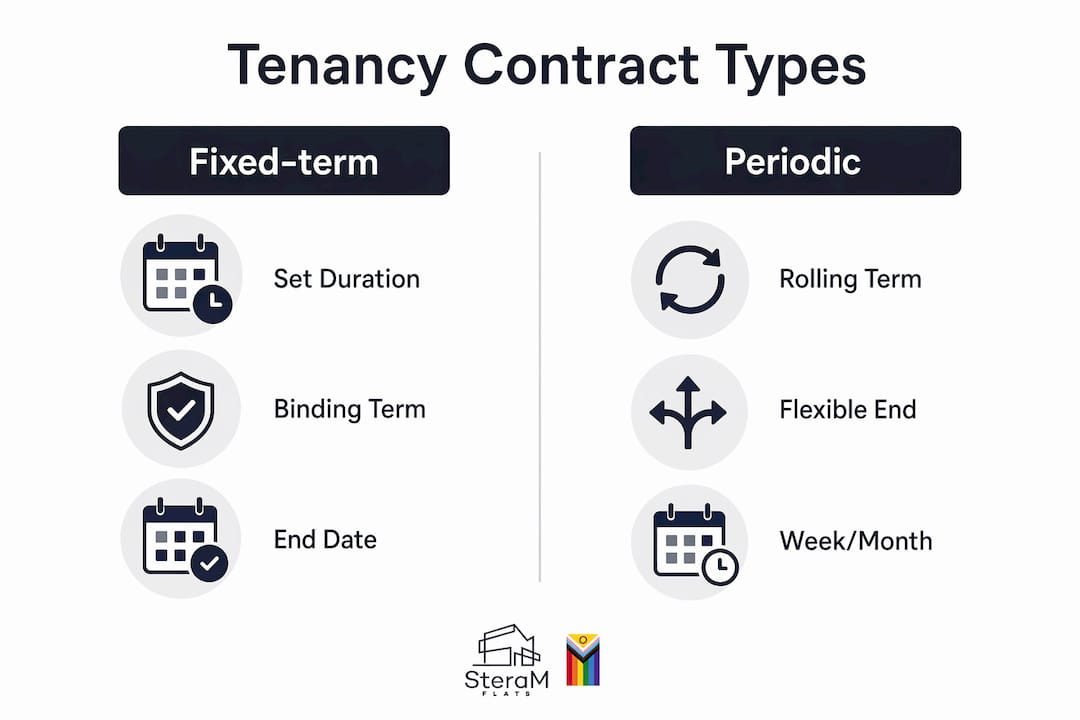
The type of tenancy contract you sign determines how long you are committed, how the agreement ends, and what legal protections apply. The two most common forms are fixed-term tenancies and periodic tenancies, and the distinction between them carries real financial and legal weight.

A fixed-term tenancy runs for a set period, typically six or twelve months. Both parties are bound for that duration. A tenant cannot simply leave early without potential liability for rent, and a landlord cannot evict without legal grounds before the term expires.
A periodic tenancy, sometimes called a rolling tenancy, has no fixed end date. It continues week to week or month to month until one party gives proper notice. This arrangement offers more flexibility but less certainty for both sides.
The Renters’ Rights Act 2025, effective May 2026, removed fixed-term assured shorthold tenancies from new contracts in England entirely. All new assured tenancies are now periodic by default. This is one of the most significant shifts in English tenancy law in decades, and it means landlords can no longer rely on a fixed end date to recover possession automatically.
| Type | Duration | How it ends | Key implication |
|---|---|---|---|
| Fixed-term tenancy | Set period (e.g., 12 months) | Expires at end date or by agreement | Both parties bound for full term |
| Periodic tenancy | Rolling (weekly or monthly) | Notice from either party | More flexible, less certainty |
| Assured periodic (post-May 2026, England) | Rolling, no fixed end | Formal notice with legal grounds | Landlord must cite valid reason to end |
For landlords managing rental agreement types across different jurisdictions, including Spain, the rules differ considerably. Spain operates under its own Ley de Arrendamientos Urbanos framework, which sets different minimum durations and notice requirements.
Pro Tip: If you are a landlord in England with tenancies that started before May 2026, check whether the Renters’ Rights Act converts those agreements automatically or at renewal. Getting this wrong can invalidate a possession claim entirely.
What legal rights and protections arise from tenancy contracts?
A tenancy contract is the primary tool for enforcing your rights, but it does not create all of them. Statutory tenant rights exist independently of what any contract says. A landlord cannot write a clause that removes a tenant’s right to a safe home, proper notice, or deposit protection. Those protections stand regardless of what the agreement contains.
That said, the contract is still the document courts and arbitrators reach for first when a dispute arises. Once signed, the tenancy agreement becomes the key legal evidence in any proceedings involving arrears, property damage, or possession. A well-drafted contract makes your position far easier to defend or enforce.
Key legal protections built into or around tenancy contracts include:
- Deposit protection: In England, deposits must be held in a government-approved scheme such as the Deposit Protection Service (DPS), MyDeposits, or the Tenancy Deposit Scheme (TDS) within 30 days of receipt.
- Safety obligations: Landlords must provide a valid Gas Safety Certificate, an Energy Performance Certificate (EPC), and evidence of electrical safety checks.
- Rent payment rules: Under the Renters’ Rights Act, landlords cannot request rent before a tenancy is signed, and advance rent is capped at one month after signing.
- Repair duties: Landlords are legally responsible for the structure, exterior, and core systems of the property regardless of what the contract states.
“Sham tenancy agreements that attempt to limit statutory rights are unenforceable and expose landlords to fines and regulatory penalties under the Renters’ Rights Act 2025.”
Verbal or implied tenancies also carry legal weight. A tenancy formed by rent payment and occupation exists in law even without a signed document. The problem is enforceability. Without written terms, proving what was agreed on notice periods, repair duties, or deposit conditions becomes extremely difficult for both sides.
Why is having a properly drafted tenancy contract important?
The importance of tenancy contracts goes beyond legal compliance. A clear, detailed agreement prevents the kind of ambiguity that turns minor disagreements into costly legal proceedings. Here are the five most practical reasons every rental relationship needs a properly drafted contract.
Dispute resolution: When a landlord claims damage beyond fair wear and tear, or a tenant disputes a rent increase, the contract is the first document any mediator or court examines. Vague or missing clauses leave both parties exposed.
Financial clarity: A written contract specifies exactly when rent is due, what happens if it is late, and how deposit deductions are calculated. This removes the guesswork that leads to arrears disputes.
Property use boundaries: Without a written agreement, a tenant may argue they were never told pets were prohibited or that subletting was restricted. A contract makes those rules explicit and enforceable.
Legal compliance evidence: For landlords, a signed contract with all required disclosures attached (EPC, gas safety certificate, How to Rent guide) demonstrates compliance with statutory obligations. Missing this documentation can block a valid possession claim.
Protection against poorly worded agreements: A contract that contradicts statutory rights is not just unenforceable. It can signal bad faith and attract regulatory scrutiny. Seeking independent legal advice before signing, as recommended by Tenancy.govt.nz, reduces misunderstandings and sets clearer expectations from day one.
For landlords operating in Spain, the legal documents required for a compliant rental go beyond the contract itself and include specific registration and licensing steps. Understanding the full picture before you list a property saves significant time and money later.
Key takeaways
A tenancy contract is the legal foundation of every rental relationship, and its quality directly determines how well both parties are protected when disputes arise.
| Point | Details |
|---|---|
| Core definition | A tenancy contract is a legally binding agreement granting a tenant the right to occupy a property under agreed terms. |
| Essential clauses | Every contract must cover rent, deposit, duration, repair duties, and termination conditions to be enforceable. |
| 2026 law change (England) | The Renters’ Rights Act 2025 ended fixed-term assured tenancies; all new contracts in England are now periodic. |
| Statutory rights prevail | Contracts cannot override tenant protections; statutory rights apply even if omitted from the written agreement. |
| Written contracts protect both sides | Verbal tenancies exist in law but make enforcing specific terms nearly impossible for landlords and tenants alike. |
What I have learned from years of watching tenancy disputes unfold
Most tenancy problems I have seen do not start with bad intentions. They start with assumptions. A landlord assumes the tenant understood the pet policy. A tenant assumes the landlord would fix the boiler within a day. Neither assumption was written down, and six months later both parties are paying legal fees to argue over something a single paragraph could have resolved.
The 2026 changes in England are a good example of how quickly the legal ground can shift. Landlords who built their entire exit strategy around fixed-term end dates now need to rethink how they manage possession. That is not a small adjustment. It changes how you price risk, how you select tenants, and how you structure your portfolio.
My honest view is that most people, both renters and landlords, underestimate how much the contract itself shapes the entire rental experience. Tenants often sign without reading past the rent amount. Landlords often use template agreements without checking whether they reflect current law. Both are expensive habits.
Before signing anything, get a second opinion. Not necessarily from a solicitor every time, though that is worth the cost for high-value properties. At minimum, read the tenant rights guidance relevant to your jurisdiction and compare it against what the contract actually says. The gap between those two documents is where disputes live.
— Steramflats
How Steramflats can help with your rental agreement
Steramflats specializes in property management and rental services across southern Spain, with deep expertise in drafting compliant tenancy contracts that protect both landlords and tenants.

Whether you are a landlord preparing to list a property or a tenant reviewing an agreement before signing, Steramflats provides guidance on legal documentation, rental terms, and property management from start to finish. The team understands the specific requirements of Spanish rental law and can help you avoid the costly mistakes that come from poorly drafted or outdated agreements. List your property for free and get access to professional rental management support tailored to your needs.
FAQ
What is a tenancy contract in simple terms?
A tenancy contract is a written legal agreement between a landlord and a tenant that sets out the terms of renting a property, including rent, duration, and responsibilities. It protects both parties by making the rules of the rental relationship explicit and enforceable.
What does a tenancy contract include?
A tenancy contract includes the names of both parties, the property address, rent amount and payment schedule, deposit details, duration or rolling nature of the tenancy, repair responsibilities, and termination conditions. Since May 2026 in England, landlords must also provide a written statement of terms before the tenant signs.
What are the main types of tenancy agreements?
The two main types are fixed-term tenancies, which run for a set period, and periodic tenancies, which roll on a weekly or monthly basis. As of May 2026, new assured tenancies in England are periodic by default under the Renters’ Rights Act 2025.
Can a tenancy exist without a written contract?
Yes. A tenancy can be formed through rent payment and occupation even without a signed document. However, the absence of a written contract makes it extremely difficult to enforce specific terms around notice periods, deposits, or property use for either party.
Can a landlord include any clause they want in a tenancy contract?
No. Clauses that contradict or remove statutory tenant rights are unenforceable regardless of what the contract states. Landlords who include terms designed to undermine tenant protections risk penalties under the Renters’ Rights Act 2025.