A holiday let license is an official authorization and registration required to legally rent out a property for short-term tourist stays in Spain. Unlike a single permit issued by one authority, Spain’s system combines a regional tourist license with a mandatory national registration under Real Decreto 1312/2024, making compliance a two-track process that every host must complete before accepting bookings. If you own a property in Andalucía, Catalonia, or any other autonomous community and plan to list it on Airbnb or Booking.com, understanding both tracks is not optional. This guide breaks down exactly what the license involves, how to obtain it, and where hosts most often go wrong.
What is a holiday let license in Spain?
A holiday let license in Spain is the industry term for what Spanish law calls a licencia de alquiler turístico combined with a national registration number. Spain requires both a regional tourist authorization and a national registration entry. Having only one is insufficient for legal hosting or platform listing. This dual requirement is the single most misunderstood aspect of holiday rental regulations in Spain, and it catches experienced hosts off guard as much as first-timers.
The regional tourist license is issued by the autonomous community where your property sits. Each of Spain’s 17 autonomous communities sets its own rules, fees, and documentation requirements. Andalucía uses the Registro de Turismo de Andalucía, while Catalonia operates through the Registre de Turisme de Catalunya. The requirements in each region differ on everything from minimum room sizes to fire safety certifications, so a license obtained in one region carries no weight in another.
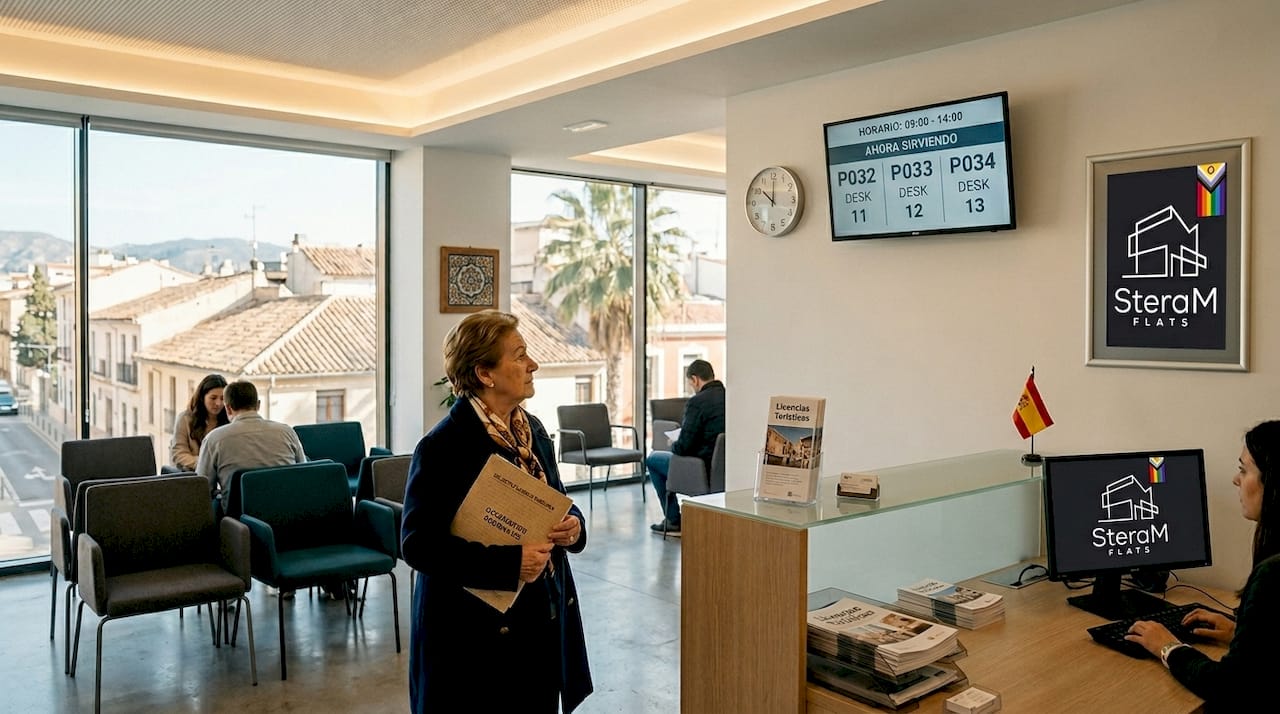
The national registration component is newer and equally binding. Real Decreto 1312/2024, published in the Boletín Oficial del Estado on December 23, 2024, established the Ventanilla Única Digital de Arrendamientos as the sole national registry for short-term rentals. Every property used for holiday lets receives a unique registration number through this portal. That number must appear in every listing on every platform where the property is advertised.
Pro Tip: Think of the regional tourist license as your permission to operate and the national registration number as your public identity on booking platforms. Both must be active and accurate before your first guest checks in.
The national registry went live on January 2, 2025, with full mandatory application from July 1, 2025. Hosts who began operating before that date had a transition window, but that window has closed. Any property listed today without a valid registration number is operating outside the law.
How to obtain a holiday let license in Spain
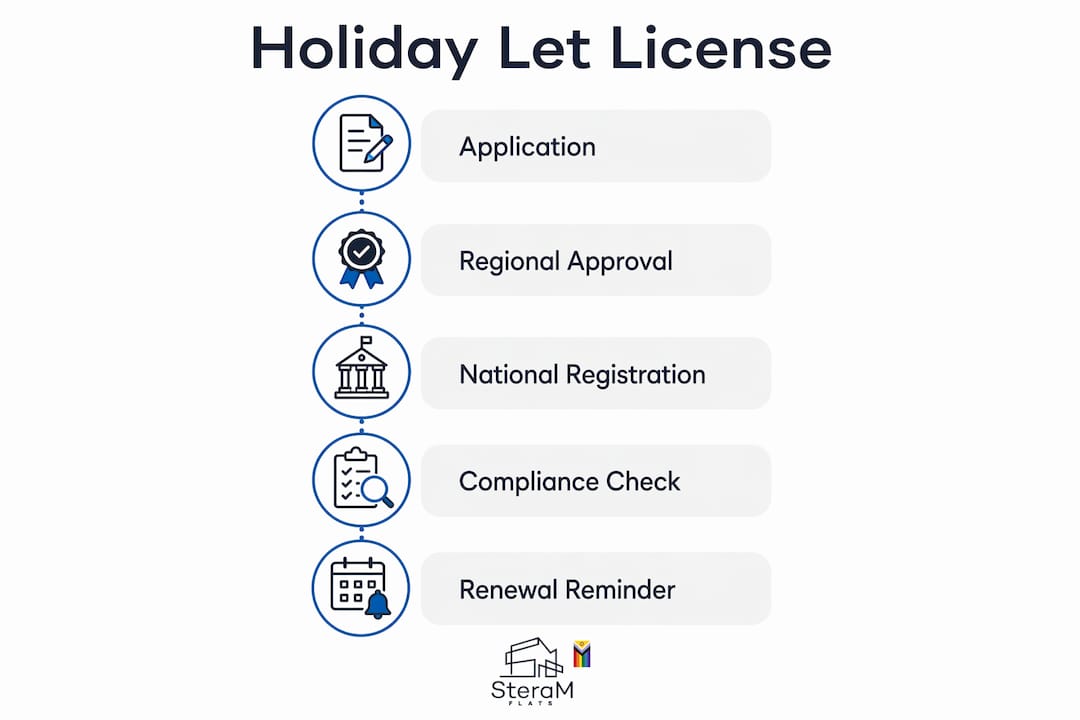
Securing full compliance requires completing both the regional and national tracks in the correct sequence. Rushing the national registration before the regional license is approved creates delays and potential rejection.
Verify property eligibility. Check your property deeds and the building’s horizontal property rules before submitting any application. Communities of owners can prohibit tourist rentals under amendments to Spain’s horizontal property law, and discovering this after paying application fees is an expensive mistake. Confirm that your building’s statutes do not contain a prohibition clause.
Gather your documentation. Regional tourism offices typically require the property title deed (escritura de propiedad), a habitation certificate (cédula de habitabilidad), proof of building consent, and in many regions a first-occupancy license. Some communities also require a floor plan and evidence of liability insurance. Refer to the rental licenses guide from Steramflats for a region-specific documentation checklist.
Submit your application to the regional tourism authority. Applications go to the tourism department of the autonomous community where the property is located. Processing times range from two weeks to three months depending on the region and current application volume. Andalucía and the Canary Islands tend to have faster turnaround than Catalonia or the Balearic Islands, where demand is higher and scrutiny is tighter.
Register at the national portal. Once your regional license is confirmed, register the property at the Ventanilla Única Digital de Arrendamientos. You will receive a unique registration number tied to your property’s address and regional license details. Changes to registration details must be reported promptly under the decree, so keep your contact information and property details current.
Update your platform listings. Add the registration number to every listing on Airbnb, Booking.com, Vrbo, and any other platform where the property appears. Listing without correct registration numbers leads to removal from platforms and fines. This step is as operationally critical as the license itself.
Pro Tip: Set a calendar reminder every six months to verify that your registration details at the national portal still match your regional license status. Platforms cross-check these records, and a mismatch can trigger automatic listing suspension.
Spain vs. the UK: how holiday let licensing differs
Property owners who have operated in both Spain and the United Kingdom often arrive in Spain expecting a single local council license similar to what they know from the UK. That expectation leads to incomplete compliance.
| Feature | Spain | United Kingdom (Scotland) |
|---|---|---|
| Licensing authority | Regional autonomous community plus national registry | Local council under national scheme |
| Number of license types | One regional tourist license plus one national registration | Four license types including home sharing, home letting, and secondary letting |
| National registration required | Yes, via Ventanilla Única Digital de Arrendamientos | No equivalent national registry |
| Community veto power | Yes, communities of owners can block licenses | No equivalent community veto |
| Platform display requirement | Registration number mandatory in all listings | License number required in Scottish listings |
Scotland’s four-category system, which separates home sharing from secondary letting, reflects a different policy philosophy. Spain’s model is layered rather than categorized. You do not choose a license type based on how you use the property. You obtain the regional authorization and then register nationally, regardless of whether you rent a spare room or an entire villa. This distinction matters because Spain’s compliance layers operate independently. Even if the national framework shifts due to judicial challenges, regional and municipal rules remain in effect.
The terminology gap also creates confusion. In the UK, hosts ask “do I need a holiday let license?” and expect one answer. In Spain, the correct question is “do I have both my regional tourist license and my national registration number?” The answer to each question can be different, and both must be yes.
Common challenges when securing a holiday let license
Spain’s holiday property licensing requirements create several friction points that trip up even well-prepared hosts.
Community of owners restrictions. Statutory authority granted to communities allows them to prohibit or restrict tourist rentals by a three-fifths majority vote. An official regional license does not override this. You can hold a valid licencia turística and still be legally blocked from renting by your building’s community. Always check the community statutes before purchasing a property for holiday rental purposes.
Regional rule changes. Autonomous communities update their tourism regulations independently of the national framework. The Balearic Islands, for example, have introduced moratoriums on new tourist licenses in certain zones. A property that was eligible for licensing when you bought it may no longer qualify under updated zoning rules.
Platform compliance gaps. Platforms like Airbnb now actively verify registration numbers against the national registry. A number that is expired, incorrectly formatted, or belongs to a different property triggers automatic listing suspension. Hosts who copy registration numbers from other listings or enter placeholder data face immediate removal.
Incomplete documentation at submission. Regional tourism offices reject applications that are missing even one required document. A missing habitation certificate or an outdated floor plan can delay approval by months. Review the landlord compliance checklist from Steramflats before submitting to any regional authority.
Failure to update after changes. Selling the property, changing the property’s use, or modifying the rental terms all trigger an obligation to update the national registration. Hosts who ignore this face fines and potential delisting.
Pro Tip: Before purchasing any property in Spain with the intent to holiday let, commission a legal due diligence report that specifically covers the building’s community statutes and the local municipality’s current zoning rules for tourist rentals. This single step prevents the most expensive surprises.
Key takeaways
A holiday let license in Spain is always a combination of a regional tourist authorization and a national registration number. Neither component alone satisfies the full legal requirement under current Spanish law.
| Point | Details |
|---|---|
| Dual compliance required | Hosts must hold both a regional tourist license and a national registration number to operate legally. |
| National registry deadline | Full mandatory application under Real Decreto 1312/2024 applied from July 1, 2025. |
| Community veto is real | Building communities can block tourist rentals even when official licenses are in place. |
| Platform visibility depends on registration | Listing without a valid national registration number leads to removal from Airbnb and similar platforms. |
| Regional rules persist independently | Even if national frameworks change, autonomous community and municipal rules remain binding. |
Why hosts keep getting this wrong
From working with property owners across southern Spain, the pattern is consistent. Hosts who struggle with licensing are not careless. They are operating on an outdated mental model of what a license means.
The most common mistake is treating the regional tourist license as the finish line. A host in Torremolinos obtains their Andalucían licencia de apartamento turístico, lists the property on Airbnb, and considers themselves compliant. They are not. Without the national registration number from the Ventanilla Única Digital de Arrendamientos, they are operating outside the framework established by Real Decreto 1312/2024. Platforms will eventually flag the listing, and the fines are not trivial.
The second mistake is ignoring the community of owners entirely. I have seen hosts invest in full licensing, complete the national registration, and then receive a cease-and-desist from their building’s community president because a three-fifths majority voted to prohibit tourist rentals two years earlier. The legal standing of that community vote is solid. The license does not override it.
My honest advice is this: treat the licensing process as three parallel tracks, not two. Track one is the regional tourist license. Track two is the national registration. Track three is community and municipal clearance. All three must be green before you accept your first booking. Consulting a local property lawyer who specializes in tourism law before you start the process costs far less than unwinding a non-compliant operation after the fact.
The short-term rental market in Spain remains one of the strongest in Europe for investors. The regulatory framework, while complex, exists to protect that market’s long-term viability. Hosts who get compliance right from the start operate with a genuine competitive advantage.
— YellowRock
How Steramflats can help you get licensed
Navigating Spain’s layered holiday rental regulations is manageable with the right support. Steramflats specializes in guiding property owners through every stage of the licensing process, from verifying community statutes and preparing regional tourism applications to completing national registration and updating platform listings.
Whether you own a single apartment in Torremolinos or a portfolio of properties across Andalucía, Steramflats handles the documentation, submissions, and ongoing compliance monitoring so you can focus on your guests. The team’s direct experience with regional tourism authorities means fewer delays and fewer rejected applications. Visit the holiday rental services page to learn how Steramflats can take the complexity out of getting and keeping your holiday let license.
FAQ
What is a holiday let license in Spain?
A holiday let license in Spain is the combination of a regional tourist authorization issued by the relevant autonomous community and a national registration number obtained through the Ventanilla Única Digital de Arrendamientos under Real Decreto 1312/2024. Both components are legally required to rent a property for short-term tourist stays.
Do I need a holiday let license to list on Airbnb in Spain?
Yes. Airbnb and other major platforms now require hosts in Spain to display a valid national registration number in their listings. Operating without one leads to listing removal and potential fines under current holiday rental regulations.
How long does it take to obtain a holiday let license in Spain?
Processing times vary by region. Andalucía typically processes applications within two to six weeks, while Catalonia and the Balearic Islands can take two to three months. Incomplete documentation is the most common cause of delays.
Can my building’s community of owners block my holiday let license?
Yes. Under amendments to Spain’s horizontal property law, a community of owners can prohibit tourist rentals by a three-fifths majority vote. This community decision holds legal weight and is not overridden by a valid regional tourist license.
What happens if I operate without proper holiday property licensing requirements met?
Operating without a valid regional tourist license and national registration number exposes you to fines from regional tourism authorities, removal of your listings from booking platforms, and potential legal action. The consequences apply whether you are a new host or an established operator who has not updated to the post-July 2025 requirements.