A real estate agreement is a legally enforceable written contract between parties involved in a property transaction, defining terms such as price, duration, and responsibilities. Whether you are buying a home in Spain, leasing a commercial space, or listing a property for sale, this document governs every obligation and right in the deal. The real estate contract definition covers three main forms: purchase agreements, listing agreements, and lease agreements. Each type serves a distinct purpose, involves different parties, and carries its own legal weight. Understanding what you are signing protects your money, your property, and your legal standing.
What is a real estate agreement and what makes it valid?
A real estate agreement is valid only when it meets six specific legal requirements. Miss any one of them, and the contract may be unenforceable in court.
- Written form. Under the Statute of Frauds, real estate agreements must be written and signed by all parties. Oral agreements carry no legal weight in property transactions.
- Mutual agreement. One party makes an offer. The other accepts it without modification. Any change to the terms creates a counteroffer, not an acceptance.
- Legal capacity. Both parties must be adults of sound mind. Contracts signed by minors or individuals deemed legally incompetent are void.
- Consideration. This is the exchange of value, typically earnest money for purchase agreements or a security deposit for leases. Courts uphold contracts with nominal consideration as long as some valid consideration exists.
- Lawful purpose. Contracts with illegal purposes or those violating zoning or housing laws are void and unenforceable from the start.
- Complete signatures. The Statute of Frauds requires all interested parties’ signatures. A co-owner who did not sign cannot be bound by the agreement.
One detail most buyers and sellers overlook is the difference between the signing date and the effective date. The effective date is typically the date the last signature is delivered. That date triggers every contingency deadline in the contract. Getting this wrong can cost you days off your inspection window.
Pro Tip: Always confirm the effective date in writing with your agent or attorney the same day the last party signs. Do not assume it matches the date on the document.
What types of real estate agreements exist and how do they differ?
The three main types of real estate agreements serve completely different functions. Confusing them leads to missed deadlines, lost deposits, and legal disputes.
Purchase agreements
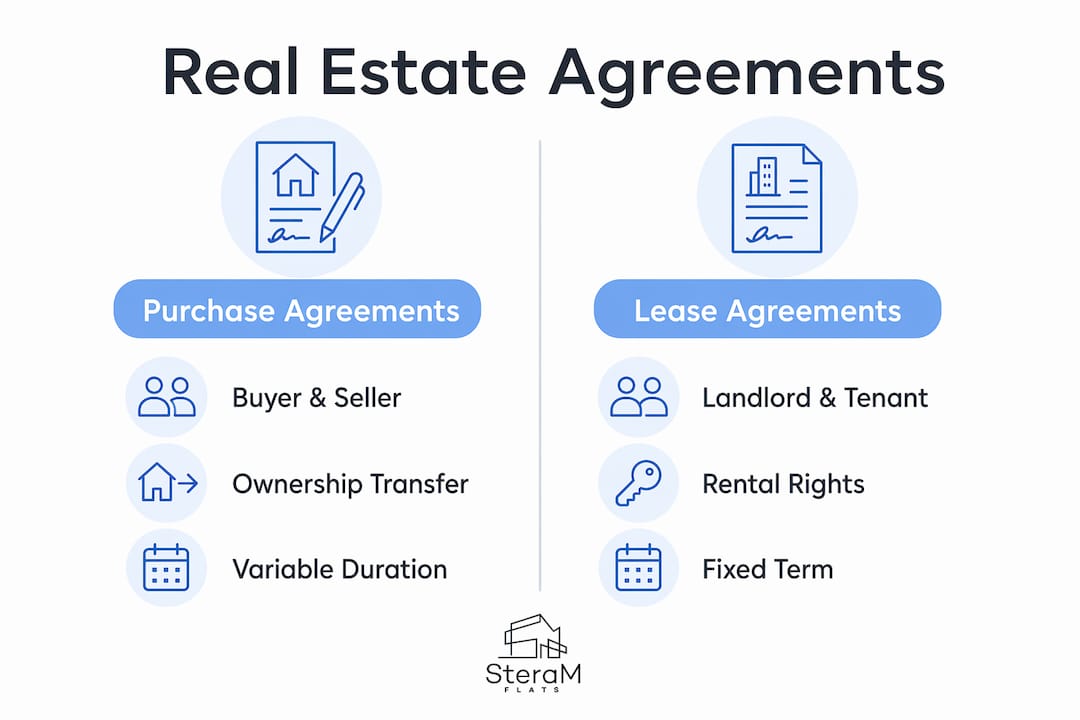
A real estate purchase agreement, also called a purchase and sale agreement (PSA), is the contract between a buyer and a seller for the transfer of property ownership. It specifies the purchase price, closing date, contingencies, and what personal property is included in the sale. Standard residential purchase agreements typically close in 30–60 days. That window covers inspections, financing approval, and title work. The PSA becomes legally binding when both parties sign the same document without modifications.

Listing agreements
A listing agreement authorizes a real estate agent or brokerage to market and sell a property on the owner’s behalf. It defines the agent’s commission, the listing price, and the duration of the authorization. Listing agreements typically run for 3–6 months. The most common form is the exclusive right to sell, which guarantees the agent a commission regardless of who finds the buyer.
Lease agreements
A lease agreement, also called a tenancy contract, governs the rental of residential or commercial property. It outlines rent amount, payment schedule, lease duration, maintenance responsibilities, and conditions for termination. Standard lease terms run 6–12 months for residential properties. For a detailed breakdown of rental agreement types, the obligations differ significantly between short-term vacation rentals and long-term tenancies.
| Agreement type | Primary parties | Typical duration | Core purpose |
|---|---|---|---|
| Purchase agreement | Buyer and seller | 30–60 days to close | Transfer of ownership |
| Listing agreement | Owner and agent | 3–6 months | Authorize property marketing |
| Lease agreement | Landlord and tenant | 6–12 months | Define rental terms |
Earnest money deposits for residential purchase agreements average 1%–3% of the purchase price. Commercial transactions require significantly more, typically 5%–10%. That gap reflects the higher risk and longer due diligence periods in commercial deals.
What key clauses and contingencies protect buyers and sellers?
Contingencies are the most negotiated part of any purchase agreement. They give buyers the right to exit the contract without losing their deposit if specific conditions are not met.
Inspection contingency. This gives the buyer a set number of days to hire a licensed inspector and review the property’s condition. In Florida, for example, inspection contingency periods may be limited to 15 days. If the inspection reveals major defects, the buyer can request repairs, renegotiate the price, or walk away.
Appraisal contingency. If the lender’s appraiser values the property below the agreed purchase price, this clause lets the buyer renegotiate or cancel without penalty. Without it, the buyer must either cover the gap in cash or lose the deposit.
Financing contingency. This protects the buyer if their mortgage application is denied. It is one of the most common contingencies in residential deals and one of the first sellers try to remove in competitive markets.
Title contingency. This allows the buyer to exit if a title search reveals liens, ownership disputes, or other encumbrances that the seller cannot resolve before closing.
Earnest money deposit clause. This specifies the deposit amount, where it is held (typically in escrow), and the conditions under which it is refunded or forfeited. Losing earnest money is the most common financial consequence of a failed transaction.
One legal concept buyers rarely understand is specific performance. Once both parties sign a purchase agreement, either party can sue the other to force completion of the sale. This is not just about getting your deposit back. A court can compel the seller to actually transfer the property. That is a significant legal right most buyers do not realize they hold.
Pro Tip: Never waive the financing contingency unless you have a fully underwritten loan commitment in hand. Pre-approval letters are not guarantees. Waiving this clause without certainty puts your entire deposit at risk.
How does the real estate agreement process unfold from offer to closing?
The path from initial offer to closed transaction follows a predictable sequence. Knowing each step prevents costly mistakes.
- Offer submission. The buyer submits a written offer specifying price, contingencies, and proposed closing date. The seller can accept, reject, or counter.
- Negotiation and counteroffers. Purchase agreements are negotiable until signed by both parties. Each counteroffer replaces the previous one. The contract forms only when both sides agree to identical terms.
- Effective date established. The effective date is the date the last signature is delivered. Every contingency deadline counts from this date, not the signing date.
- Earnest money deposited. The buyer typically deposits earnest money within 3–5 business days of the effective date. It is held in escrow by the title company or the seller’s broker.
- Inspections and due diligence. The buyer hires inspectors, reviews HOA documents, and investigates any issues flagged during the offer process.
- Financing and appraisal. The lender orders an appraisal. The buyer’s loan moves through underwriting. This is often the longest step.
- Title search. A title company or real estate attorney confirms the seller has clear ownership and no outstanding liens.
- Closing preparation. Both parties review the closing disclosure, confirm final numbers, and schedule the signing.
- Final closing. Both parties sign the closing documents. The buyer transfers funds. Ownership transfers to the buyer.
After signing a purchase agreement, buyers typically complete inspections, financing, and title work within 30–60 days. Real estate attorneys and licensed agents play a critical role in keeping this timeline on track. For buyers navigating an unfamiliar market, understanding legal support for real estate can prevent costly errors at every stage.
Key Takeaways
A real estate agreement is a legally binding written contract that is only enforceable when it includes mutual consent, consideration, legal capacity, and the signatures of all interested parties.
| Point | Details |
|---|---|
| Written form is mandatory | Oral real estate agreements are unenforceable under the Statute of Frauds. |
| Three main agreement types | Purchase, listing, and lease agreements each serve a distinct legal purpose. |
| Effective date drives deadlines | Every contingency period starts from the effective date, not the signing date. |
| Earnest money varies by deal type | Residential deposits average 1%–3%; commercial deals require 5%–10%. |
| Contingencies protect your deposit | Inspection, appraisal, and financing contingencies let buyers exit without penalty. |
What I have learned from watching real estate contracts go wrong
Most contract disputes do not start with bad faith. They start with assumptions. A buyer assumes the inspection period starts the day they signed. A seller assumes the financing contingency was waived. An agent assumes the co-owner already agreed to the terms. None of these assumptions are written down, and none of them hold up in court.
The single most valuable habit I have seen in successful real estate transactions is reading every date in the contract out loud with all parties present. Not skimming. Not delegating to an assistant. Reading it. The effective date, the inspection deadline, the financing deadline, the closing date. These four numbers determine whether a deal closes or collapses.
I have also seen buyers waive contingencies to win competitive offers, then discover a structural defect that would have been caught in a standard inspection. Winning a bidding war by removing protections is not a strategy. It is a gamble. The market rewards patience more often than speed.
One more thing: the lawful purpose requirement is not theoretical. Contracts that involve properties being used in violation of local zoning laws are void from the start, regardless of how carefully they were drafted. If you are buying a property to operate a business, confirm the zoning classification before you sign anything.
— YellowRock
How Steramflats supports your real estate transactions
Steramflats operates as a full-service real estate platform in Spain, helping buyers, sellers, landlords, and investors manage every stage of a property transaction. Whether you need to list your property for sale or rent or need guidance on lease terms and legal documentation, Steramflats provides the tools and expertise to get it right.

The team at Steramflats specializes in markets like Torremolinos, where vacation rentals, long-term leases, and property sales each require different contract structures and legal compliance. From drafting agreements to managing tenant communication and property valuation, Steramflats covers the full transaction lifecycle. Avoid the contract errors that cost buyers and landlords thousands by working with professionals who know the local market and the legal requirements inside out.
FAQ
What is the difference between a purchase agreement and a lease agreement?
A purchase agreement transfers property ownership from seller to buyer, while a lease agreement grants a tenant the right to occupy a property for a set period without transferring ownership. Purchase agreements typically close in 30–60 days; lease agreements run 6–12 months.
Does a real estate contract have to be in writing?
Yes. Under the Statute of Frauds, all real estate agreements must be written and signed by all parties to be legally enforceable. Oral agreements for property transactions have no legal standing.
What happens if a buyer backs out of a purchase agreement?
If a buyer exits without a valid contingency, the seller typically keeps the earnest money deposit as compensation. If the buyer had an active contingency such as a financing or inspection clause, they can usually recover the deposit in full.
What is earnest money and how much is required?
Earnest money is a deposit made by the buyer to demonstrate serious intent. Residential deals average 1%–3% of the purchase price; commercial transactions typically require 5%–10%. Courts enforce contracts even with nominal consideration as long as some payment exists.
When does a real estate agreement become legally binding?
A real estate agreement becomes binding when both parties sign the same document with identical terms. The effective date, usually the date the last signature is delivered, triggers all contingency deadlines in the contract.