If a defect in your home was hidden, existed before you bought it, and is serious enough to affect its use or value, Spanish law almost certainly gives you a claim under the Código Civil. Your first move matters more than any legal argument: commission a peritaje and act before six months pass, because that clock, set by article 1490, is unforgiving and can extinguish your right to sue no matter how strong your case looks on paper.
TL;DR:
- Hidden defects must be preexisting, undetectable with reasonable inspection, and cause significant damage or reduction in property value.
- The defect claim must be filed within six months of property delivery, or the right to sue is lost, regardless of other conditions.
- A professional surveyor should be commissioned immediately to document the defect, establish its origin, and estimate repair costs.
- Common qualifying defects include concealed plumbing leaks, termite infestations, and structural issues masked by cosmetic repairs.
- Buyers should thoroughly document defects early, avoid repairs before inspection, and act swiftly with legal support to preserve their rights.
Table of Contents
- What Counts as a Vicio Oculto Under Spanish Law?
- Which Defects Actually Qualify (and Which Don’t)?
- How Do You Detect a Hidden Defect Before It’s Too Late?
- What Are the Exact Steps to Claim for a Vicio Oculto in Spain?
- Redhibitoria, Quanti Minoris, and the Deadlines That Decide Everything
- What Should a Peritaje Actually Include?
- When Is It More Than a Vicio Oculto?
- Your First 30 Days: A Practical Checklist
- Where Buyers Go Wrong, and How to Avoid It
- How a real estate agency can help you resolve a hidden defect claim
- Where to Verify the Legal Details Yourself
- Sources
What Counts as a Vicio Oculto Under Spanish Law?
Spanish law defines a hidden defect through four cumulative tests, all drawn from articles 1484 through 1490 of the Código Civil. Miss one, and the claim collapses regardless of how expensive the fix turns out to be.
- Preexisting. The defect must have existed before you took delivery of the property, not developed afterward through your own use or neglect.
- Hidden. An ordinary buyer inspecting the home with reasonable care could not have detected it. A crack in plain sight fails this test; a rotted beam behind drywall does not.
- Grave. The flaw must impair the home’s normal use or reduce its value substantially, not just annoy you.
- Undisclosed by the seller. The seller did not point it out at the time of sale.
The seller answers for these defects even without knowing about them, though Legia’s legal guide notes that bad faith concealment opens the door to additional damages beyond the basic remedies. New-build homes shift part of this analysis toward the Ley de Ordenación de la Edificación, which we cover further down, and consumer-protection rules can tighten a professional seller’s obligations beyond what a private individual owes.
Which Defects Actually Qualify (and Which Don’t)?
Courts see the same patterns repeat across hidden-defect litigation. Some issues clear the bar easily; others get thrown out because a buyer should have caught them during a normal visit.
Defects that typically qualify:
- Rising damp or condensation trapped inside walls, invisible until the first heavy rain season
- Concealed plumbing leaks that surface months later as ceiling stains or warped flooring
- Termite or wood-boring insect infestations hidden inside structural beams
- Electrical wiring faults buried behind finished walls that violate current safety codes
- Foundation or structural settling masked by cosmetic repairs done before the sale
Defects that usually don’t qualify:
- Hairline cosmetic cracks visible during any walkthrough
- Normal wear consistent with the property’s age, like worn flooring or dated fixtures
- Anything the listing or seller disclosed, even verbally, before signing
Tinsa’s analysis of the Spanish housing stock found that roughly one in four homes carries some form of serious unseen deterioration, with repair costs in those cases often running around €10,000. A buyer who purchases an older property below market price should treat that gap as a warning sign, not a bargain.
How Do You Detect a Hidden Defect Before It’s Too Late?
A reasonable pre-purchase inspection means walking every room, testing taps and outlets, checking for damp smells, and looking behind furniture the seller conveniently left in place. It does not require thermal cameras or moisture meters, but hiring a professional to bring them is smart precisely because it exceeds what courts expect an ordinary buyer to do, which is what makes any defect a survey misses genuinely “hidden” for legal purposes. Our guide to due diligence inmobiliaria walks through what buyers should verify before signing anything.
- Order a technical survey before purchase, especially on homes over 20 years old or priced noticeably below comparable listings.
- Watch for red flags during viewings: fresh paint patches, new tiles in one corner, a strong smell of air freshener, or a seller unwilling to let you visit twice.
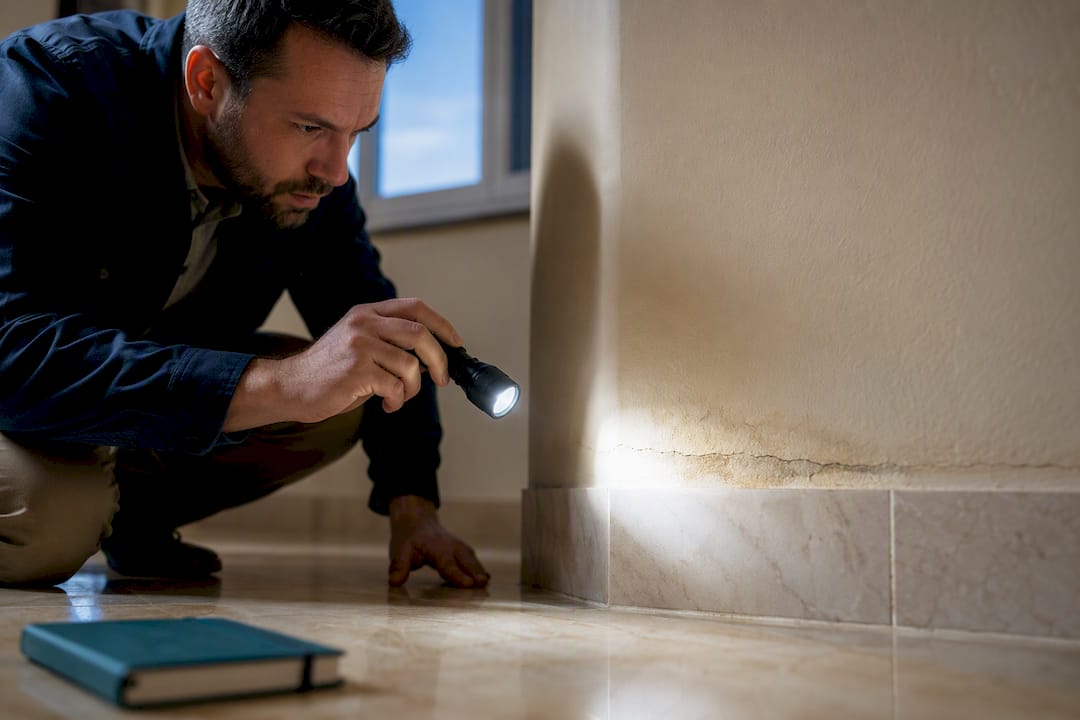
- Photograph and date everything the moment you notice something off, before touching or repairing it.
- Keep every document, including the original listing, contract, and any seller statements about the property’s condition.
Pro Tip: Never authorize a repair before your perito has inspected and documented the damage. Fixing it first destroys the evidence that proves the defect existed and was hidden.
What Are the Exact Steps to Claim for a Vicio Oculto in Spain?
The sequence matters as much as the substance. Skip a step or do them out of order, and you weaken your negotiating position even when the law is on your side.
- Commission the peritaje immediately. Getting a technical report quickly preserves the physical evidence and strengthens your position before the seller has a chance to argue the damage appeared after delivery.
- Gather supporting documents: the purchase contract, the property listing, any pre-sale inspection notes, photographs, and repair estimates from at least one contractor.
- Send a burofax to the seller. This certified notification should attach the peritaje, state the defect clearly, and specify which remedy you’re pursuing.
- Attempt direct negotiation. Many sellers settle once faced with a documented technical report rather than risk a court judgment plus costs.
- File a formal demand if negotiation fails, using the same documentation package assembled for the burofax.
Each burofax and claim should include:
- The dated peritaje with photographs and repair cost estimates
- Proof of when you took delivery of the property
- Correspondence showing the seller was notified promptly
Whether you pursue repair, a price reduction, or full rescission depends on severity. A defect that’s expensive but fixable usually points toward negotiating a rebate or repair credit. A defect that makes the home genuinely unlivable, or one discovered so late that trust in the transaction is gone, points toward rescission instead. If you’re unsure which lane fits your situation, our overview of why legal support matters in Spanish real estate breaks down what a consultation should cover.
Redhibitoria, Quanti Minoris, and the Deadlines That Decide Everything
Spanish law hands you two distinct remedies once a hidden defect is proven, and the choice between them changes what you can recover.
- Acción redhibitoria: you rescind the sale, return the property, and get your money back, as article 1486 CC sets out.
- Acción quanti minoris: you keep the property and claim a proportional price reduction instead.
- Indemnification: available on top of either remedy if the seller knew about the defect and hid it deliberately.
Here’s the trap most buyers fall into: article 1490 gives you just six months from delivery to bring either action. That period is a caducity deadline, not a limitation period, meaning courts won’t extend it for good excuses. Miss it, and the claim is gone regardless of how solid your peritaje is.
There’s one major exception. When what you received is so fundamentally different from what you bought that it amounts to aliud pro alio, “something other than what was agreed,” the case shifts out of vicios ocultos entirely and into ordinary contractual breach. That route runs under the general five-year limitation of article 1964 CC, which is why correctly classifying your case at the outset changes everything downstream.
What Should a Peritaje Actually Include?
A weak expert report loses cases that should win. A strong one does four things clearly:
- Diagnoses the defect precisely, with photographs and technical explanation
- Establishes preexistence, showing the damage predates your occupancy
- Confirms it was undetectable during a normal inspection
- Includes a realistic repair cost estimate from a qualified contractor
Only a colegiado architect, aparejador, arquitecto técnico, or ingeniero can produce a report courts take seriously, because professional accreditation signals the methodology will hold up under cross-examination. Legia’s guidance points out that reports incorporating scientific dating methods, thermography, salinity testing, core samples, carry far more weight than a visual assessment alone.
Pro Tip: Commission the peritaje from someone who can explain their methodology in plain language. A judge who understands the report is a judge who trusts it.
When Is It More Than a Vicio Oculto?
Some cases outgrow the hidden-defect framework entirely. Courts treat a sale as aliud pro alio when the property is uninhabitable or so fundamentally different from what was advertised that calling it a “defect” undersells the problem.
- Structural damage severe enough to bar occupancy
- A property missing essential features the contract promised
- New-construction defects, where the Ley de Ordenación de la Edificación creates separate one, three, and ten-year warranties against the builder or developer, not just the seller
Choosing this route means longer deadlines but a different defendant and a heavier evidentiary burden, so it’s worth confirming which framework fits before you file.
Your First 30 Days: A Practical Checklist
- Document the defect with dated, unedited photos and video the moment you find it.
- Stop any repair work until your perito has inspected the damage.
- Hire a colegiado professional to produce the peritaje within days, not weeks.
- Send the burofax with all supporting documents attached.
- Keep every receipt, contractor quote, and piece of correspondence.
- Avoid relying on verbal promises from the seller; get everything in writing.
- Contact a lawyer immediately if the six-month window is closing.
Where Buyers Go Wrong, and How to Avoid It
The most common mistake isn’t legal ignorance. It’s timing. Buyers discover damp stains or wiring faults, assume they have plenty of time, and lose the case simply because six months slipped by while they gathered quotes. A close second is treating an “as is” clause as a dead end. Courts routinely set those aside when the seller knew about the defect, so never assume that clause ends your options without checking.
Agents who run proper pre-purchase technical checks and insist on clear contract language around disclosed condition prevent most of these disputes before they start. When they don’t, the fix is almost always the same: get a qualified peritaje fast, and get advice on whether you’re dealing with a vicio oculto or something bigger.
— YellowRock
How a real estate agency can help you resolve a hidden defect claim
Some agencies work with property owners and buyers who need more than a legal citation. They offer support coordinating the technical inspection, the peritaje, and the negotiation at the same time. A practical agency can provide a single point of contact to arrange a qualified inspector, connect you with legal advisory support, and keep the paper trail organized from day one.

A first consultation typically covers the property’s history, the timeline since delivery, and what documentation you already have, so bring your purchase contract, any photos, and correspondence with the seller. From there, a real estate agent might oversee repairs, help document costs for a future claim, and manage the project if you decide to pursue a price reduction rather than rescission. Read how a real estate agent supports buyers and sellers through this exact process, then reach out to schedule an assessment before your six-month window narrows any further.
Where to Verify the Legal Details Yourself

For readers who want to check the underlying law, Corelex’s overview of claiming hidden defects walks through articles 1484 to 1490 CC in detail, while ILP Abogados explains the redhibitoria and quanti minoris distinction. Legia’s guide and professional peritos’ associations remain good starting points for finding a colegiado expert near you.
Sources
- Claiming hidden defects & construction flaws when buying property in Spain — Corelex
- En redhibitory action (hidden defects) and different performance — ILP Abogados
- Vicios ocultos en la compraventa de vivienda — Legia
- Ejemplos de vicios ocultos en una vivienda — Tinsa
- Asesoramiento