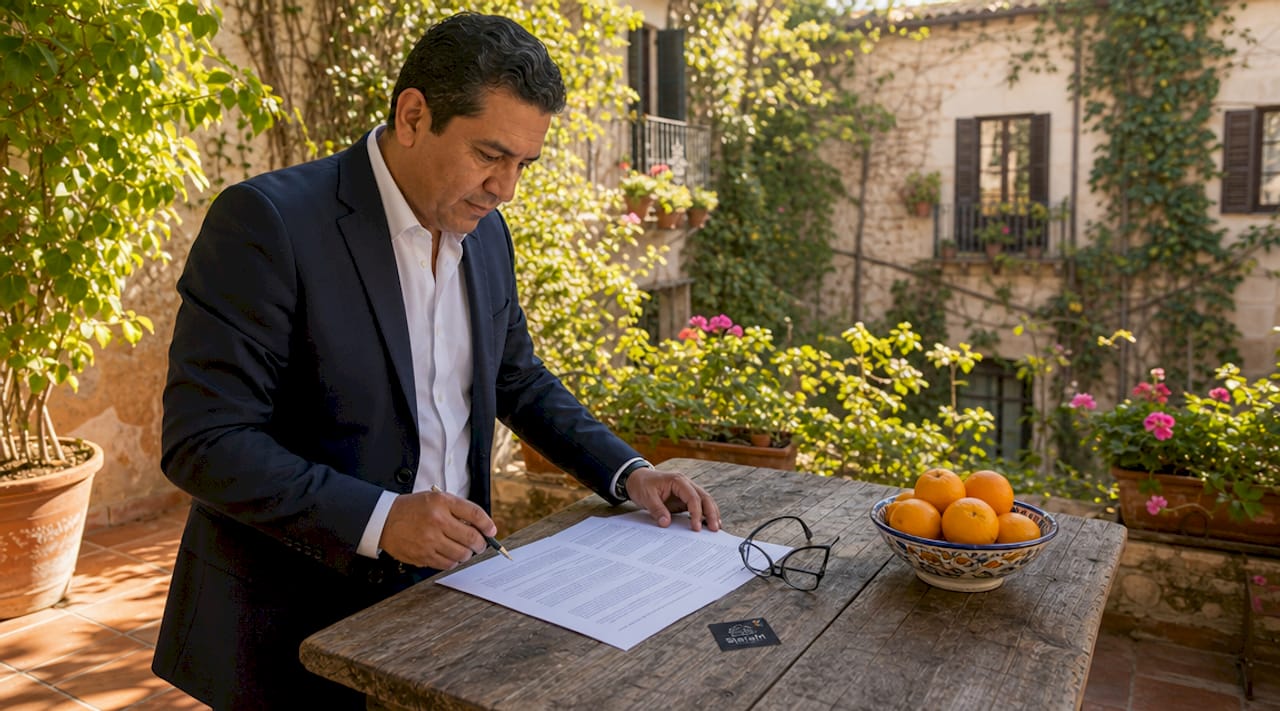
A Spanish notary (notario) is a state-appointed public official who certifies the authenticity and legal validity of documents, contracts, and transactions under Spanish civil law. Unlike the common law notary public familiar to Americans or Britons, the Spanish notario holds far greater authority and sits at the center of nearly every significant legal act in the country. For expatriates buying property, signing contracts, or managing personal legal matters in Spain, understanding the role of notary in Spain is not optional. It is the difference between a legally protected transaction and a costly mistake.
What does a notary in Spain actually do?
The core function of a Spanish notary is to grant fe pública, or public faith, to legal documents and acts. A notary passes the competitive oposiciones exam to earn this state appointment, which means every notary in Spain carries the same legal authority regardless of location. That authority is what makes a notarized document enforceable in court and registrable in official registries.
The practical scope of notarial acts in Spain covers far more ground than most expatriates expect:
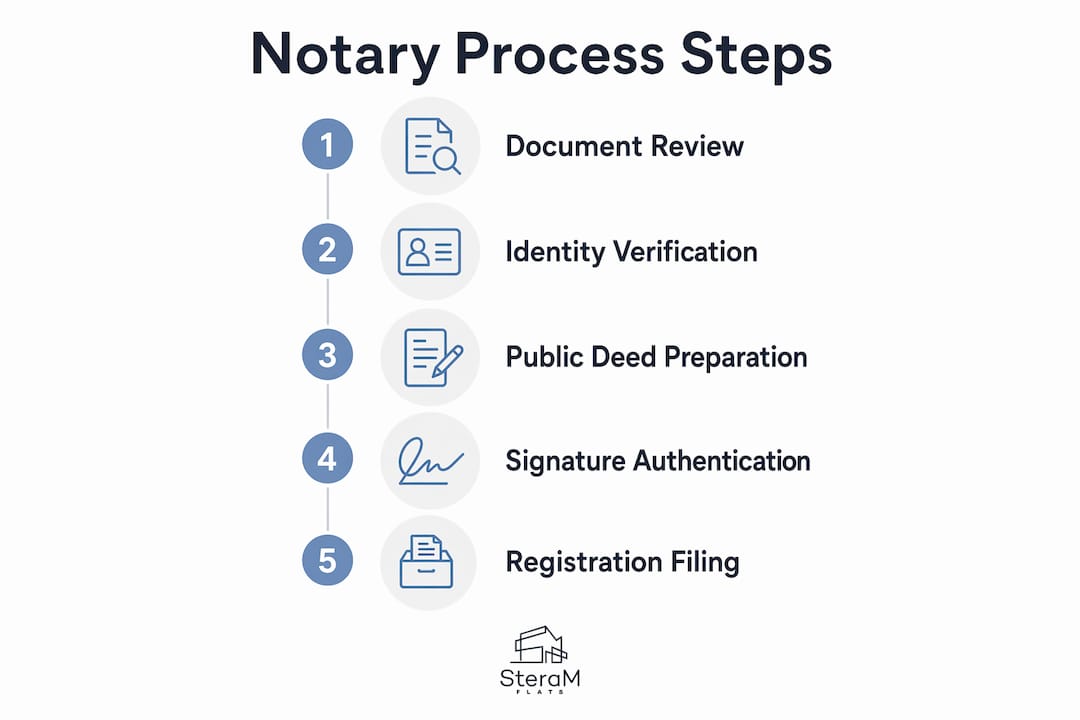
- Authentication of contracts and deeds. The notary drafts or reviews the escritura pública (public deed), which includes all declarations and contract clauses to guarantee third-party efficacy and enable registration in the Property or Mercantile Registry.
- Identity and capacity verification. The notary checks passports, NIE numbers, and powers of representation to confirm that all parties have the legal capacity and free consent to sign.
- Fraud prevention and clause review. Notaries detect abusive or invalidating clauses and verify compliance with anti-money laundering regulations, adding a layer of legal certainty that protects all parties.
- Reading the deed aloud. Spanish civil law requires the notary to read the full deed to all parties before signing. This requirement reflects the system’s emphasis on informed consent.
- Personal status acts. Notaries handle marriages, wills (testamentos), and powers of attorney. Marriage applications can now be processed entirely within the notary’s office, with electronic transmission to the Civil Registry on the ceremony day.
- Corporate acts. Company formation, share capital certification, and statutory modifications all require notarial authentication and compliance with commercial registries.
Pro Tip: When you need a will or power of attorney drafted in Spain, any notary in the country can handle it. You are not required to use the same notary as your property transaction.
How a notary fits into Spanish property transactions
Property transactions are where most expatriates first encounter notary services in Spain, and where misunderstanding the notary’s role causes the most friction. All property sales must be registered via a public deed authenticated by a notary for the transfer to have full legal protection. Without that deed, the buyer holds no enforceable title.
Here is the sequence of how a notary participates in a typical property purchase in Spain:
- Pre-signing verification. The notary requests the property’s details from the Land Registry (Registro de la Propiedad) and the Catastro (cadastral registry) to confirm ownership, boundaries, and any outstanding charges.
- Identity and NIE confirmation. All parties present valid identification. A missing or incorrect NIE number blocks the transaction on the spot.
- Deed reading. The notary reads the full escritura aloud, explaining key clauses. This step cannot be skipped or abbreviated.
- Payment recording. The notary witnesses and records the payment method, typically a bank-certified check (cheque bancario) or wire transfer confirmation.
- Signing and stamping. All parties sign. The notary stamps and signs the document, making it legally binding and ready for registry submission.
- Post-signing registration. The signed deed is submitted to the Property Registry. Until registration is complete, the property registration process is technically unfinished, even though the notarized deed already provides strong legal protection.
Pro Tip: The buyer traditionally chooses and pays for the notary in Spain. If the seller insists on a specific notary, you are within your rights to request a different one. Your choice protects your interests procedurally, even though the notary remains neutral.
The notary does not negotiate price, advise on market value, or flag whether a deal is financially sound. That is a critical distinction. The notary’s job is formal and legal, not advisory.

Common misconceptions about what a notary can and cannot do
The most damaging misconception expatriates carry into Spanish property transactions is that the notary is their legal protector. The notary acts as a neutral referee, ensuring formal and legal correctness. That is not the same as protecting your interests.
Here is what a Spanish notary will not do:
- Advise you whether the price is fair or the deal is good
- Investigate hidden debts, illegal construction extensions, or unpaid community fees
- Negotiate contract terms on your behalf
- Warn you if the property has planning violations not visible in the registries
- Act as your legal representative at any stage of the transaction
“Misunderstanding the notary’s impartial role leads many foreign buyers to assume they will be protected from legal risks, a misconception that often causes distress if uncovered at signing.” — Real Estate Lawyer In Spain
This is why independent legal support is not a luxury in Spain. A qualified abogado (lawyer) conducts due diligence before the notary appointment: checking for debts, verifying planning permissions, reviewing the private purchase contract (contrato de arras), and confirming that the seller has the legal right to sell. The notary confirms the transaction is formally correct. The lawyer confirms it is safe.
Transactions can also be blocked at the notary’s office for procedural reasons. Bringing original documents is mandatory. Digital copies, expired identification, or missing bank certificates for funds transfer are common reasons for immediate delays or cancellations on signing day.
How to find and prepare for a notary appointment in Spain
Finding notary services in Spain is straightforward. The Consejo General del Notariado (General Council of Notaries) maintains a searchable directory at notariado.org, organized by province and municipality. In practice, your lawyer or real estate agent will often recommend a notary they work with regularly, which can speed up document preparation.
The documentation typically required at a notary appointment for a property purchase includes:
- Valid passport or Spanish national ID (DNI) for all parties
- NIE (Número de Identificación de Extranjero) for all foreign buyers
- Bank-certified check or wire transfer confirmation for the purchase price
- Proof of payment of applicable property taxes where required before signing
- The private purchase contract (contrato de arras) if one was signed
- Energy performance certificate (certificado de eficiencia energética)
- Last paid IBI (property tax) receipt from the seller
For expatriates who cannot attend in person, a poder notarial (power of attorney) is a legally valid solution. The power of attorney must be authenticated with an Apostille under the Hague Convention if executed abroad, which adds processing time. Plan for at least two to three weeks if you need this route.
Non-Spanish speakers have a specific legal requirement to address. Official sworn interpreters are legally required during the deed reading if a party does not understand Spanish. Without an interpreter present, the transaction can be invalidated. Some notaries have bilingual staff, but you should confirm this in advance and never assume.
| Situation | What you need |
|---|---|
| Foreign buyer attending in person | Valid passport, NIE, certified bank check, energy certificate |
| Foreign buyer signing remotely | Apostille-authenticated power of attorney, representative’s ID |
| Non-Spanish speaker at signing | Sworn interpreter (intérprete jurado) present at the notary |
| Company purchasing property | Corporate deed, representative’s authority documents, company NIE |
| Seller with outstanding mortgage | Bank cancellation certificate or simultaneous mortgage discharge |
Key takeaways
The Spanish notary is a state-appointed authenticator, not a legal advisor. Every property purchase, will, and major contract in Spain requires notarial certification to be legally enforceable and registrable.
| Point | Details |
|---|---|
| Notary role is authentication | The notario certifies legal validity and public faith, not buyer or seller protection. |
| Property sales require a public deed | All property transfers must be notarized and registered to hold full legal title. |
| Notaries do not replace lawyers | Independent legal counsel handles due diligence, negotiation, and risk assessment. |
| Documentation must be original | Missing NIE, expired ID, or absent bank certificates block transactions immediately. |
| Remote signing is possible | A Hague Apostille power of attorney lets expatriates sign without traveling to Spain. |
What I’ve learned watching expatriates navigate Spanish notaries
The single biggest mistake I see is treating the notary appointment as the finish line. Buyers arrive on signing day having done little due diligence, assuming the notary’s presence means everything is in order. It does not. The notary confirms the document is formally correct. Whether the property has an illegal terrace extension, unpaid community debts, or a disputed boundary is entirely outside the notary’s scope.
The second pattern I notice is the language trap. Expatriates who speak conversational Spanish often decline an interpreter, confident they understand enough. The deed reading is dense legal Spanish, delivered at pace. Missing one clause about a retained right of way or an outstanding charge can have consequences that take years to resolve. If there is any doubt, hire the sworn interpreter. The cost is minimal compared to the risk.
What the Spanish notary system does exceptionally well is prevent fraud at the point of transaction. The identity checks, registry cross-referencing, and anti-money laundering compliance built into every signing make Spain’s property market significantly safer than many comparable markets. That protection is real and valuable. It just does not substitute for the due diligence that should happen in the weeks before you sit down at the notary’s desk.
Prepare your documents early, hire an independent lawyer, confirm interpreter arrangements in advance, and treat signing day as a formal ceremony rather than a negotiation. When you do that, the notary appointment is smooth, fast, and genuinely reassuring.
— YellowRock
How Steramflats supports your property journey in Spain
Buying or selling property in Spain involves multiple legal steps, and the notary appointment is just one of them. Steramflats combines local real estate expertise with practical guidance on the full transaction process, from property search through to deed registration.

Whether you are listing a property for sale or searching for your next investment in southern Spain, Steramflats gives you the platform and the local knowledge to move forward with confidence. You can list your property for free and reach buyers who understand the Spanish legal process. For expatriates seeking real estate services in English, the team at Steramflats is equipped to guide you through every stage, including coordinating with notaries, lawyers, and registries on your behalf.
FAQ
What is the role of a notary in Spain?
A Spanish notary is a state-appointed public official who authenticates legal documents and transactions, granting them public faith and legal enforceability. The notary verifies identities, reads deeds aloud, witnesses payments, and submits documents for registry.
Is a notary required for buying property in Spain?
Yes. All property transfers in Spain must be formalized through a public deed signed before a notary and subsequently registered in the Property Registry to hold full legal protection.
Does the Spanish notary protect the buyer?
No. The notary is a neutral official who confirms formal and legal correctness. Buyers need an independent lawyer to conduct due diligence, check for debts, and negotiate contract terms before the notary appointment.
How do I find a notary in Spain?
The Consejo General del Notariado maintains a searchable directory at notariado.org. Your lawyer or real estate agent will typically recommend a notary experienced with the transaction type you need.
Can I sign at a Spanish notary if I don’t speak Spanish?
Yes, but a sworn interpreter (intérprete jurado) is legally required during the deed reading if you do not understand Spanish. Without one, the transaction risks being invalidated. Confirm interpreter arrangements with the notary’s office before signing day.