Licenses are the legal backbone of any property renovation. They authorize contractors to perform specific types of work, verify that those contractors meet state and local competency standards, and trigger the inspection process that catches dangerous mistakes before walls get closed up. Without them, you are not just bending a rule. You are exposing yourself to denied insurance claims, personal liability for injuries, and a property that may be unsellable or unmortgageable down the road.
Here is what the role of licenses in property renovation actually means in practice:
- Authorization: A license confirms a contractor has passed the required exams, background checks, and experience thresholds set by the state or local licensing board.
- Code compliance: Licensed contractors are legally bound to follow the International Residential Code (IRC) and any local amendments, reducing the risk of structural failure, fire, or electrical hazard.
- Accountability: Licensing ensures contractor accountability by giving homeowners a formal dispute resolution path through the licensing board if work is substandard.
- Inspection access: Pulling a permit, which only a licensed contractor or owner-builder can do, triggers mandatory inspections by the Authority Having Jurisdiction (AHJ) at key construction stages.
- Financial protection: Unlicensed work can cause your homeowner’s insurance to deny related claims entirely, leaving you personally responsible for damages.
What are the legal requirements for renovation licenses in the United States?
Licensing requirements for builders and contractors vary by state, county, and sometimes city, but the underlying framework is consistent. Every jurisdiction designates an Authority Having Jurisdiction, typically a local building department, to enforce the applicable codes and determine which work requires a permit or a licensed professional.
Types of contractor licenses commonly required:
| License Type | Typical Scope | Who Issues It |
|---|---|---|
| General contractor | Overall project management, structural work | State licensing board |
| Electrical contractor | Wiring, panels, outlets, fixtures | State or local board |
| Plumbing contractor | Pipes, drains, water heaters, gas lines | State or local board |
| HVAC/mechanical contractor | Heating, cooling, ventilation systems | State or local board |
| Specialty licenses | Roofing, tile, concrete, demolition | Varies by jurisdiction |
Building permits are required whenever a renovation alters structural integrity, square footage, or regulated systems like electrical, plumbing, mechanical, or gas. Cosmetic work, such as painting, flooring, or swapping out cabinet doors, generally does not trigger a permit under most codes. But local amendments can shift that line, so checking with your AHJ before starting is the only reliable approach.
What triggers a permit requirement:
- Structural changes: removing or adding walls, beams, or load-bearing elements
- Electrical work beyond simple fixture swaps
- Plumbing modifications or new fixture installations
- HVAC system changes or additions
- Room additions or conversions (garage to living space, for example)
- Roofing replacement in many jurisdictions
Skipping permits carries real consequences. A stop-work order shuts down your project immediately. Fines accumulate daily in many municipalities. Worse, retroactive permits often require opening finished walls and ceilings so an inspector can verify concealed work, which costs far more than getting the permit upfront. New York City, for instance, requires a Home Improvement Contractor license for virtually all residential renovation work, administered through the city’s Department of Consumer and Worker Protection.
Pro Tip: Before signing any contractor agreement, ask your local building department for a written list of what requires a permit for your specific project. That list protects you if a dispute arises later.
How licensed contractors protect your safety and limit your liability
Licensed contractors are required to carry liability insurance and workers’ compensation, and that requirement exists specifically to protect you. If a worker falls on your property and the contractor lacks workers’ comp coverage, you can be held financially responsible for medical costs and lost wages. That is not a hypothetical. It happens regularly when homeowners hire unlicensed crews to save money upfront.
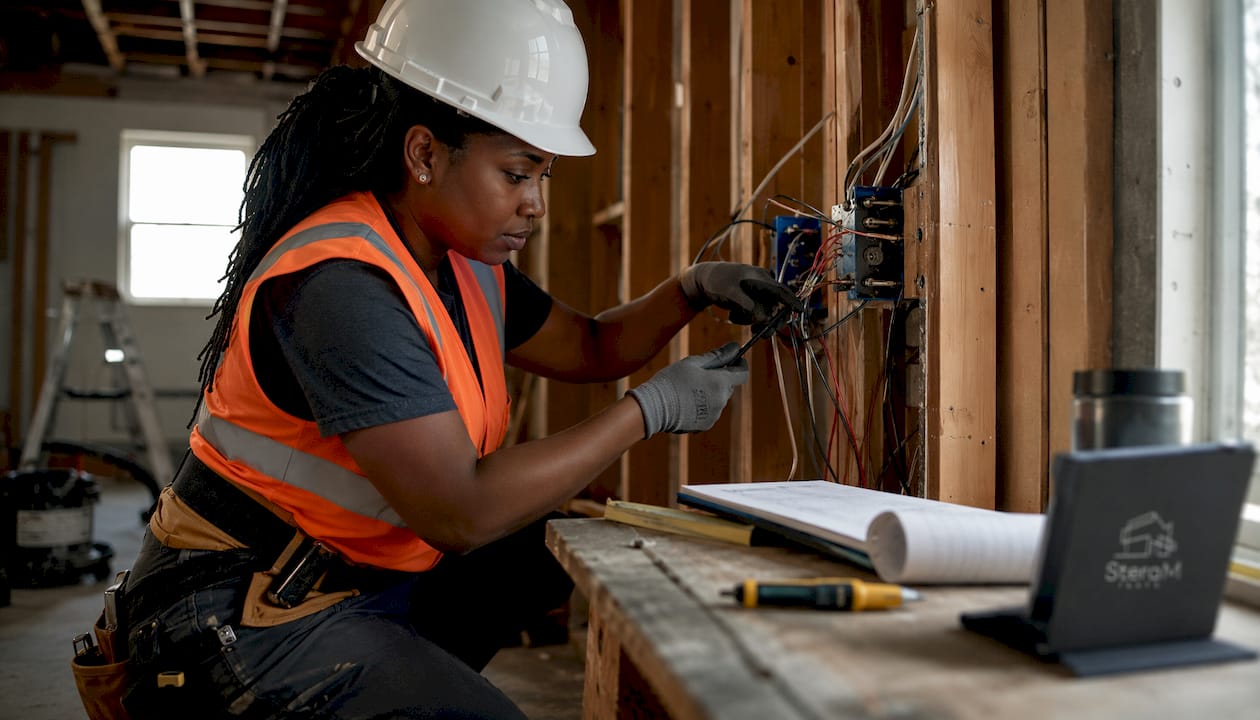
Beyond insurance, the permit and inspection process itself is a safety mechanism. Permit review lets building officials evaluate life-safety features, including structural connections, fire blocking, and electrical grounding, before work gets covered by drywall. Once those surfaces are closed, a hidden defect can go undetected for years until it causes a fire, a collapse, or a carbon monoxide incident.
Key safety and liability risks of unlicensed or unpermitted work:
- Insurance denial: unpermitted work can void coverage for related claims entirely
- Personal liability for contractor injuries on your property
- Structural failures from work that was never inspected
- Fire hazards from non-code-compliant electrical installations
- Difficulty selling or refinancing, since lenders and buyers routinely flag unpermitted additions
The inspection gap is where most homeowner losses originate. Work that looks fine on the surface can have concealed defects that only a licensed inspector would catch at the right construction stage.
Pulling a permit also triggers current smoke and carbon monoxide alarm retrofit requirements in most jurisdictions. That means a kitchen remodel can legally require you to upgrade alarms throughout the house. Annoying? Maybe. But it is the kind of safety net that saves lives.
How do you verify a contractor’s license before hiring?
Relying on a contractor’s word is not enough. Licenses expire, get suspended, or get revoked after disciplinary action, and a contractor who was licensed last year may not be today. The California Contractors State License Board (CSLB), for example, maintains a public license verification portal where you can confirm license status, expiration date, and any disciplinary history in under two minutes. Most states have equivalent tools.
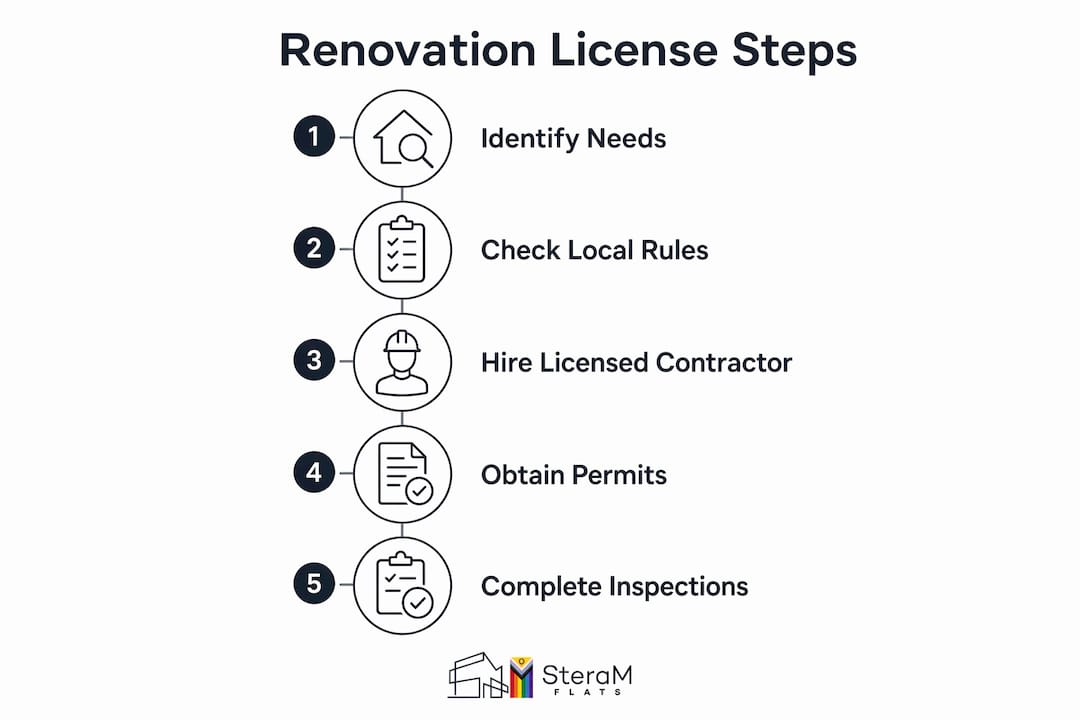
Steps to verify a contractor’s license:
- Ask the contractor for their license number and the issuing state or local board.
- Go directly to the official licensing board website and search by name or number.
- Confirm the license is active, covers the type of work you need, and has no open complaints or suspensions.
- Request a certificate of insurance for both general liability and workers’ compensation, then call the insurer to confirm the policy is current.
- Cross-check the contractor’s business name against state business registration records.
Red flags that should stop you from signing a contract:
- Refuses to pull permits, claiming it will “speed things up” or save you money
- Cannot provide a license number or asks you to pull the permit yourself
- Offers a price dramatically below other bids with no clear explanation
- Requests full payment upfront before any work begins
- Has no verifiable address or business history
References matter too, but they are not a substitute for license verification. A contractor can have satisfied customers and still be operating without proper coverage. Use references to evaluate quality and communication; use the licensing board to evaluate legal standing.

EPA lead rules and 2026 permit updates you need to know
If your home was built before 1978, federal law adds another layer to property renovation compliance. The EPA’s Lead Renovation, Repair and Painting Rule requires that any contractor paid to disturb painted surfaces in pre-1978 residences or child-occupied facilities must be certified in lead-safe work practices. This applies to all firms, including sole proprietors. The rule covers renovation, repair, and painting projects that disturb painted surfaces above a certain regulated threshold.
What the EPA RRP Rule covers in 2026:
- All paid contractors working in pre-1978 homes, childcare facilities, and preschools
- Firms must be EPA-certified; individual workers must be trained by a certified renovator
- Landlords and property managers who perform this work themselves must also comply
- House flippers who renovate and resell are covered, even if they do the work personally
- Homeowners doing their own renovations in their own primary residence are generally exempt
The exemption for owner-occupants is real but narrow. If you rent any part of your home, operate a childcare business from it, or buy and flip properties, the RRP Rule applies to you fully.
Permit triggers that apply broadly across U.S. jurisdictions in 2026:
- Structural modifications: walls, foundations, load-bearing elements
- Electrical system changes beyond like-for-like fixture replacement
- Plumbing and gas line work
- HVAC and mechanical system alterations
- Any addition that changes the building’s footprint or square footage
Failing to obtain required permits can result in stop-work orders, daily fines, and mandatory demolition of non-compliant work in extreme cases. Local AHJs retain the authority to enforce these rules and can require destructive inspection of completed work if permits were skipped. As noted in the retroactive permitting section above, that process is expensive and invasive by design.
If you own a pre-1978 property and are planning any paid renovation work, verify your contractor’s EPA RRP certification before work begins. The EPA maintains a searchable database of certified firms at epa.gov/lead.
The AHJ in your jurisdiction may also impose requirements beyond federal minimums. Some municipalities require permits for work that state code exempts, and local amendments to the IRC can expand or restrict what counts as a regulated system change. The only way to know for certain is to contact your local building department directly before any work starts.
Working with Steramflats on renovation and property compliance
Navigating licensing requirements, permit processes, and contractor vetting is genuinely complex, especially for investment properties or homes in multiple jurisdictions. Steramflats brings hands-on experience in real estate project management to help property owners handle the legal and procedural side of renovations without the guesswork.

Whether you are preparing a property for sale, upgrading a rental unit, or managing a renovation from a distance, Steramflats can guide you through the compliance steps that protect your investment. Explore property management best practices or connect directly through the Steramflats platform to get started.
Key Takeaways
Licenses and permits are not bureaucratic obstacles. They are the legal and safety infrastructure that keeps renovation work from becoming a financial and physical liability.
| Point | Details |
|---|---|
| Licenses authorize and verify | A contractor’s license confirms legal standing, competency, and insurance coverage before work begins. |
| Permits trigger inspections | Structural, electrical, plumbing, and mechanical work requires permits that mandate official inspections at key stages. |
| Unpermitted work voids insurance | Homeowner insurance claims tied to unpermitted renovations are routinely denied, leaving owners personally exposed. |
| EPA RRP certification is federal law | Paid contractors disturbing paint in pre-1978 homes must hold EPA lead-safe certification under the RRP Rule. |
| Retroactive permits cost more | Skipping permits upfront often requires opening finished walls for inspection later, at significantly higher cost and disruption. |