Buying property in Spain is a structured, achievable process that any international buyer can complete with the right legal preparation, financial planning, and local guidance. The formal term for the transaction is compraventa inmobiliaria, and it follows a sequence of legal milestones that differ significantly from US or UK systems. This guide covers every critical stage: obtaining your NIE number, securing financing, navigating contracts, and avoiding the mistakes that cost buyers time and money. Whether you are purchasing a vacation home on the Costa del Sol or building a rental portfolio in Mallorca, the steps are the same.
What legal prerequisites must you fulfill before buying property in spain?
Every foreign buyer must complete several administrative requirements before any property transaction can proceed. Skipping these steps does not just delay your purchase. It can invalidate contracts and freeze bank transfers.
The NIE number: your first priority
The NIE (Número de Identificación de Extranjero) is the foreign identification number Spain requires for all property purchases, tax payments, and bank account openings. All foreign buyers must obtain a NIE before signing any binding contract, and the process takes 1–4 weeks. Start this application the moment you decide to buy, not after you find a property.
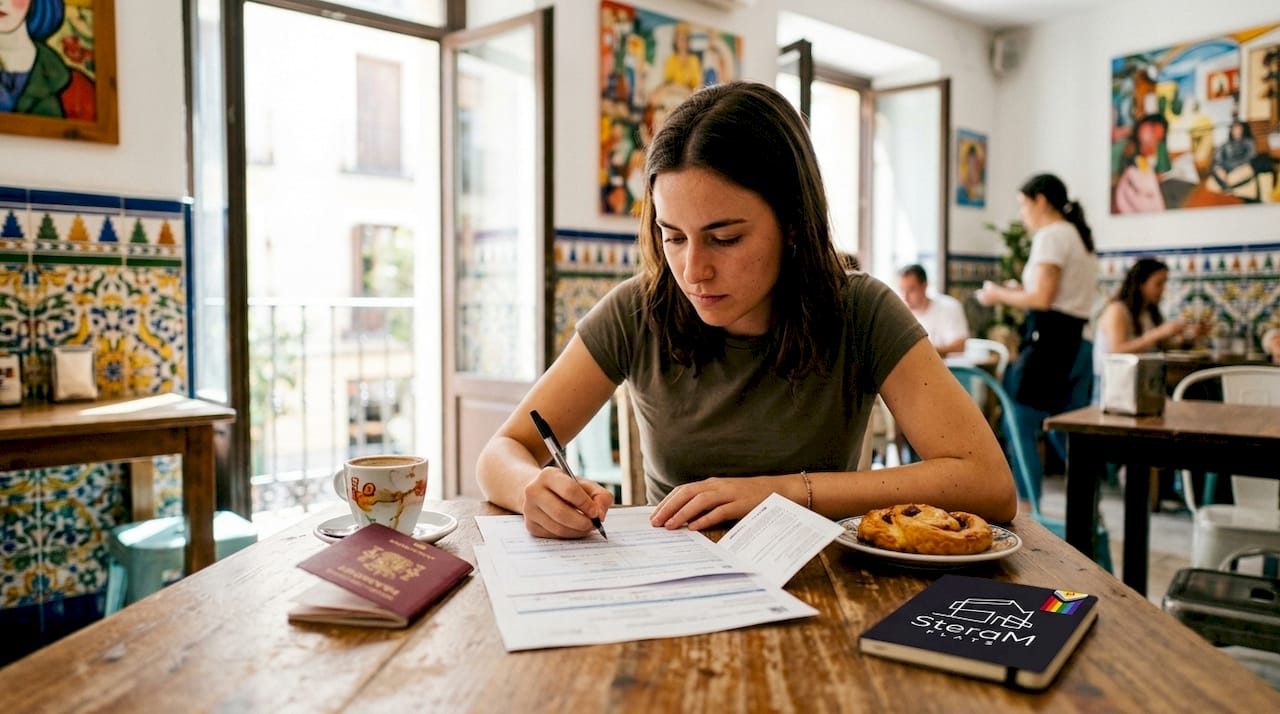
You can apply for your NIE at a Spanish consulate in the US or in person at a Spanish National Police station. Many buyers use a local lawyer to handle this by power of attorney, which saves a trip abroad.
Opening a spanish bank account
A Spanish bank account is not optional. Mortgage payments, utility transfers, and property taxes all require a local account. Banks like Santander, BBVA, and CaixaBank all offer non-resident accounts with standard documentation: passport, proof of address, and your NIE.
Why you need independent legal counsel
The Spanish buying process differs substantially from US and UK systems, making independent legal counsel non-negotiable. Your lawyer checks ownership records, outstanding debts on the property, planning licenses, and community fees. They also handle anti-money laundering (AML) compliance, which requires documented proof of where your purchase funds originated. Prepare this documentation months in advance. Strict AML compliance means large cash deposits without documented origins can trigger bank freezes that derail your purchase.
| Prerequisite | Purpose | Typical Timeline |
|---|---|---|
| NIE Number | Required for all legal and financial transactions | 1–4 weeks |
| Spanish Bank Account | Needed for mortgage payments and taxes | 1–2 weeks |
| Independent Lawyer | Legal due diligence and contract review | Engage immediately |
| Fund Origin Documentation | AML compliance for bank and notary | Prepare 2–3 months early |
Pro Tip: Hire a lawyer who specializes in Spanish property law and is independent from your real estate agent. Shared representation creates conflicts of interest that rarely favor the buyer. Steramflats can connect you with vetted legal professionals in southern Spain.
How can you finance real estate in spain as a foreign buyer?
Financing a Spanish property purchase as a non-resident requires more cash upfront than most buyers expect. Understanding the numbers before you search for properties prevents serious disappointment later.
Mortgage loan-to-value limits for non-residents
Spanish banks cap non-resident mortgages at 60–70% loan-to-value, meaning you must fund 30–40% as a down payment. Add the 10–15% in taxes and fees required on top of the purchase price, and your total cash reserve requirement reaches 40–55% of the property value. On a €300,000 apartment, that means having €120,000–€165,000 in liquid funds before you apply.
The valuation gap problem
The bank orders an independent property valuation called a tasación. This figure often comes in 5–10% below the agreed purchase price. The bank lends against the lower of the two figures, so the buyer must cover the shortfall in cash. Budget for this gap from day one.
The 35% debt-to-income rule
Spanish banks apply a strict 35% debt-to-income ratio that counts all your global debts, including car loans, student debt, and credit cards in the US. This surprises most international buyers and is the single most common reason mortgage applications fail. Pay down existing debts before applying.
Here are the steps to secure financing for a Spanish property purchase:
- Calculate your total budget. Add purchase price plus 40–55% for down payment, taxes, and fees.
- Check your global debt-to-income ratio. Total monthly debt payments must stay under 35% of gross income.
- Gather financial documents. Banks require 2–3 years of tax returns, pay stubs or business accounts, and bank statements.
- Get a mortgage pre-approval. Approach Spanish banks or a specialist international mortgage broker before making offers.
- Review the FEIN document. Banks must provide the European Standardized Information Sheet at least 10 days before mortgage signing, giving you time to review all terms.
Pro Tip: Since 2019, Spanish banks cover most mortgage setup costs including notary, registry, and administration fees. The buyer’s responsibility is property purchase taxes. Confirm this split in writing with your bank before signing.
What are the critical steps in the property purchase process?
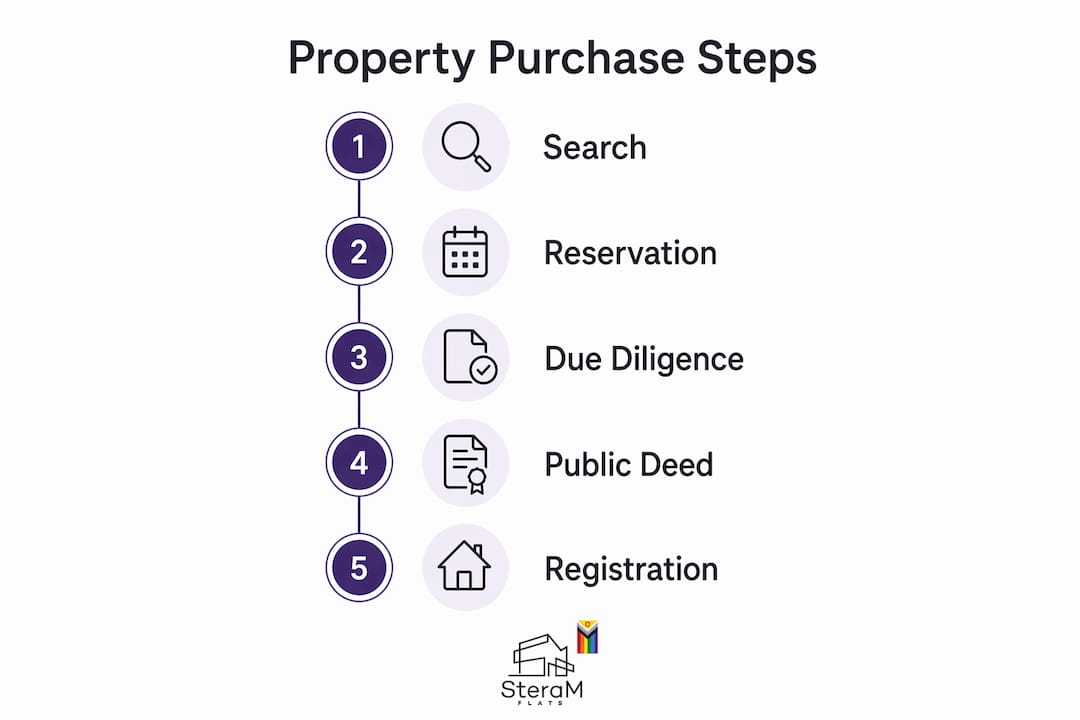
The Spanish property purchase follows a defined sequence. Each step has legal weight, so understanding what you are signing at every stage protects your deposit and your investment.
Searching for properties and setting a realistic budget
Start your property search with a clear budget that already accounts for the full 40–55% cash requirement. Focus your search on regions that match your goals. Costa del Sol, Mallorca, and Costa Blanca consistently show strong demand from both lifestyle buyers and investors. Use a foreign buyer’s property guide to understand what to look for in each micro-market.
The reservation contract and deposit
Once you agree on a price, you sign a contrato de arras, the deposit contract that legally binds both buyer and seller. This contract typically requires a deposit of 10% of the purchase price. If the buyer withdraws, they lose the deposit. If the seller withdraws, they must return double the deposit. Your lawyer must review this document before you sign.
Due diligence: what your lawyer checks
Your lawyer orders a nota simple from the Land Registry to confirm ownership and check for mortgages, liens, or unpaid community fees on the property. They also verify planning licenses, building permits, and that the property matches its registered description. Skipping this step is the most expensive mistake a buyer can make.
Signing the public deed at the notary
The escritura pública is the notarial deed that formally transfers ownership. Both buyer and seller sign in front of a Spanish notary. If you are financing the purchase, you sign two separate deeds at the same appointment: the property purchase deed and the mortgage deed. The role of the notary in Spain is to authenticate the transaction, not to advise either party.
| Stage | Resale Property | Off-Plan Property |
|---|---|---|
| Reservation to completion | 6–10 weeks | 18–36 months |
| Deposit contract | Contrato de arras, 10% deposit | Stage payments per build schedule |
| Key risk | Hidden debts or title issues | Developer insolvency or delays |
| Legal registration | Immediate after signing | After construction certificate issued |
Pro Tip: For off-plan purchases, your lawyer must verify that the developer holds a bank guarantee protecting your stage payments. Without this guarantee, your deposits are at risk if the developer fails to complete.
What common pitfalls should you avoid when buying property in spain?
Most costly mistakes in Spanish property purchases are predictable and preventable. Here are the five that trip up international buyers most often:
- Underestimating total costs. Buyers focus on the purchase price and forget the 10–15% in taxes and fees. Budget the full amount before you start searching.
- Skipping independent legal review. Using the seller’s lawyer or no lawyer at all leaves you exposed to title defects, undisclosed debts, and invalid contracts.
- Ignoring the valuation gap. The bank’s tasación often comes in below the agreed price. Have extra cash available to cover the shortfall or your mortgage falls short.
- Failing the DTI check. International buyers with car loans, mortgages, or student debt in their home country frequently hit the 35% global debt-to-income ceiling. Address this before applying.
- Delaying AML documentation. Banks require months of bank statements showing the origin of your funds. Starting this process late can freeze your transaction at the worst possible moment.
“The buyers who complete smoothly are the ones who treat legal and financial preparation as the first phase of the purchase, not an afterthought. Every shortcut taken at the start costs double at the finish.”
Why invest in spanish real estate today?
Spain is Southern Europe’s top property investment destination in 2026, driven by strong economic growth, record tourism demand, and a persistent housing supply shortage. That combination pushes prices upward and keeps rental yields healthy, particularly in coastal and urban markets.
Costa del Sol, Mallorca, and Costa Blanca attract the highest concentration of international buyers. These markets benefit from year-round tourism, strong short-term rental income potential, and consistent demand from northern European and American buyers. Strong tourism and international investment create a property market where well-located assets hold value even during broader economic slowdowns.
Spain also offers a lifestyle premium that few European markets match: climate, infrastructure, healthcare, and connectivity. For buyers comparing European options, Spain consistently outperforms Portugal, Italy, and Greece on the combination of market liquidity and lifestyle quality. The 2026 investor roadmap from Steramflats breaks down the regional opportunities in detail.
Pro Tip: Match your investment goal to the micro-market before you search. Torremolinos and Benalmádena on the Costa del Sol deliver strong short-term rental yields. Marbella and Estepona attract higher-end buyers seeking capital appreciation. These are different strategies requiring different property types and price points.
Key takeaways
Buying property in Spain requires early legal preparation, sufficient cash reserves of 40–55% of the purchase price, and independent legal counsel at every stage of the transaction.
| Point | Details |
|---|---|
| NIE number is mandatory | Apply 1–4 weeks before any contract signing; use a lawyer by power of attorney if needed. |
| Cash reserves of 40–55% required | Non-resident mortgages cap at 60–70% LTV, and taxes add another 10–15% on top. |
| 35% DTI rule counts global debts | Pay down international loans before applying to avoid mortgage rejection. |
| Contrato de arras is legally binding | A 10% deposit locks both parties; losing it or doubling it is the legal consequence of withdrawal. |
| Independent legal counsel is non-negotiable | Your lawyer checks title, debts, licenses, and AML compliance before you commit funds. |
What i’ve learned watching international buyers navigate spain’s market
The buyers who struggle most are not the ones who lack money. They are the ones who treat Spain like a familiar market and skip the steps that feel bureaucratic. The NIE application feels like paperwork. The AML documentation feels excessive. The independent lawyer feels like an extra cost. Every one of those “optional” steps has a story behind it where a buyer who skipped it lost their deposit, their mortgage, or their property.
The 35% global debt-to-income rule is the insight I share most often with American buyers. They arrive with solid incomes and good credit scores, and they genuinely cannot understand why a Spanish bank is declining them. The answer is always the same: a car payment, a student loan, and a US mortgage already consume 38% of their gross income before the Spanish mortgage is even calculated. Addressing this before the search begins changes everything.
One more thing worth saying directly: the Spanish market in 2026 is not a buyer’s market. Supply is tight, demand from international buyers is high, and well-priced properties in Costa del Sol and Mallorca move fast. Buyers who arrive prepared, with NIE in hand, financing pre-approved, and a lawyer already engaged, are the ones who close. Buyers who arrive enthusiastic but unprepared watch properties sell to someone else while they sort out paperwork.
Start the preparation before you fall in love with a property. The process rewards the organized.
— YellowRock
How Steramflats supports your spanish property purchase
Steramflats operates across southern Spain with a focus on property sales, rental management, and full transaction support for international buyers. Whether you are searching for a residential home in Torremolinos or an investment property on the Costa del Sol, the team handles property search, legal coordination, valuation, and licensing from start to finish.

Steramflats also manages short-term and long-term rentals, making it straightforward to generate income from your property after purchase. If you are ready to list a property or explore available listings, visit the Steramflats property platform to get started. For a full overview of available vacation rental and real estate services, the Steramflats team is ready to guide you through every step.
FAQ
What is the NIE number and why do i need it?
The NIE (Número de Identificación de Extranjero) is a mandatory foreign identification number required for all property purchases, tax payments, and bank account openings in Spain. The application process takes 1–4 weeks and must be completed before signing any binding contract.
How much cash do i need to buy property in spain as a foreigner?
Non-resident buyers need total cash reserves of 40–55% of the purchase price. This covers the 30–40% down payment required by Spanish banks plus 10–15% for property transfer tax, notary fees, and registration costs.
What is the contrato de arras?
The contrato de arras is a legally binding deposit contract signed after agreeing on a purchase price. It typically requires a 10% deposit and commits both buyer and seller to the transaction, with financial penalties for either party who withdraws.
How long does buying property in spain take?
A resale property purchase typically completes in 6–10 weeks from reservation to signing. Off-plan purchases take significantly longer, ranging from 18–36 months depending on the construction timeline.
Do i need a lawyer to buy property in spain?
Independent legal counsel is required in practice, even if not legally mandated. Your lawyer verifies title, checks for debts and liens, reviews contracts, and handles AML compliance documentation, all of which protect your deposit and your investment.