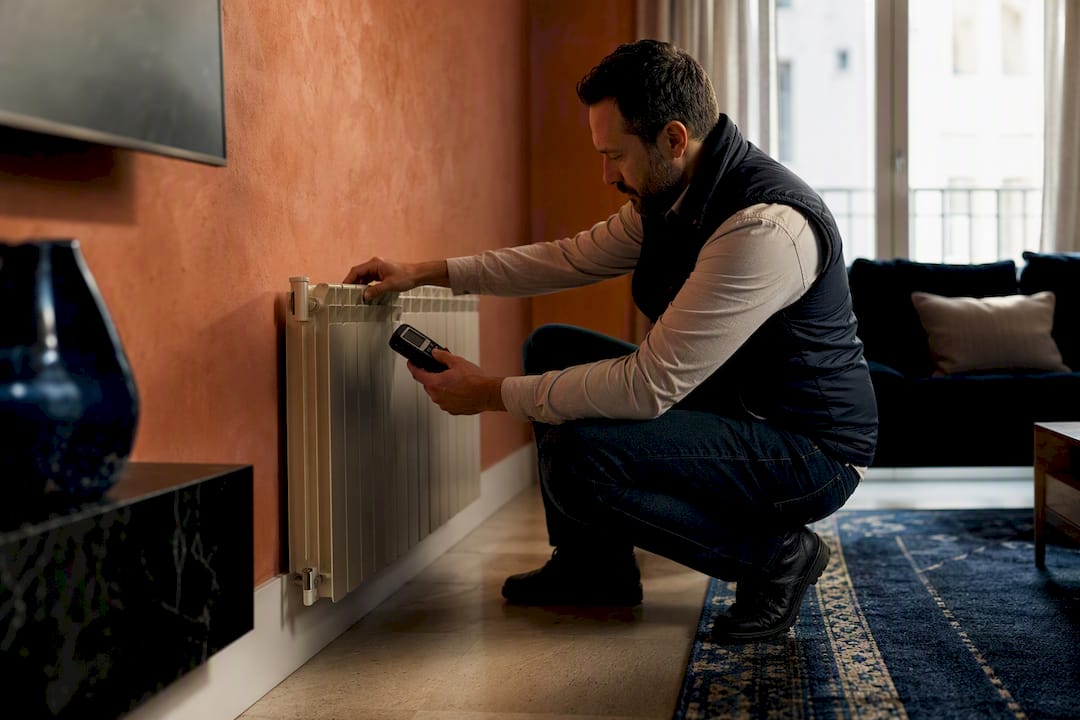
Yes, you must present a registered energy performance certificate to sell a home in Spain, and the seller is legally responsible for getting it. Real Decreto 390/2021 requires the document at signing, and a notary who doesn’t see a valid, registered certificate will not authorize the sale. Commission it early, from an authorized technician, and confirm it’s registered before you list the property.
TL;DR:
- The energy performance certificate must be registered with the regional authority before sale signing, or the notary will refuse to authorize the transaction.
- Obtaining the certificate involves hiring an authorized technician, preparing documentation, and submitting the registry reference, which should be confirmed before payment.
- A valid certificate is typically valid for ten years, but a G-rated property may require renewal after five years or following major renovations.
- Buyers regard the energy rating as a negotiation factor, so sellers should disclose it early and highlight strong grades in listings.
- Coordinating the certificate through a full-service agency like Steramflats can prevent delays and ensure the registration process is completed before signing.
Table of Contents
- What Is a Certificado Energético and What Does It Cover?
- The Legal Requirement Behind Every Sale in Spain
- How to Get Your Certificate Before Signing Day
- What It Costs and How Long It Takes
- How Your Energy Rating Shapes the Sale
- How Long Your Certificate Stays Valid
- Mistakes That Delay or Void Your Certificate
- How Steramflats Removes the Guesswork for Sellers
- Why Certificates Get Rejected and How to Avoid It
- Boosting Your Rating Before the Technician Arrives
- When to Order Your Certificate During the Sale
- Get Your Certificate Handled Without the Back and Forth
- Where to Verify the Rules Yourself
- Sources
What Is a Certificado Energético and What Does It Cover?
A certificado energético venta is a technical report that scores how much energy a home consumes and how much CO2 it produces, then assigns a letter grade from A (most efficient) to G (least efficient). It’s not a cosmetic add-on to a listing. It’s a legal document with real technical content behind it.
The technician who visits your property assesses several fixed elements:
- Heating and hot water systems, including their age and efficiency
- Cooling and ventilation setups, where they exist
- Insulation quality in walls, roof, and windows
- Lighting fixtures in shared or commercial spaces, when relevant
The final report includes the calculation method used, the resulting A to G rating with estimated annual energy consumption and CO2 emissions, and a set of recommended improvements the owner could make to raise the score. Under MITECO’s guidance, that energy label also has to appear in any advertisement or listing offering the property for sale, not just in the paperwork handed to the buyer.
The Legal Requirement Behind Every Sale in Spain
The rule isn’t a recommendation from an estate agent trying to sound thorough. It’s written into national law.
Real Decreto 390/2021 establishes the basic procedure for certifying the energy performance of buildings and makes registration with the competent regional authority a condition of the certificate’s validity for sale or rental transactions.
That single requirement, laid out in RD 390/2021, creates three concrete obligations for you as the seller. First, you register the certificate with your Autonomous Community once the technician issues it, not just have it drafted. Second, you disclose the energy label in every property advertisement, print or online, and skipping this can trigger administrative fines. Third, you hand the registered certificate to the notary before signing, because legal-practice guidance from Baker McKenzie confirms notaries in Spain cannot authorize a deed of sale without it. Miss any one of these and the transaction stalls, sometimes on the day you were meant to sign.
How to Get Your Certificate Before Signing Day
Getting the certificate right the first time saves you a second visit and a second bill. Follow this order:
- Hire an authorized technician. Look for an architect, technical architect, or engineer registered with their professional college, and ask directly whether they handle registration or leave that step to you.
- Prep the property. Have floor plans, utility bills, and access to the boiler room, meters, and any plant equipment ready before the technician arrives.
- Let the technician inspect. They’ll measure areas, check the building envelope, log heating and cooling systems, and photograph anything relevant to the rating.
- Wait for the report and XML file. The technician calculates the rating using approved software and generates both the printed report and a registry ready electronic file.
- Confirm registration. The technician or your agent submits the file to the Autonomous Community registry; some regions enforce a one month submission window after the report is signed, per the certificate model published by MITECO.
Pro Tip: Ask for the registration reference number in writing before you pay the final invoice. A signed report that never gets submitted to the registry is worthless at the notary’s desk.
What It Costs and How Long It Takes
Prices swing based on property size, building type, region, and how fast you need the report turned around. Smaller apartments in a standard block cost less than a detached house with multiple heating zones.
- Studios and small apartments typically sit at the low end of the price range
- Larger homes or properties with complex systems cost more
- Rush jobs carry a premium over standard scheduling
According to BBVA’s consumer guidance, delivery from inspection to a registered certificate often takes between 24 and 72 hours once the technician has visited, though this depends on the region’s registry processing speed and the technician’s own workload. Always ask for an itemized quote that separates the inspection fee from the registration fee, since some pricing guides show sellers getting quoted for the report alone, with registration billed later as a surprise.
How Your Energy Rating Shapes the Sale
Buyers read the letter grade the way they read a price tag. A property rated A or B signals lower running costs, and that’s a legitimate talking point when you set your asking price. A rating of E, F, or G doesn’t sink a sale, but it does invite negotiation.
- Highlight a strong rating explicitly in your listing description, not just in the mandatory label
- If your rating is low, be upfront about it rather than letting a buyer discover it at viewing stage
- Disclosing early tends to keep negotiations smoother than surprises late in the process
- Remember the label itself is a legal requirement in every ad, regardless of how flattering the grade is
How Long Your Certificate Stays Valid
Most certificates are valid for 10 years from the registration date. The exception is a G rating, which BBVA notes carries only a 5 year validity window. Major renovations, like replacing the heating system or re-insulating the envelope, can also require a fresh certificate even before expiry. Check your certificate’s issue date as soon as you decide to sell, not after you’ve already found a buyer.
Mistakes That Delay or Void Your Certificate
Most problems trace back to a handful of avoidable errors.
- Accepting an unregistered report. A technician’s signature alone isn’t enough. The certificate needs its registry reference to be valid at signing.
- Vague quotes. If a quote doesn’t clearly separate the technician’s fee, the registration fee, and the college membership number, ask before you commit.
- Unrealistic turnaround promises. Anyone promising same-day everything, inspection through registration, without explaining the regional registry’s actual processing time is worth double-checking.
Ignore these and you risk advertising fines for missing the energy label, administrative sanctions for noncompliance, or, worst case, a notary who refuses to authorize the sale on signing day because the certificate isn’t on file.
How Steramflats Removes the Guesswork for Sellers
Steramflats operates as a full real estate agency and property management platform across southern Spain, and document coordination sits at the core of that work. Sellers rarely want to chase down a technician, track a registration number, and hope it lands on the notary’s desk in time.
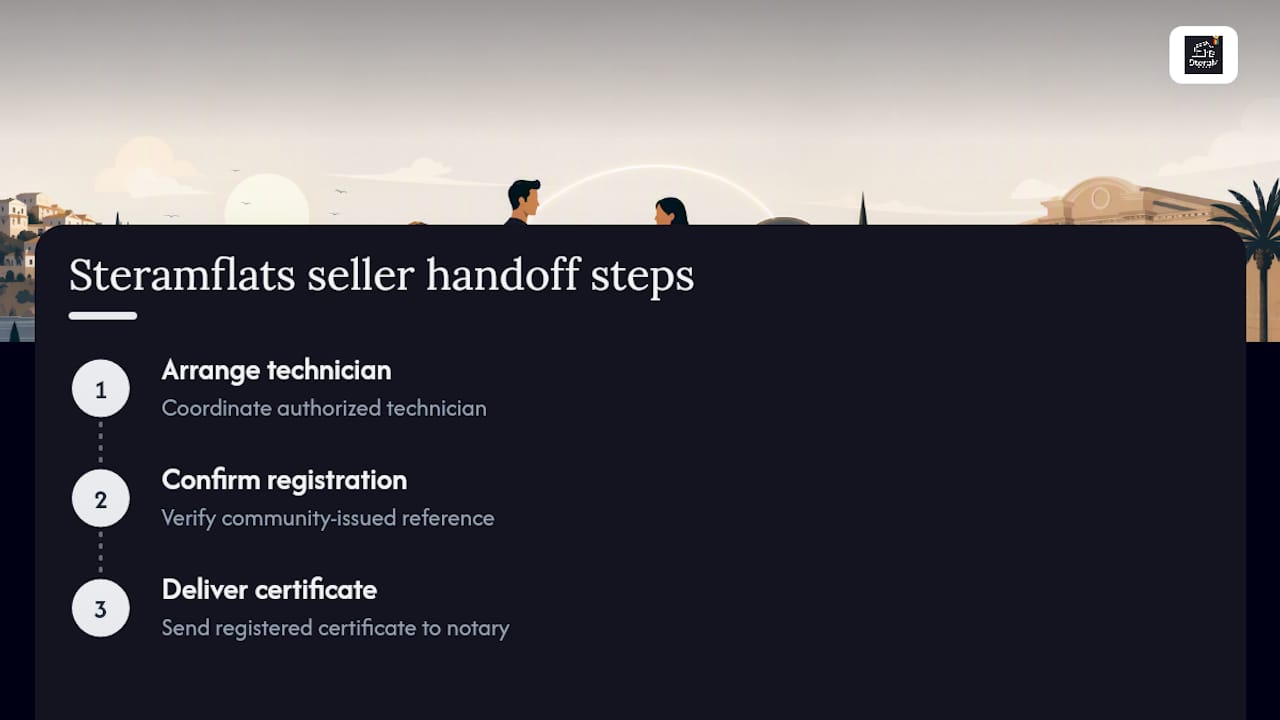
Steramflats coordinates the authorized technician, confirms the registration reference has actually been issued by the Autonomous Community, and delivers the registered certificate directly into the sale file the notary reviews. That handoff is where most delays happen when sellers manage the process alone, and it’s the piece Steramflats builds into its broader document coordination work for property sales across the region.
Why Certificates Get Rejected and How to Avoid It
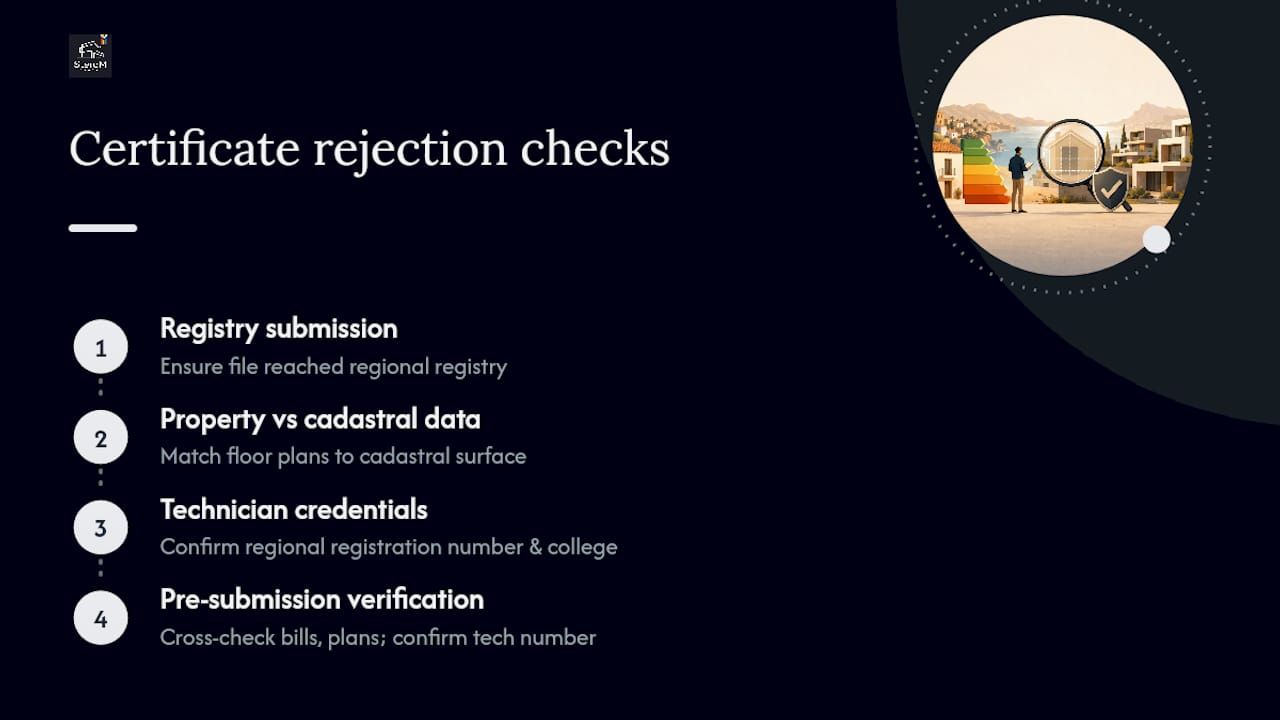
A certificate can be technically issued and still fail you at the notary’s office. The most common reason is incomplete registration: the technician signs the report, but the file never actually reaches the Autonomous Community registry, or it sits in a queue past the region’s submission window. Real Decreto 390/2021 treats registration as a separate legal step from the technician’s calculation, and skipping it invalidates the certificate for sale purposes even though the paperwork looks finished.
A second common failure point is mismatched property data. If the floor plan the technician used doesn’t match the registered cadastral surface, or if a recent renovation changed the heating system without updating the report, the registry can bounce the submission back for correction. This is especially common in older buildings where original blueprints don’t reflect decades of small alterations.
Third, some certificates get flagged because the technician wasn’t properly credentialed for the region where the property sits, or didn’t hold current college membership at the time of inspection. Always confirm your technician’s registration number before the visit, not after you’ve paid.
The fix for all three is the same: verify registration happened, not just that a report exists, and cross check the technician’s data against your actual utility bills and floor plans before the inspection. Catching a mismatch before submission costs you five minutes. Catching it after rejection costs you a second technician visit and a delayed closing date.
Boosting Your Rating Before the Technician Arrives
You don’t need a full renovation to move your rating up a letter or two, and a better grade genuinely helps at negotiation time. Small, targeted fixes often move the needle more than owners expect.
Start with lighting and insulation, the cheapest levers available. Swapping incandescent or older fluorescent fixtures for LED lighting in common areas takes an afternoon and shows up in the calculation. Sealing obvious draft points around windows and doors, even with basic weatherstripping, reduces the heat loss the technician’s software accounts for.
Heating system age matters more than most sellers realize. A boiler installed 20 years ago scores worse than a modern condensing unit, even if both work fine day to day. If a system replacement isn’t in the budget, having recent maintenance records ready at least demonstrates the unit is running at rated efficiency rather than degraded performance.
Window glazing is a bigger investment but a real lever if your property has original single-pane windows. Double glazing shows up directly in the envelope assessment and can shift a rating from E to D or better in older buildings.
If you’re unsure which upgrade gives the best return before your inspection, ask your technician for a quick pre-visit consultation. Many will flag the one or two changes likely to move your letter grade for the least cost, which is worth knowing before you schedule the official visit rather than after you’ve already paid for a G rated report.
When to Order Your Certificate During the Sale
Order your certificate before you list, not after you’ve found a buyer. Waiting until you’ve signed arras with a buyer means the registration clock is now racing your closing date, and any registry delay becomes their problem and yours.
Full-service agencies bundle the certificate alongside other mandatory sale documents, cadastral checks, deed copies, mortgage payoff figures, so nothing arrives at the notary’s office piecemeal. If you’re coordinating this yourself, hand your technician one simple checklist on first contact: confirm college membership, confirm registration is included in the quote, and confirm the expected registry reference delivery date in writing.
— YellowRock
Get Your Certificate Handled Without the Back and Forth
Steramflats is the alternative to chasing technicians and registry updates yourself, sellers who work through the agency get the certificate sourced, tracked, and delivered to the notary as part of the same document package that covers the rest of the sale.

That coordination matters most in the final weeks before signing, when a missing registration reference is the one thing that can push back your closing date. Steramflats sources the authorized technician, confirms the registry submission actually went through, and adds the certificate to your property marketing checklist so nothing gets missed between listing and notary. If you’re preparing to sell and want the paperwork side handled while you focus on the buyer, request a quote through Steramflats and get your certificate timeline mapped out from the first call.
Where to Verify the Rules Yourself
Don’t take any guide’s word for it, including this one. Check these directly:
- The Geoportal de Certificados de Eficiencia Energética lets you search registered certificates by address to confirm a property’s status.
- Partner resource Fiesta Properties’ overview walks through the practical steps of obtaining a certificate as a property owner in Spain.