Buying property in Spain without a lawyer feels tempting — the agent is friendly, the notary seems official, and the whole process looks managed. But understanding why get legal support for real estate in Spain can be the difference between a sound investment and a costly mistake. Hidden liens, illegal constructions, unpaid community fees, and zoning violations are not rare edge cases. They are common enough that legal professionals who specialize in Spanish property transactions spend most of their working hours untangling exactly these problems for buyers who thought the process was covered.
Table of Contents
- Why legal support in Spanish real estate transactions matters
- Key legal risks in Spanish property transactions and how lawyers mitigate them
- Critical transaction stages for engaging legal support
- Compliance and broader legal advice beyond contracts
- Common misconceptions about legal roles and why relying on notaries or agents isn’t enough
- Our take: legal support is not a cost, it’s what you actually paid for
- Ready to buy property in Spain with confidence?
- Frequently asked questions
Key Takeaways
| Point | Details |
|---|---|
| Legal support essential | Independent legal counsel is critical to avoid risks and secure your property investment in Spain. |
| Early lawyer involvement | Engaging a lawyer before signing contracts or paying deposits protects your money and rights. |
| Notaries not advocates | Notaries formalize deeds but do not check for hidden issues or negotiate protective terms for buyers. |
| Risk due diligence | Lawyers uncover liens, debts, planning issues, and regulatory noncompliance before closing. |
| Avoid conflicts of interest | Use an independent lawyer who works only for you, not one recommended by sellers or agents. |
Why legal support in Spanish real estate transactions matters
To understand the importance of legal help in real estate, start with what each participant in a Spanish property deal actually does for you. The agent finds the property and negotiates the commercial terms. The notary witnesses the deed signing and verifies identities. Neither role involves protecting your legal interests.
That leaves a significant gap. Independent legal support is strongly recommended even though it is not legally required, because lawyers handle due diligence, contract review, and coordinate the key steps between reservation and deed signing. Without that, you are navigating one of Europe’s most complex property markets without a navigator.
What legal counsel specifically covers in Spain:
- Due diligence: Checking title history, outstanding mortgages, liens, and planning status at the Land Registry and Catastro
- Contract review: Analyzing the reservation contract and private purchase agreement before you commit any funds
- Regulatory verification: Confirming the property has proper building licenses and no outstanding fines
- Tax coordination: Advising on transfer taxes, notary fees, and fiscal obligations tied to the purchase
- Post-sale registration: Ensuring property registration in Spain is completed correctly in your name
Each of these tasks requires legal training and authority that agents and notaries simply do not hold.
Key legal risks in Spanish property transactions and how lawyers mitigate them
Hidden risks are where the real cost of skipping legal advice shows up. Spain has had decades of unregulated urban development, particularly on the southern coasts, leaving behind a legacy of properties built without proper licenses or on protected land. Some of these properties cannot be legalized. Buying one means inheriting the problem.
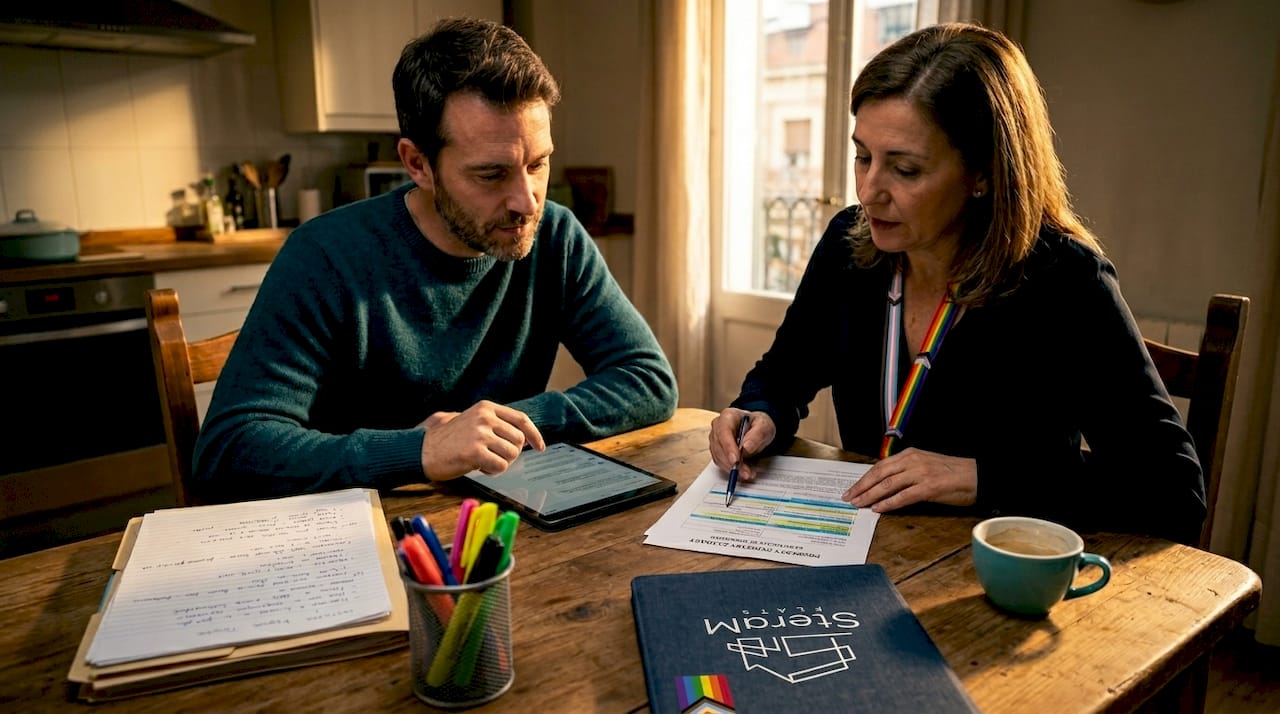
Legal counsel uncovers hidden issues like liens, ownership disputes, easements, and title defects that would cause serious problems after signing, and then negotiates fixes before closing. This is not theoretical caution. It is applied risk management on your behalf.
Common risks lawyers catch during due diligence:
- Outstanding mortgages or charges: Sellers do not always disclose what they owe
- Unpaid community fees: These transfer to the new owner under Spanish law
- Illegal extensions or structures: Extensions built without permits can trigger demolition orders
- Planning violations: Properties in rural zones sometimes violate land-use restrictions
- Multiple ownership claims: Inheritance disputes can leave title genuinely unclear
“A Spanish property can look perfect on the surface and still carry unresolved legal baggage. The Registry entry and the Catastro record often tell different stories, and only a lawyer knows how to read the gap between them.”
Pro Tip: Always ask your lawyer to check both the Land Registry entry and the Catastro record. Discrepancies between the two are common in older Spanish properties and can affect everything from mortgage eligibility to future resale.
For a detailed breakdown of legal title checks in Spain and the associated property tax risks, understanding both before you sign reservation paperwork puts you in a dramatically stronger position.
Critical transaction stages for engaging legal support
Knowing risks is one thing. Knowing when to act is what actually protects your money. Legal counsel is not just useful at the end when you sign the deed. There are three stages where a lawyer’s intervention is non-negotiable.
Before signing the reservation or arras contract. This is the moment most buyers underestimate. The arras contract is legally binding under Spanish law. Once signed, withdrawing without cause costs you your deposit. A lawyer reviews every clause, negotiates withdrawal rights tied to legal search results, and ensures lawyers add protective clauses that make your deposit contingent on clear title and clean searches. Without this, your deposit is at risk the moment you sign.
Before transferring any funds. Between the reservation and the final deed, significant sums move. The full private purchase agreement is signed at this stage, often involving 10 percent of the purchase price. A lawyer confirms due diligence is complete, all searches are clear, and the contract reflects exactly what was agreed. This is when hidden issues discovered during searches can still be used to renegotiate or withdraw.
Coordination with the notary and post-sale registration. Many buyers assume the notary appointment is a formality. It largely is — but only if the legal groundwork before it was done correctly. A lawyer reviews the public deed draft before the appointment, attends or coordinates attendance, and then handles contract negotiation guidance and post-sale registration to ensure title transfers cleanly.
Pro Tip: Engage a lawyer before you even make an offer if you can. Knowing what searches will reveal before you negotiate price gives you real leverage, especially in coastal markets where planning issues are common.
Compliance and broader legal advice beyond contracts
The real estate attorney benefits in Spain extend well past the purchase contract. For investors especially, the regulatory environment around property use can be complex, and getting it wrong has financial consequences.
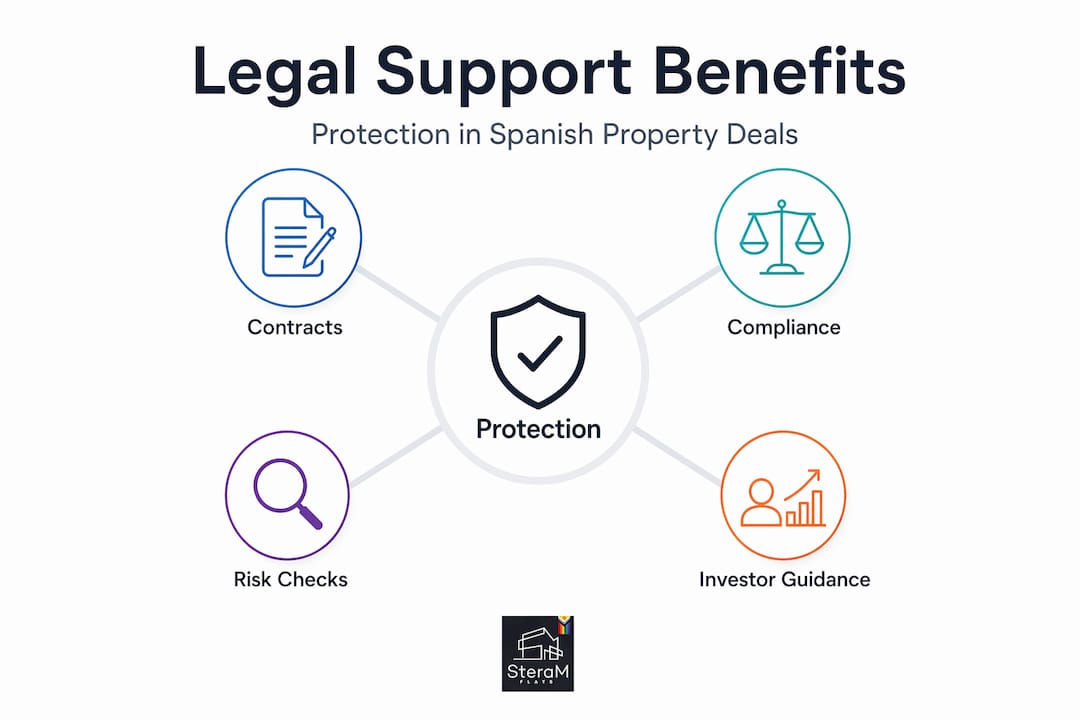
Real estate lawyers advise on land-use, zoning rules, regulatory obligations, and potential contractual liabilities, reducing uncertainty and the risk of disputes after you own the property.
What compliance advice typically covers:
- Municipal urban planning rules: Whether your intended use (short-term rental, commercial, residential) is actually permitted in that zone
- Tourist license requirements: Short-term rental regulations vary by municipality and are enforced with real fines in Andalusia
- Outstanding fiscal obligations: Unpaid IBI (local property tax) and community fees attached to the property
- Building certificate requirements: Older properties sometimes lack a valid habitation certificate, which affects utilities and resale
| Compliance area | Risk without legal advice | How a lawyer helps |
|---|---|---|
| Zoning and land use | Purchasing a property you cannot use as intended | Verifies permitted uses before contracts are signed |
| Tourist rental license | Operating without a license, fines up to €150,000 | Confirms license status and guides application |
| Unpaid IBI or fees | Inheriting previous owner’s debts | Requests official certificates confirming zero balance |
| Building legality | Buying an unlicensed structure | Checks municipal records and planning history |
| Habitation certificate | Unable to connect utilities or sell later | Confirms certificate validity or flags need to obtain one |
For investors planning short-term lettings, understanding Spanish holiday home regulations and working through a rental compliance checklist before purchase saves considerable cost and frustration afterward.
Common misconceptions about legal roles and why relying on notaries or agents isn’t enough
This might be the most important section for foreign buyers, because the misconception here is genuinely expensive when it goes wrong.
Many buyers arrive in Spain assuming the notary plays a protective role similar to a solicitor in the UK or an attorney in the US. That is not how Spanish law works.
“Notaries in Spain formalize the public deed and verify identities, but they do not conduct due diligence or advocate for buyer protection. That role belongs exclusively to an independent lawyer.”
Notaries formalize deeds and verify identities but do not conduct due diligence or negotiation for buyer protection. Their obligation is to the document, not to either party. They will notarize a deed even if the property carries hidden debts or planning violations, as long as the paperwork in front of them is formally correct.
Agents have a different but equally important limitation. They are commercially motivated to close the sale. That is not a criticism — it is their job. But it means their interests and yours are not perfectly aligned, particularly when legal complications threaten the deal timeline. Relying on an agent’s assurance that “everything is fine” is not due diligence.
What only an independent lawyer provides:
- Undivided loyalty to you: No financial incentive from the seller or the transaction closing
- Legal authority: Ability to formally request title documents, planning certificates, and debt clearances
- Negotiating power on legal terms: Agents can negotiate price; lawyers negotiate the clauses that protect you if something goes wrong
- Continuity: A lawyer follows the transaction from reservation through registration, keeping every stage aligned
Understanding property registration explained in this context makes clear why having a single legal representative who tracks the entire process is far safer than relying on multiple parties with different interests.
Our take: legal support is not a cost, it’s what you actually paid for
The framing of legal support as an added expense misses what is really happening. When you budget for a property in Spain, the legal fee (typically 1 to 1.5 percent of the purchase price for a good independent lawyer) is not overhead. It is the cost of actually understanding what you are buying.
We have seen transactions in the Torremolinos and Costa del Sol markets where buyers saved money on legal fees and spent multiples of that amount resolving issues discovered after signing. Illegal terraces. Properties registered at half their actual size. Rental licenses that existed on paper but had been administratively suspended. None of these would have survived a proper due diligence review.
The uncomfortable truth is that the Spanish property market rewards prepared buyers and punishes unprepared ones. Not because sellers are dishonest (most are not), but because the system places very little burden on sellers to disclose problems proactively. The buyer bears responsibility for finding issues before signing. A lawyer is how you fulfill that responsibility.
Independent legal counsel is not a luxury for high-value deals only. It is how you make any deal the right one.
Ready to buy property in Spain with confidence?
Navigating Spanish real estate is genuinely rewarding when you have the right support in place. At Steram Flats, we work with buyers and investors throughout the southern Spain market, connecting them with independent legal guidance, property valuation expertise, and regulatory knowledge built from years of working in this specific market.

Whether you are purchasing your first Spanish home, building a rental portfolio in Torremolinos, or exploring coastal investment opportunities, we can help you understand exactly what you are buying before you commit. Browse our current listings, explore our property investment guidance, and get in touch to talk through your specific situation with people who know this market deeply.
Frequently asked questions
Is hiring a lawyer legally required to buy property in Spain?
Hiring a lawyer is not legally required in Spain, but it is strongly recommended to protect against hidden risks, contract issues, and regulatory complications that can arise in any purchase.
Can a notary protect me from legal issues when buying property in Spain?
No. Notaries formalize deeds and verify identities but do not conduct due diligence or negotiate buyer protections, so they cannot identify or resolve hidden title or planning problems.
What legal checks are done before paying the deposit on a property?
A lawyer adds protective clauses making the deposit contingent on clear legal searches, and reviews title, outstanding liens, planning status, and contract terms before you commit any funds.
Why can’t I rely on the real estate agent’s recommended lawyer?
Agent-recommended lawyers can carry conflicts of interest, since their relationship with the agent may prioritize closing the sale over protecting your specific legal interests as the buyer.