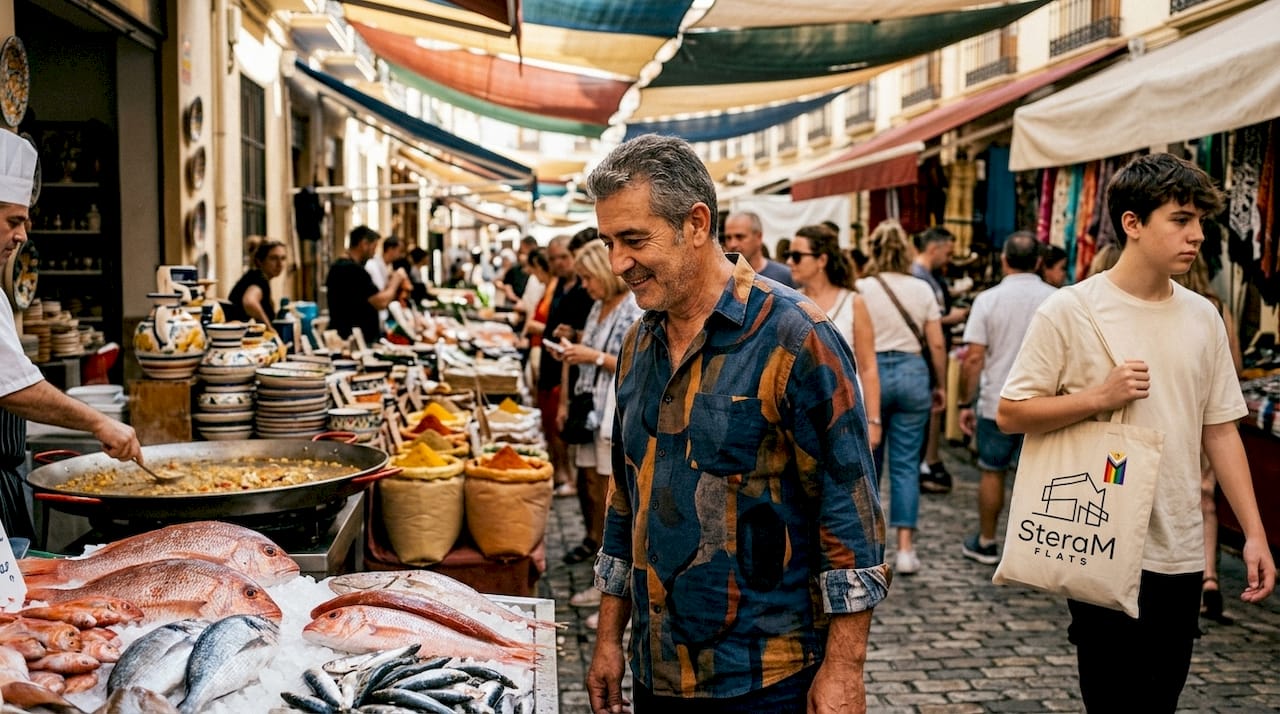
Most visitors to Malaga spend their days on the beach and call it a trip. That’s a shame, because Malaga is one of the oldest continuously inhabited cities in Europe, with more than 2,800 years of layered history sitting right in its center. From Phoenician settlements to Moorish fortresses to the birthplace of Pablo Picasso, this Andalucian port city holds a cultural weight that rivals Barcelona or Seville. If you’re planning a visit, this guide gives you a clear, practical, and genuinely exciting roadmap for experiencing Malaga the way it deserves.
Table of Contents
- Explore Malaga’s must-see historical landmarks
- Immerse yourself in Malaga’s market and food scene
- Museums, art, and Malaga’s creative spirit
- Crafting your perfect Malaga itinerary
- What most Malaga guides miss: Local rhythms and seasonal surprises
- Enhance your stay in Malaga with expert support
- Frequently asked questions
Key Takeaways
| Point | Details |
|---|---|
| Must-see landmarks | The Alcazaba, Gibralfaro Castle, Roman Theatre, Cathedral, and Picasso Museum are essential for any Malaga trip. |
| Market experience | Mercado de Atarazanas gives you a true taste of Malaga’s daily life and culinary scene. |
| Smart itinerary planning | Start with major sights in the morning and use official and crowd-sourced resources to shape your day. |
| Art and culture access | Malaga’s museum scene is vibrant and includes both classic and modern creative venues. |
| Seasonal flexibility | Embrace local rhythms and leave room for spontaneous discovery for the best Malaga experience. |
Explore Malaga’s must-see historical landmarks
Malaga’s historic core is compact enough to walk, but rich enough to fill several days. The key heritage sights include the Alcazaba, the Roman Theatre, Gibralfaro Castle, Malaga Cathedral, and the Picasso Museum area. These are not just tourist checkboxes. Each one tells a distinct chapter of the city’s story, and visiting them in the right order makes the experience far more rewarding.
The Alcazaba is an 11th-century Moorish palace-fortress built on the foundations of an older Roman structure. It rises above the city center with terraced gardens, horseshoe arches, and sweeping views of the port. Just below it, the Roman Theatre dates back to the 1st century BC and was only rediscovered in 1951 during construction work. The contrast between these two layers of history, standing literally on top of each other, is striking and gives you an immediate sense of how many civilizations have called this city home.
Gibralfaro Castle sits higher on the hill above the Alcazaba, connected by a fortified pathway called La Coracha. The views from the top are arguably the best in the city. The Malaga Cathedral, known locally as “La Manquita” (meaning “the one-armed lady”) because one of its towers was never completed, is a Renaissance masterpiece that took nearly 250 years to build. And the Picasso Museum (Museo Picasso Málaga) occupies a 16th-century palace in the historic center, housing more than 200 works from the artist’s career.
First-time visitors consistently anchor their itineraries around these five sites, according to major travel guidebooks covering Malaga. Together, they represent the city’s historical, artistic, and architectural identity in one walkable zone.
| Landmark | Why visit | Best visit time | Ticket basics |
|---|---|---|---|
| Alcazaba | Moorish palace, gardens, city views | 9 AM to 11 AM | Paid, combo tickets available |
| Roman Theatre | Ancient ruins, free museum adjacent | Morning or late afternoon | Free entry |
| Gibralfaro Castle | Panoramic views, military history | Early morning | Paid, combo with Alcazaba |
| Malaga Cathedral | Renaissance architecture, organ concerts | Mid-morning | Paid entry |
| Museo Picasso Málaga | Major Picasso collection, 16th-c. palace | Weekday afternoon | Paid, book online |
Pro Tip: Visit the Alcazaba and Gibralfaro Castle first thing in the morning. By 11 AM, both sites get crowded and the hilltop heat becomes intense, especially from May through September. Buying a combo ticket for both saves money and lets you move between them without stopping at a second ticket window.
If you’re still sorting out where to stay while planning your landmark visits, checking out Malaga vacation rental alternatives can help you find options that put you within easy walking distance of the historic center. Location matters more in Malaga than in most cities because the best sites are all clustered together. You can also find helpful recommendations through Time Out Malaga for updated event listings and seasonal highlights alongside the landmarks.
Immerse yourself in Malaga’s market and food scene
History is one thing. But the real pulse of Malaga beats loudest in its markets. After you’ve walked the ancient stones, head to the Mercado de Atarazanas, which sits in a stunning 14th-century Moorish gateway that was later converted into a market hall. The Atarazanas market is widely recognized as the top authentic local food and market experience in the city, and it earns that reputation every single day.

The building itself is worth seeing. The original Moorish arch at the entrance is one of the best-preserved examples of Islamic architecture in Malaga. Inside, the stained-glass windows cast colorful light over stalls packed with fresh seafood, olives, jamón, local cheeses, and seasonal produce. It’s open Monday through Saturday, and the best time to visit is between 9 AM and 1 PM when the stalls are fully stocked and the energy is at its highest.
What to eat and try at Atarazanas:
- Fresh espetos (sardines grilled on skewers over open fire, a Malaga signature)
- Boquerones (anchovies, served fried or marinated in vinegar)
- Local Malaga sweet wine, known as Moscatel, available at wine stalls
- Ajoblanco (a cold almond and garlic soup, a regional specialty)
- Cured meats, especially chorizo and salchichón from Malaga’s mountain towns
- Seasonal fruit: figs, custard apples (chirimoyas), and avocados from the Axarquía region
Pro Tip: Don’t just walk through the market. Stop at a bar inside the hall and order a small glass of local wine with a tapa. This is how locals use the market, not just as a shopping stop, but as a social ritual. Standing at the bar, watching the vendors work, and eating something fresh is one of the most genuine travel experiences Malaga offers.
Markets like Atarazanas are also a great way to orient yourself to a neighborhood before choosing where to stay. If you want to understand the local rhythm of a specific area, our rental neighborhood tips can help you identify which parts of the city put you closest to the daily life you’re looking for.
Museums, art, and Malaga’s creative spirit
Malaga has quietly built one of the most impressive museum ecosystems of any mid-sized European city. It’s not just about Picasso, though Picasso is absolutely the starting point. Pablo Picasso was born in Malaga in 1881, and the city has honored that legacy with two distinct sites worth visiting.
Casa Natal de Picasso is the house where he was born, now a museum on Plaza de la Merced. It contains early sketches, family photographs, and personal artifacts that give you a surprisingly intimate look at the artist before he became famous. The Picasso and Casa Natal experiences are consistently ranked among the top cultural activities in Malaga by major travel guides, and for good reason. They complement each other well and together take about two to three hours.
Beyond Picasso, Malaga’s museum scene has expanded significantly in recent years. The Centre Pompidou Málaga, a satellite of the famous Paris institution, opened in 2015 and offers rotating exhibitions of modern and contemporary art. The Carmen Thyssen Museum focuses on 19th-century Andalucian painting and is housed in a beautifully restored palace. For something completely different, the Automobile and Fashion Museum (Museo Automovilístico) pairs vintage cars with haute couture in a genuinely surprising combination.
| Museum | Collection focus | Time needed |
|---|---|---|
| Museo Picasso Málaga | Picasso works, 16th-c. palace setting | 1.5 to 2 hours |
| Casa Natal de Picasso | Early life artifacts, personal history | 45 to 60 minutes |
| Centre Pompidou Málaga | Modern and contemporary art | 1 to 2 hours |
| Carmen Thyssen Museum | 19th-century Andalucian painting | 1 to 1.5 hours |
| Museo Automovilístico | Vintage cars and fashion | 1 to 1.5 hours |
Tips for planning a museum day in Malaga:
- Book tickets online in advance for the Picasso Museum, especially on weekends
- Many museums offer free entry on Sunday afternoons, check individual sites
- Combine Casa Natal and the Picasso Museum in one morning since they’re close together
- The Carmen Thyssen and Centre Pompidou are near each other and pair well for an afternoon
- Wear comfortable shoes since museum floors in historic palaces are often uneven stone
For travelers who are also considering property investment in the region, it’s worth noting that holiday rentals boost returns in cultural hubs like Malaga, partly because the city’s strong museum and arts scene drives year-round visitor demand. You can also find detailed visitor information, including opening hours and accessibility details, through Malaga’s official visitor guide.
Crafting your perfect Malaga itinerary
Knowing what to see is one thing. Knowing how to sequence it without burning out or missing the best moments is another. Malaga is a walkable city, but it’s also a city with a very specific rhythm, and working with that rhythm rather than against it makes a real difference.
The official tourist site for Malaga offers practical planning tools through its “What to see and do” and “Plan” sections, including maps, event calendars, and attraction details. Use it as your baseline before you arrive. For a crowd-sourced reality check, Tripadvisor’s top attractions list for Malaga is useful for seeing which sites are generating the most current visitor interest, though always verify hours and ticket prices on official sites since they update more reliably.
Steps for building a smart Malaga daily itinerary:
- Start hilltop sites (Alcazaba, Gibralfaro) before 10 AM to beat heat and crowds
- Schedule the Atarazanas market for mid-morning, around 10 AM to 12 PM
- Eat lunch between 2 PM and 4 PM, following local timing rather than tourist timing
- Use the siesta hours (roughly 2 PM to 5 PM) for indoor museums or rest
- Return to outdoor sites or the city center in the late afternoon when temperatures drop
- Plan evening walks along the Muelle Uno waterfront or through the Soho arts district
- Book popular attractions like the Picasso Museum at least two days ahead during peak season
A useful statistic worth noting: nearly all of Malaga’s top-ranked attractions appear in at least two major international travel guides, which means the core itinerary is well-validated. The challenge isn’t finding what to do, it’s fitting it into a realistic schedule without overloading any single day.
For travelers managing accommodation logistics alongside sightseeing, our guide on how to find holiday rentals in Spain walks through practical steps for securing a base that supports your itinerary rather than complicating it.

What most Malaga guides miss: Local rhythms and seasonal surprises
Here’s something the standard travel articles rarely say out loud: the single biggest mistake visitors make in Malaga is treating it like a theme park with a checklist. They arrive, rush through the landmarks, eat at the nearest restaurant to the Alcazaba, and leave feeling like they saw Malaga. They didn’t. They saw the surface of it.
The city has a rhythm. Locals eat late, rest in the afternoon, and come alive again in the evening. If you’re trying to have lunch at noon or dinner at 6 PM, you’re eating at tourist restaurants because locals aren’t there yet. Adjust your schedule by just two hours and you’ll find yourself in a completely different city.
Malaga also has a festival calendar that most short-stay visitors never intersect with. The Semana Santa (Holy Week) processions in spring are among the most dramatic in all of Andalucia. The Feria de Málaga in August transforms the city into a week-long celebration of flamenco, food, and community. Even smaller neighborhood festivals, called verbenas, happen throughout summer and are completely free, genuinely local, and almost never mentioned in guidebooks.
Our contrarian advice: don’t plan every hour. Leave at least one afternoon per day completely unscheduled. Walk into a neighborhood you don’t recognize. Sit at a bar with no English menu. Follow the sound of music. Some of the best Malaga experiences happen when you stop executing an itinerary and start paying attention to what’s actually happening around you.
Seasonal timing also matters more than most guides admit. Spring (March to May) and fall (September to November) offer the best combination of manageable crowds, comfortable temperatures, and active local life. Summer is hot, crowded, and expensive. Winter is quiet, mild, and underrated. For travelers thinking about smart seasonal planning around costs and comfort, the shoulder seasons consistently deliver the best value and the most authentic experience.
Enhance your stay in Malaga with expert support
Planning a trip to a city as layered as Malaga is exciting, but getting the logistics right makes the difference between a stressful trip and a genuinely memorable one. Where you stay shapes everything: how far you walk, how much you spend on transport, and how connected you feel to the neighborhoods you’re exploring.

At Steram Flats, we specialize in vacation rentals and property services across southern Spain, including Malaga. Our Malaga vacation rentals are professionally managed, well-located, and designed to make your stay as smooth as possible from arrival to departure. Whether you’re looking for a central apartment near the historic quarter or something quieter with easy access to the coast, we can help you find the right fit. Explore our affordable vacation rentals in Spain to compare options and plan your Malaga stay with confidence.
Frequently asked questions
What is the best time to visit the Alcazaba or Gibralfaro Castle in Malaga?
Morning visits are best to avoid the heat and crowds, especially at Malaga’s hilltop landmarks. Aim to arrive before 10 AM during spring and summer months.
Which local market should I visit for an authentic Malaga food experience?
Mercado de Atarazanas offers the most genuine local market and food experience in Malaga, with fresh seafood, regional produce, and local wines all under one historic roof.
Where can I find official and up-to-date information for planning my Malaga itinerary?
Malaga’s official visitor website provides updated city guidance, attraction details, and itinerary planning tools that are more reliable than third-party sources for current hours and pricing.
How do I check which Malaga attractions are most popular with real travelers?
Tripadvisor’s top attractions page for Malaga shows crowd-sourced popularity rankings updated regularly by real visitors, making it a useful complement to official planning resources.
Are museums in Malaga family-friendly?
Many of Malaga’s museums, including the Picasso Museum and the Automobile and Fashion Museum, offer activities and exhibits that engage visitors of all ages. It’s worth checking individual museum websites for specific family programs before your visit.