Most property managers think installing a deadbolt and a doorbell camera covers their security obligations. It doesn’t. The role of security providers in rentals goes far deeper than hardware. Professional security firms bring trained personnel, integrated technology, and structured response protocols that no camera alone can replicate. This guide unpacks exactly what security providers do for rental properties, why tenants care more than you might expect, how to evaluate a provider worth your money, and why the legal and financial stakes of getting this wrong are real.
Table of Contents
- Key takeaways
- The role of security providers in rental properties
- How security shapes tenant safety and perception
- Security technology integrated by providers
- How to choose the right security provider
- Legal and financial benefits of professional security
- My take on why security partnerships actually matter
- How Steramflats approaches property security and management
- FAQ
Key takeaways
| Point | Details |
|---|---|
| Tenants prioritize security | 66% of renters would reject a property over safety concerns, making security a leasing advantage. |
| Providers do more than patrol | Professional security firms manage access control, visitor verification, incident response, and tenant engagement. |
| Technology needs human backup | SOCs and GPS patrol verification increase accountability, but trained personnel remain the core of effective security. |
| Evaluation requires scrutiny | Low officer-to-site ratios, ongoing training, and transparent reporting are the markers of a quality provider. |
| Security reduces financial risk | Evictions and property damage can cost landlords up to $16,000 per incident, making professional security a cost-saving investment. |
The role of security providers in rental properties
Security providers do far more than walk the perimeter after midnight. Their scope in a well-run rental property touches every layer of daily operations.
At the most visible level, security personnel handle access control. That means verifying who enters the property, screening visitors, and making sure residents and authorized guests are the only ones passing through common areas. In larger complexes, this function alone reduces unauthorized entry and the low-level incidents that follow from it.
Beyond access, trained officers conduct scheduled and randomized patrols, identify physical hazards (broken lighting, propped gates, damaged locks), and enforce community rules in situations where property management staff either aren’t present or aren’t the right people to intervene. Visible, marked security sends a message to would-be offenders before any incident occurs.
Security providers also act as an operational extension of your management team. They document incidents, file detailed reports, escalate emergencies to local authorities, and communicate directly with tenants. That last point matters more than most landlords realize. A security officer who knows residents by face and greets them respectfully becomes a community asset. A rotating, distracted guard becomes a liability.
Common security services tailored to rental properties include:
- Manned entry and lobby security for high-traffic complexes
- Foot and vehicle patrols across parking areas and building perimeters
- Emergency response coordination with police, fire, and medical services
- CCTV monitoring and alarm response
- Tenant interaction and conflict de-escalation
- Written incident and patrol reports submitted to property management
Pro Tip: Ask any prospective security provider for sample incident reports before signing a contract. The level of detail in those reports tells you immediately how seriously they take documentation and accountability.
How security shapes tenant safety and perception
Here is a number worth writing down. 48% of renters rank safety and security in their top three priorities when choosing a rental. More pointedly, 66% would stop considering a property entirely because of crime or safety concerns. This isn’t a niche preference. It is a primary leasing driver.
The perception of safety matters as much as actual safety. Tenants who see a uniformed officer in the lobby, note monitored cameras in the parking structure, and receive prompt responses when they report concerns feel secure. Tenants who call management about a suspicious individual and hear nothing back do not feel secure, regardless of the locks on their doors.
“71% of American renters believe management should do more to make their living environments safer, and 60% reported feeling unsafe in their apartment complexes.” — Eagle Country Lifestyle
That statistic should concern any landlord managing a multi-unit building. Three out of five tenants feeling unsafe is not a minor complaint. It is a retention and reputation crisis waiting to happen.
Tenants feel measurably safer in communities with monitored cameras and live security compared to properties relying solely on access control or alarms. The human presence closes the gap between hardware and actual reassurance. Security personnel who engage with residents, learn names, and respond to concerns quickly become trusted figures in the community. That trust directly supports tenant retention.
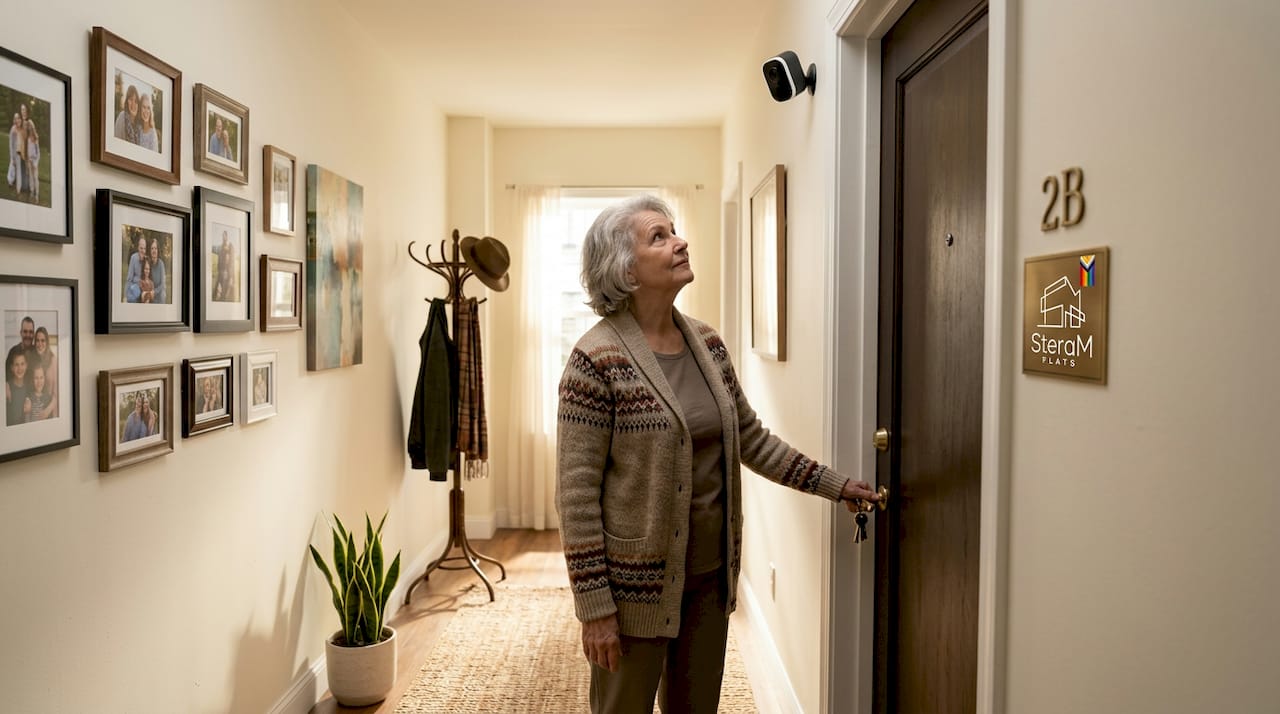
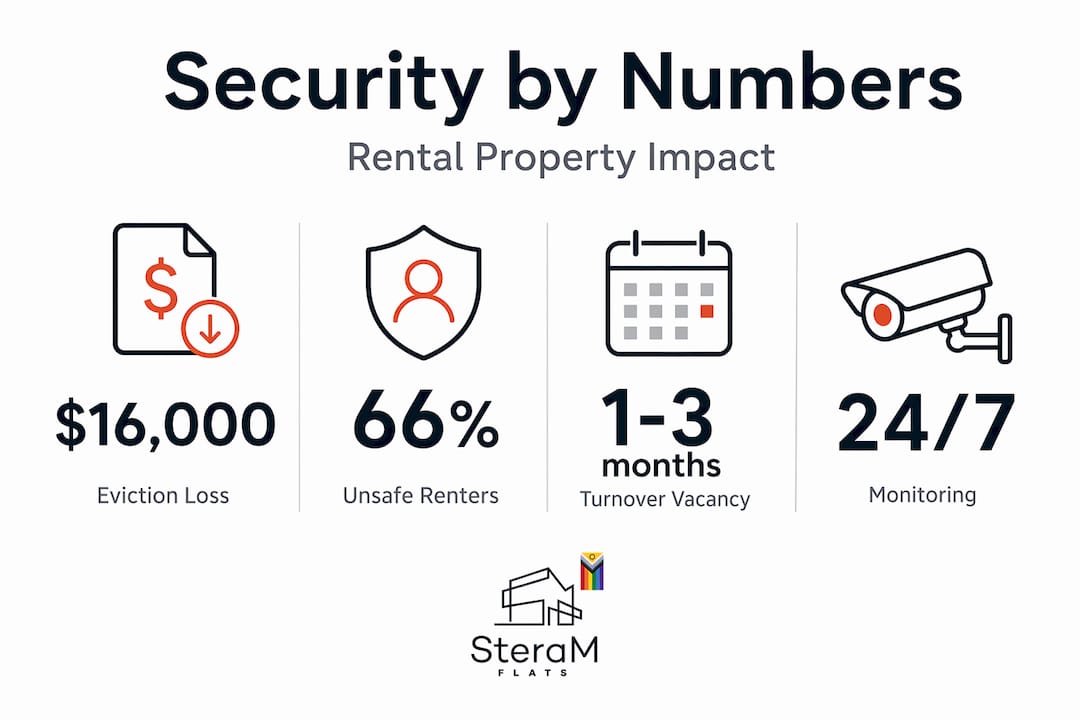
The financial logic follows: replacing a tenant costs between one and three months of rent in vacancy, turnover cleaning, and marketing. Keeping a quality tenant who feels safe in their home is significantly cheaper than finding a new one.
Security technology integrated by providers
Technology doesn’t replace trained security personnel. It makes them more effective and more accountable. The best security providers deploy systems that verify, track, and support their officers in real time.
| Technology | Function | Benefit to property managers |
|---|---|---|
| Security Operations Center (SOC) | 24/7 monitoring of officer status and live alerts | Immediate escalation of incidents, no dead zones in coverage |
| GPS Guard Tour System | Tracks patrol routes and timestamps checkpoints | Verifiable proof that patrols happened on schedule |
| CCTV integration | Live and recorded video across common areas | Evidence for disputes, deterrence, and incident review |
| Access control systems | Keycard, fob, or biometric entry management | Restricts access, creates audit trails |
| Alarm monitoring | Instant alerts on breach, fire, or environmental sensors | Faster response times, reduced damage |
SOC teams provide around-the-clock oversight for security officers on the ground. They monitor officer check-ins, coordinate escalation when something goes wrong, and verify patrols through GPS data. That layer of accountability distinguishes a professional firm from a company that simply dispatches a guard and hopes for the best.
Smart integration of security technology amplifies human effort without replacing it. GPS patrol verification means you can open a client portal and confirm that the north parking lot was checked at 2:17 a.m. Collecting and analyzing security incident data lets providers identify patterns, adjust patrol focus, and build evidence-backed safety recommendations for your specific property.
Pro Tip: Request access to your security provider’s client portal during the sales process. If they don’t offer one, that is a meaningful warning sign about their transparency standards.
How to choose the right security provider
Choosing a security provider based on price alone is the fastest way to end up with a problem. The right evaluation process looks at operational depth, not just the hourly rate on the proposal.
Work through these questions with every provider you consider:
- What is your officer-to-site ratio? Providers with low officer-to-site ratios deliver a more authoritative, present security service rather than token coverage spread thin across too many locations.
- How do you train and retain officers? High turnover in security personnel means your tenants never see a familiar face, and your officers never learn the property. Ask for documented training programs and retention rate data.
- What does your management structure look like? Hands-on supervisors who visit sites regularly produce better results than firms run entirely through remote dispatch.
- How do you report incidents? Request a sample report. It should include timestamp, location, description, actions taken, and follow-up notes. Vague reports protect the provider, not your property.
- Do you offer a client portal? Real-time access to patrol logs, incident reports, and officer status is the baseline of modern security accountability.
- What is your SOC support model? 24/7 monitoring support for on-site officers is standard for quality firms. Anything less means your officer is alone in an emergency.
The financial math on quality security is not complicated. Your property management checklist should include a formal security review. Rental management best practices treat security as a core operational function, not an optional add-on.
Legal and financial benefits of professional security
Landlords carry a legal duty to provide safe, habitable living environments. That duty extends to adequate security measures. Landlords must meet foundational standards including functional locks, proper lighting, and fire safety equipment. Failure to meet those standards creates legal exposure when a tenant is harmed.
The financial stakes are specific and significant. Average losses from evictions and property damage can reach $16,000 per incident, not counting legal fees that average an additional $1,500. A single incident that professional security could have deterred costs more than a year of security service at many properties.
Effective security programs are strategic investments that increase property marketability and tenant satisfaction. They reduce insurance claims, support stronger rental agreements, and attract quality tenants who take care of the property. Understanding how insurance and security interact in Spanish rentals is also worth reviewing for landlords operating in this market.
The argument for professional security providers is not soft. It is grounded in liability reduction, cost avoidance, and revenue protection. Properties that market proven security features as amenities consistently outperform comparable properties that don’t.
My take on why security partnerships actually matter
I’ve watched landlords spend months deliberating over kitchen finishes and then sign a security contract in fifteen minutes because the price was right. That’s a fundamental misread of where the real risk lives in rental property management.
In my experience, the properties that struggled most with tenant turnover weren’t the ones with the oldest appliances. They were the ones where tenants didn’t feel safe. A tenant who feels safe renews. A tenant who feels exposed starts looking the moment their lease ends.
What I’ve also seen is that security providers who function as genuine extensions of the management team, who know residents, who communicate proactively, who show up in the SOC reports as consistently doing their job, transform the reputation of a property within a single lease cycle. That’s not a theoretical benefit. It’s a measurable shift in how tenants describe their home to their friends.
The mistake I see repeatedly is treating security as a compliance box to check rather than a relationship to manage. The best security partnerships I’ve observed are ones where the landlord demands transparency, asks hard questions about officer training, and treats the security firm as a partner accountable to real performance metrics. That accountability changes everything about how the service is delivered.
Technology will keep getting better. GPS tracking, SOC monitoring, integrated access control. But the human element of security, the officer who notices something is off before it becomes an incident, is not going away. The future of rental security is human judgment backed by better data. Demand both from whoever you hire.
— Steramflats
How Steramflats approaches property security and management

At Steramflats, we’ve built our property management model around the understanding that security is not a separate service you bolt on after everything else is set up. It’s woven into how we manage properties from day one. Our rental and real estate services are structured to give landlords in Spain a single point of accountability for everything from tenant screening and agreements to safety coordination and compliance.
Whether you manage a long-term rental in Torremolinos or a portfolio of vacation apartments on the Costa del Sol, the security considerations are real and the legal obligations don’t disappear because the property is a short stay. We connect property owners with vetted security partners, guide you through compliance requirements, and help you position security as the marketable advantage it actually is. Explore our full property management services to see how we can help you build a safer, more profitable rental operation.
FAQ
What does a security provider actually do in a rental property?
Security providers manage access control, conduct patrols, verify visitors, respond to incidents, and file detailed reports for property management. Trained security personnel also serve as a visible deterrent that reduces crime and increases tenant confidence.
How much does poor security cost a landlord?
Inadequate security can cost landlords up to $16,000 per eviction or property damage incident, plus roughly $1,500 in legal fees. Professional security services typically cost far less than a single serious incident.
What technology should a quality security provider use?
Quality providers use GPS guard tour management systems, Security Operations Centers for 24/7 monitoring, integrated CCTV, and access control platforms that give property managers verifiable, real-time data on patrol activity.
How do I know if a security provider is actually performing?
Ask for client portal access, sample incident reports, and GPS patrol logs before signing any contract. Transparent performance data is the clearest indicator that a provider can be held accountable.
Does better security really improve tenant retention?
Yes. Research shows that tenants prioritizing safety are a large and measurable segment of the rental market, and properties with visible, responsive security consistently attract and retain higher-quality tenants.
Recommended
- SteraM Flats | Insurance in Spanish Rentals: Guide for Landlords & Tenants
- SteraM Flats | How to rent a vacation home in southern Spain safely
- SteraM Flats | Rental agreements in Spain: Essential rules for tenants and landlords
- SteraM Flats | Rental management checklist: Essential steps for landlords in Spain