An official tasación in Spain typically runs €250 to €600, depending on property type, size, and location. A free online valuation gives you a fast, indicative number, but only a homologated tasación, completed with a site visit, carries legal weight for a mortgage, inheritance, or tax filing. Most official reports arrive within 3 to 10 business days.
TL;DR:
- Official tasación costs in Spain typically range from €250 to €600, influenced by property size, location, and travel distance for appraisers.
- A homologated firm registered with the Bank of Spain is required for a report to be accepted by banks, notaries, or courts.
- The most common valuation method for homes is the comparison approach, which relies on recent sales of similar nearby properties.
- A mortgage-related tasación is usually valid for about six months and must be renewed if the transaction takes longer.
- Online valuation tools provide quick estimates suitable for market testing but lack legal standing, unlike licensed appraisals.
Table of Contents
- Tasación vivienda precio: what an official appraisal covers and when you need one
- How appraisers calculate value: the four methods behind the number
- Typical price ranges for tasación in Spain by property type
- Factors that change the final cost and delivery time
- Who pays, how banks use the report, and what happens if it comes in low
- Online valuation tools vs. official tasación: when to use each
- Documents, site visit, and timeline: what to expect
- How to pick a tasador and get quotes worth comparing
- A publisher’s take: reading a tasación the right way
- Get help preparing for your next tasación
- Sources
Tasación vivienda precio: what an official appraisal covers and when you need one
An official tasación is a written valuation produced by a licensed appraiser after visiting the property, measuring it, and applying a recognized methodology. Banks require one before approving a mortgage. Notaries, courts, and tax authorities also accept them for inheritance settlements, divorce proceedings, and property tax disputes.
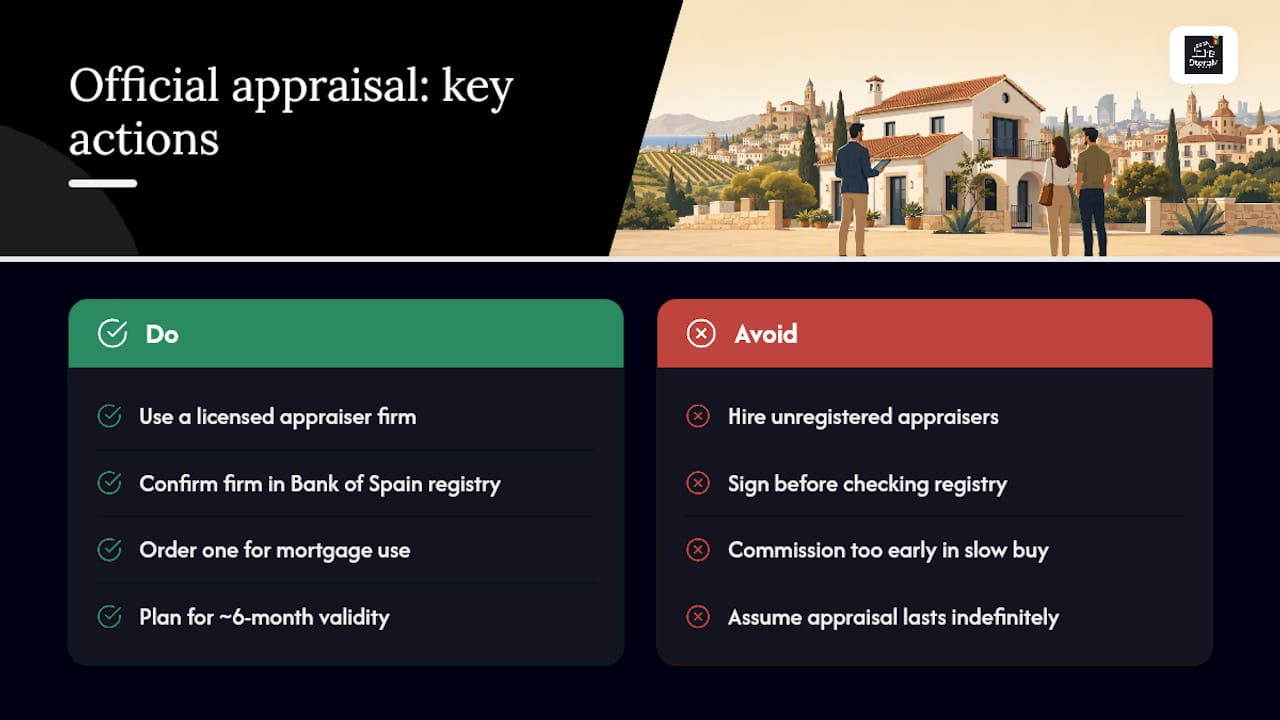
Not every appraiser can issue a report a bank will accept. You need a sociedad de tasación homologada, a firm registered and supervised by the Bank of Spain (Banco de España). You can check a firm’s registration status directly through the Bank of Spain’s public registry before signing anything, which takes a couple of minutes and rules out unlicensed operators.
A tasación produced for mortgage purposes is generally valid for a limited time, commonly around half a year. Once that window closes, the bank requires a new one, even if nothing about the property changed. This matters if your purchase drags on: a tasación commissioned early in a slow negotiation can expire before the notary appointment, forcing you to pay for a second one.
How appraisers calculate value: the four methods behind the number
Every tasación price tag reflects a methodology, and knowing which one applies to your case helps you read the final report instead of just trusting the bottom line.
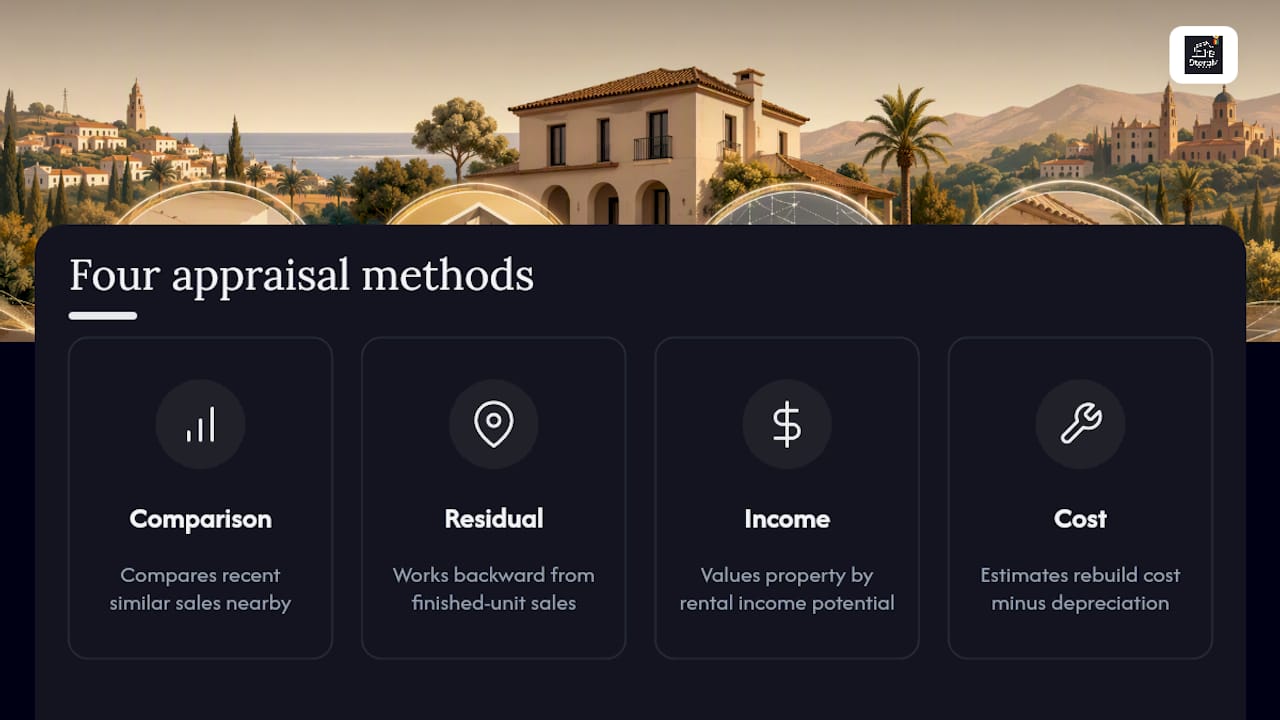
The comparison method is the one you’ll see most often for standard homes. The appraiser pulls recent sale prices of similar properties nearby and adjusts for size, condition, and floor level. A three-bedroom flat in a Valencia suburb gets compared against five or six similar sales from the last several months.
The residual method applies to land and new developments. The appraiser works backward from the expected sale value of finished units, subtracting construction costs and developer margin to estimate what the land or project is worth today.
The income method, sometimes called the rent-capitalization approach, values a property based on the rental income it could generate. Investors buying flats to let out see this method applied, since it reflects earning potential rather than comparable sales.
The cost method estimates what it would cost to rebuild the structure from scratch, minus depreciation for age and wear. Appraisers use it for unique buildings, like a converted farmhouse, where comparable sales barely exist.
Typical price ranges for tasación in Spain by property type
There’s no fixed national tariff. Each homologated sociedad de tasación sets its own fees, which is exactly why the price you get quoted in Madrid can differ meaningfully from one quoted in a smaller inland town for the same size flat.
That said, sector guides converge on a general band. A typical official tasación in Spain falls between €250 and €600, with the specific number shaped by square meters, property type, and how far the appraiser has to travel.
City size and density push these ranges around. In Madrid and Barcelona, where appraisers handle high volumes and travel is quick, quotes tend to sit toward the middle of the band unless the property is unusually large. In Valencia, Sevilla, and Málaga, standard flats often land closer to the lower end, while rural or coastal properties outside those cities can push costs higher due to travel time and scarcer comparable sales.
VAT (IVA) generally applies to the appraiser’s fee since it’s a professional service, so confirm whether the quote you receive is stated with or without tax included. One more wrinkle worth flagging: some banks offer to cover the tasación cost if you take out the mortgage with them, but that usually means the bank picks the sociedad de tasación, not you.
Factors that change the final cost and delivery time
Square footage is the biggest driver. A 200 m² house takes longer to measure and compare than a 60 m² studio, and the fee scales with that time.
Location matters almost as much. A property in a dense urban neighborhood with plenty of comparable sales nearby is cheaper and faster to appraise than a rural finca where the appraiser has to travel and dig for scarce reference points.
Statistic Callout: Getting two quotes for the same job isn’t just due diligence. Rankia’s analysis of market pricing found that identical residential appraisals can vary by €100 to €150 between firms, so skipping the comparison step means overpaying with no upside.
Other factors that move the price:
- Property uniqueness: irregular layouts, historic buildings, or mixed-use spaces take longer to value than a standard flat.
- Registry document retrieval: if you don’t have the nota simple or cadastral plans ready, the appraiser has to pull them, which adds time and sometimes a small fee.
- Urgency: rush jobs, often needed to close a mortgage on a deadline, can carry an express surcharge.
- Access difficulty: gated communities, remote addresses, or properties requiring an appointment to enter can extend turnaround by a day or two.
Handing the appraiser your title deed, floor plans, and energy certificate up front is the single easiest way to shave both time and cost off the job, since it removes research the appraiser would otherwise bill for.
Who pays, how banks use the report, and what happens if it comes in low
In most transactions, the buyer pays for the tasación, since it’s the buyer’s mortgage that depends on it. If you commission the report yourself from a homologated firm, any bank accepting mortgages in Spain must accept it, not just the bank that referred you.
If the tasación comes back below the price you agreed with the seller, you have a few realistic options. You can renegotiate the price down to match the appraisal. You can cover the gap yourself with extra savings, since the bank won’t lend against the difference. You can request a second tasación from a different homologated firm, which sometimes produces a higher figure if the first one used unusually conservative comparables. Or you can formally challenge the report if you believe the appraiser made an error, though this rarely changes the outcome fast enough to help with a tight closing timeline.
Online valuation tools vs. official tasación: when to use each
A free online estimator gives you a number in seconds by running your address and square meters through an algorithm trained on public sale data. It’s genuinely useful, just not for every purpose.
- Use an online estimate when: you’re testing the market before listing, deciding on an asking price, or sanity-checking a seller’s number before you make an offer.
- Use a homologated tasación when: you’re applying for a mortgage, settling an inheritance, filing for divorce, or need a figure a notary or tax office will accept.
- Watch for: algorithms can’t see condition, renovations, or a bad layout, so two identical-looking flats on paper can carry very different real values.
The gap between the two isn’t about accuracy so much as legal standing. An online tool can get you within a reasonable range; only a licensed appraiser’s signature makes that number official.
Documents, site visit, and timeline: what to expect
- Gather your paperwork first: title deed (nota simple), floor plans, IBI receipt, energy certificate if you have one, and recent community fee statements.
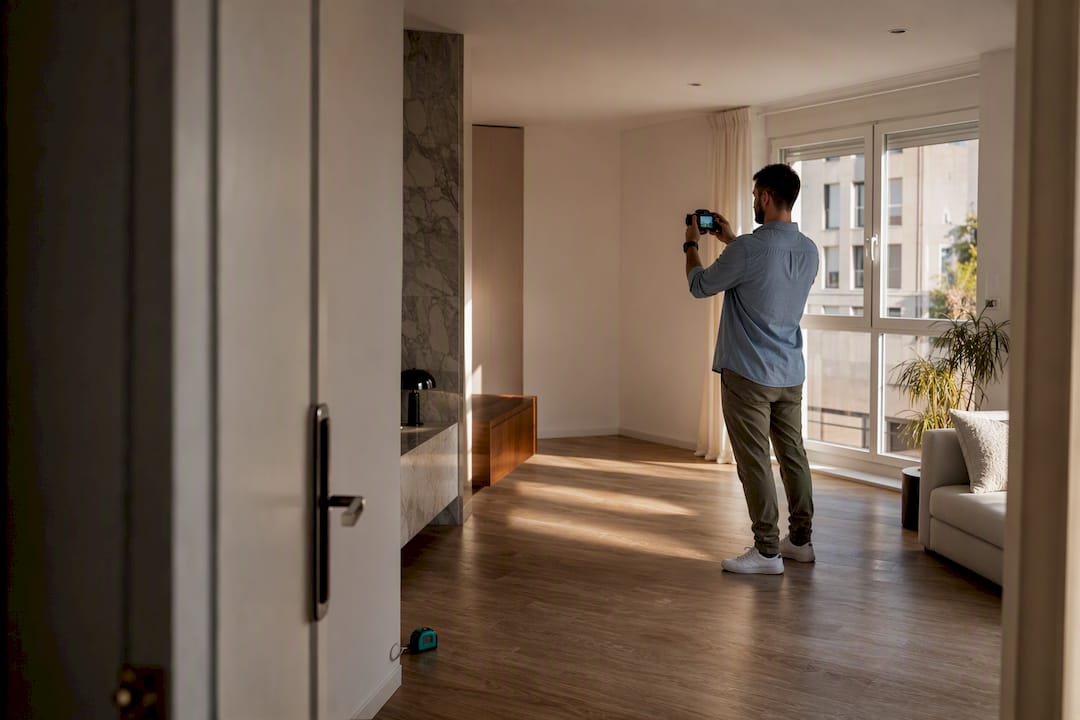
- The site visit: the appraiser measures the property, checks conservation state, reviews common areas, and notes orientation and natural light.
- Delivery: most reports arrive within 3 to 10 business days as a signed PDF, though rush requests can sometimes be turned around faster for an added fee.
How to pick a tasador and get quotes worth comparing
Start by confirming the firm’s homologation number against the Bank of Spain registry before requesting a quote. That single check filters out operators whose reports a bank simply won’t accept, no matter how professional they sound on the phone.
Ask for an itemized quote that states whether VAT is included, whether the price covers the site visit and registry searches, and what the delivery deadline is in writing. Get two or three quotes from different homologated societies, since prices for the same job can genuinely differ by €100 to €150 between firms.
- Confirm the appraiser is homologated, not just “certified” in a vague marketing sense.
- Ask directly whether your bank will accept a tasación you commission yourself.
- Get the scope of work in writing: measurements, comparables used, and whether the registry check is included.
- Be wary of a quote that’s unusually cheap with no itemized breakdown, or a bank insisting you use only their assigned appraiser.
Pro Tip: Ask each firm the same three questions (VAT included, delivery date, and whether they order the registry documents themselves) so the quotes you get back are actually comparable, not apples to oranges.
A publisher’s take: reading a tasación the right way
Our team helps sellers and buyers gather the paperwork a tasador asks for and interpret what the finished report actually says about a property’s position in the local market. When a client just wants a gut check before listing, we often recommend using an online estimate first. When a mortgage, inheritance, or tax filing is on the table, an official tasación isn’t optional, and getting the documents ready in advance saves real time. For sellers weighing next steps, the property marketing checklist and cadastral value guide are worth reading next.
— YellowRock
Get help preparing for your next tasación
We assist clients in gathering necessary documents like a nota simple, floor plans, or an energy certificate before an appraiser can begin. Our advisory support is designed to align with what banks and notaries in Spain generally require.

If you’re preparing to sell, refinance, or settle an inheritance and want a clear read on what a tasación will involve for your specific property, Steramflats’ real estate advisory services walk you through document prep and connect you with the right next step. Reach out to get your documents organized before you request your first quote.
This article is general information, not a substitute for advice from a qualified financial advisor. Consult a qualified financial professional about your own circumstances before acting on anything here.
Sources
- ¿Cuánto cuesta tasar una vivienda en 2026? Guía completa — RealAdvisor
- Precio de tasación de una vivienda o inmueble — Tinsa
- ¿Cuánto cuesta tasar un piso y qué factores influyen? — BBVA
- Cuánto cuesta tasación vivienda — Rankia