
An agency market valuation for a home in Spain (what many searches call “tasación vivienda homologada”) gives you a documented price range grounded in real comparables, not a bank mortgage appraisal. You get a short report justifying what your property should sell or rent for, based on a site visit and current market data, along with insights on home value factors explained for buyers and sellers. Expect a quick orientation in a short time, or a fully validated report within a reasonable period.
TL;DR:
- The home’s condition, neighborhood liquidity, and outdoor space can cause significant valuation differences even among similar properties in Spain.
- Adjustments are based on real comparable sales, with detailed corrections for features like parking and renovation quality, not guesswork.
- The valuation method depends on the asset type and available data: comparison for regular homes, cost for unique ones, income for rental properties, and residual for land.
- Missing documents like the cadastral reference or energy certificate can delay the process, which usually takes about a week for a validated report.
- A proper site visit, documentation review, and market analysis are essential to produce a defensible valuation that supports listing, negotiating, or rental pricing.
Table of Contents
- What Is a Homologated Property Valuation, Exactly?
- How Does the Valuation Process Work Step by Step?
- What Actually Moves a Home’s Value in Spain?
- Which Valuation Method Fits Your Property?
- What Documents Do You Need, and How Long Does It Take?
- How Does Steramflats Handle Market Valuations?
- An Appraiser’s Short List of What Actually Matters
- Ready to Get Your Property Valued?
- Sources
What Is a Homologated Property Valuation, Exactly?
The term “homologated” gets attached to two very different documents in Spain, and the confusion costs sellers time. A bank-approved mortgage appraisal comes from a registered tasación company and only matters if you’re financing a purchase. What this guide covers is the other kind: an agency’s professional market valuation, built to set an asking price, negotiate a sale, price a rental, or support an investment decision.
The two share a method more than a name. Both rely on visiting the property, pulling comparables, and applying technical methods and report requirements that Spanish regulation lays out for formal valuations. But an agency valuation is faster, cheaper, and built for a different job: getting your listing priced right, not satisfying a lender.
How Does the Valuation Process Work Step by Step?
Once you request a valuation, the agency needs to know why you want it before anything else happens. A number aimed at a quick sale looks different from one built to justify a rental increase or guide a buy-to-let decision.
- Define the purpose. Sale, rent, or investment advice each change which comparables and adjustments matter most.
- Collect documentation. The nota simple, referencia catastral, energy certificate, and any available floor plans go into the file first.
- Conduct the on-site visit. An appraiser measures the space, photographs each room, and checks installations, layout, and any reforms against what the paperwork claims.
- Search and adjust comparables. Recently sold or listed units nearby get pulled and corrected for differences in floor, state, and extras.
- Draft, validate, and deliver the report. A second technical review checks the math and the reasoning before the report goes out.
The visit isn’t a box to check. It’s the core evidence-gathering step that confirms measurements, condition, and installations actually match what’s on paper, and it’s usually where discrepancies between a seller’s expectations and market reality surface first. Skip it, or rush it, and the resulting number is easier to challenge during negotiation.
What Actually Moves a Home’s Value in Spain?
Two nearly identical apartments three streets apart can carry very different price tags, and the gap almost always traces back to a short list of factors buyers respond to even when they can’t articulate why.
- Neighborhood liquidity. Areas with steady transaction volume and easy access to services hold value better and sell faster than isolated pockets, even within the same town.
- Building condition. A working elevator, a maintained façade, and low community debt add real value; a building association fighting over unpaid fees does the opposite.
- Usable versus built area. Buyers pay for livable square meters, not the number on the deed, so layout efficiency matters as much as raw size.
- Orientation and outdoor space. South-facing units with a usable terrace consistently outperform north-facing units without one, especially along the coast.
- State of reforms. A recently updated kitchen or bathroom pays off; cosmetic paint jobs rarely move the needle much.
Appraisers translate these differences into concrete adjustments when comparing your property against testigos, the recorded comparables used for the comparison method. A ground-floor unit might get corrected upward for a private garden, then adjusted down again for lower natural light. A unit with deeded parking might see a flat percentage bump over one without it. None of these adjustments are guesswork. They’re pulled from what similar units actually sold for once you strip away the variable being tested.
Pro Tip: Before your visit, pull together receipts or permits for any major reform. An appraiser who can confirm a kitchen renovation was done properly, with the right paperwork, will weight it more heavily than one they have to take your word for.
Which Valuation Method Fits Your Property?
Method choice changes the number you get, sometimes by a meaningful margin, so it’s worth understanding which one applies to your situation before you see a figure.
- Comparison method. The default for ordinary apartments and houses in areas with active sales data. This is what most sellers and buyers will encounter.
- Cost or replacement method. Used when comparables are scarce, typically for unique standalone homes or unusual builds where nothing nearby matches closely enough.
- Income or updated-rent method. Applied to rented properties or yield-focused purchases, where the number that matters is what the asset produces, not just what it might sell for.
- Residual method. Reserved for development land or properties needing major rehabilitation, where the value depends on what can be built or restored, not on current condition.
Method selection follows the asset type and the data available: comparison dominates for standard housing, residual for land, cost for singular buildings, and income methods for anything generating rent. An investor weighing a coastal apartment for long-term rental might request both a comparison figure and an income calculation side by side, since the gap between them often reveals whether selling or holding makes more financial sense.
What Documents Do You Need, and How Long Does It Take?
Missing paperwork is the single biggest reason a valuation gets delayed or comes back with caveats attached. Have these ready before you book a visit:
- Nota simple registral, showing ownership and any charges on the property.
- Referencia catastral, the cadastral reference tied to the property record.
- Energy performance certificate, required for any sale or rental listing.
- Valid ID for the owner.
- Floor plans, if you have them, though their absence rarely stops the process.
Missing documentation can lengthen the work or condition the report’s finality, particularly when there’s uncertainty around registered charges or boundaries. A property registration guide walks through what each document actually proves if you’re unsure where to start.
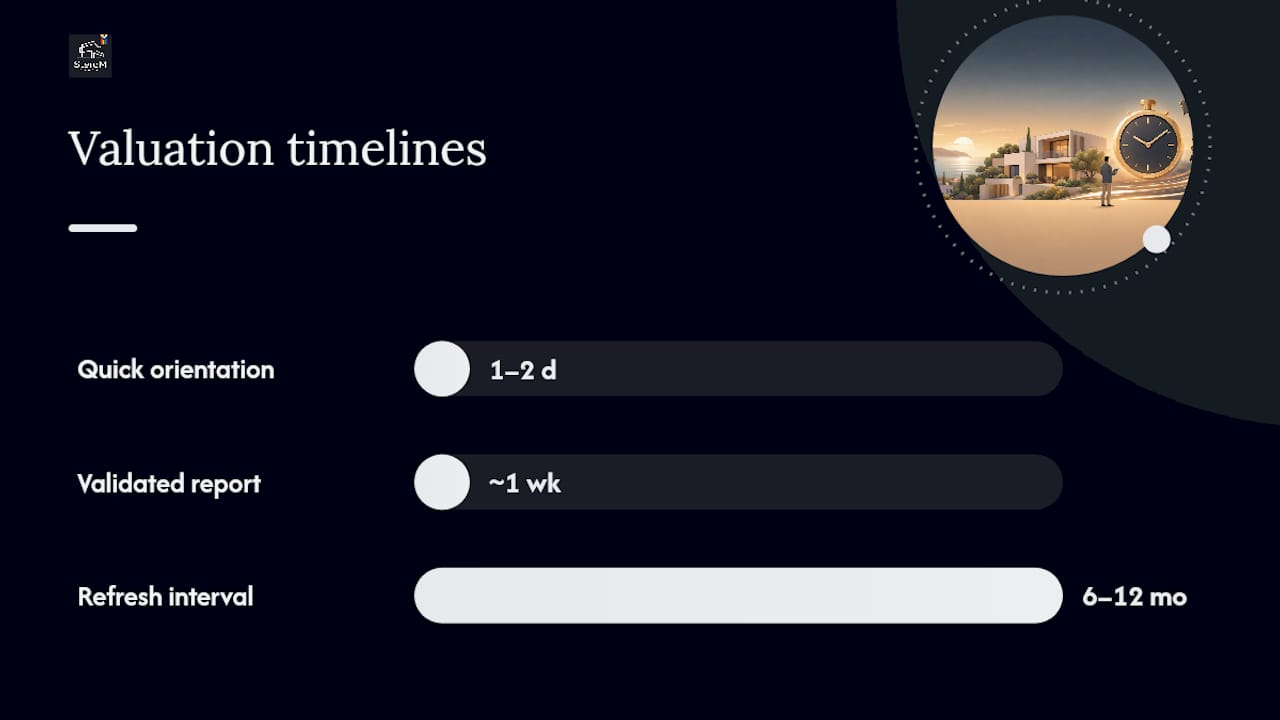
Timelines split cleanly into two tiers. A quick market orientation, drawing on comparable listings without a full visit, typically comes back within a day or two. A validated report with a site visit and documentary review usually takes about a week. Update the valuation whenever the local market shifts meaningfully, after any significant renovation, or if more than six to twelve months pass since the last figure, since comparables age faster than owners expect.
How Does Steramflats Handle Market Valuations?
Steramflats builds every valuation around the same evidentiary steps that make a report defensible: a proper site visit, full documentation review, and a market study drawing on real comparables rather than a plug-in-the-address estimate. Every report goes through an internal technical validation pass before it reaches the client, catching errors in the adjustment math or inconsistencies between the visit notes and the comparables pulled.
That process pays off in a few concrete ways:
- Pricing strategy. A justified range gives you a defensible starting point for listing, not a guess pulled from a portal average.
- Negotiation support. When a buyer challenges your asking price, you have documented comparables and adjustments to point to.
- Rental-setting. Landlords get a figure grounded in actual rent comparables, not aspiration.
- Management handoff. If you decide to hold and rent rather than sell, the valuation feeds directly into ongoing property management planning.
Pro Tip: If you’re deciding between selling now and renting long-term, ask for the income-method figure alongside the comparison figure. Seeing both side by side often makes the decision obvious in a way neither number does alone.
An Appraiser’s Short List of What Actually Matters
Most of what determines your final number comes down to preparation, not luck. Clean the property, fix anything obviously broken, and gather your documents before the visit rather than scrambling afterward. Be upfront about occupancy status. If a tenant is in place, say so early, since it changes both the method and the number.

Watch for the red flags that quietly erode value: unregistered renovations, an unclear title, or unpaid community fees. Any of these can delay a report or force a downward adjustment once discovered mid-process.
One thing worth remembering: a valuation gives you a defensible band, not a single magic number. Where you land within that band, and what you ultimately sell for, depends on negotiation and how well the property gets marketed once it’s listed.
— YellowRock
Ready to Get Your Property Valued?
You can get a documented, visit-based valuation instead of a generic online estimate that carries no weight when a buyer pushes back on price. You get two options depending on how fast you need an answer: a quick market orientation for a rough sense of range, or a full valuation with a site visit, comparables, and a validated written report you can actually use in negotiation or when setting a rental price.

Getting started is simple. Send over your nota simple, referencia catastral, and energy certificate first. That first meeting covers your goals: selling fast, maximizing price, or figuring out whether renting beats selling for your situation. From there, Steramflats can also walk you through real estate advisory services built for Spain-based investors if you’re weighing a purchase alongside the valuation. Reach out to book your visit and get a documented number you can actually use.
Sources
- Arquitasa — criterios, procesos y métodos de tasación
- Fotocasa Blog — valoraciones inmobiliarias
- BOE — Orden ECO/802/2003 (regulatory framework for valuations)