Most people assume a rental agreement is straightforward. You pick a property, you agree on a price, you sign something, and you move in. Simple, right? Not in Spain. The country has a detailed legal framework for rental contracts that sets specific rules on duration, renewals, deposit limits, and exit penalties. Both tenants and landlords can face serious financial and legal consequences if they sign without understanding what the contract actually says. This guide breaks down everything you need to know before putting pen to paper on a Spanish rental agreement.
Table of Contents
- What is a rental agreement?
- Main clauses of a Spanish rental agreement
- How Spanish rental terms work: Duration, renewals, and exit rules
- Key rights and obligations for tenants and landlords
- Market risks: Why understanding your agreement matters in 2026
- Our perspective: Why a solid contract is your best defense in a volatile market
- Looking for expert support with your Spanish rental agreement?
- Frequently asked questions
Key Takeaways
| Point | Details |
|---|---|
| Written contracts are essential | A clear, written rental agreement is vital to protect both tenant and landlord rights in Spain. |
| Understand contract duration | Rental agreements usually renew yearly, with special rules for individuals and companies. |
| Know your exit rights | Tenants can leave after 6 months with notice, but should check for penalty clauses. |
| 2026 brings market risk | Many contracts expire in 2026, raising risks of price hikes or eviction—awareness is crucial. |
| Custom contracts reduce risk | Personalized agreements protect your interests better than generic templates, especially in a changing market. |
What is a rental agreement?
In Spain, a rental agreement is legally known as a contrato de alquiler. It is a formal contract between a landlord and a tenant that grants the tenant the right to occupy a property in exchange for periodic payment, typically monthly rent. This is not just a handshake deal or a courtesy document. Under Spanish law, this contract is the foundation of the entire landlord-tenant relationship.
A legally sound contrato de alquiler includes several essential elements:
- The parties involved: Full legal names and ID numbers of both landlord and tenant
- Property description: The full address and a description of the rental property
- Rent amount and payment terms: How much is owed, when it’s due, and how payments are made
- Duration of the contract: The initial period agreed upon by both parties
- Deposit terms: The amount held and conditions for its return
- Rights and obligations: What each party can and cannot do during the tenancy
Verbal agreements are technically recognized under Spanish law, but they are extremely risky. Without written documentation, proving what was agreed upon becomes nearly impossible if a dispute arises. Written contracts give both sides a clear reference point and legal protection.
“Spanish law sets minimum rights that no contract can override. Even if both parties agree to terms that fall below these minimums, those terms are unenforceable.” This is a critical point that many tenants and landlords miss when using generic templates they found online.
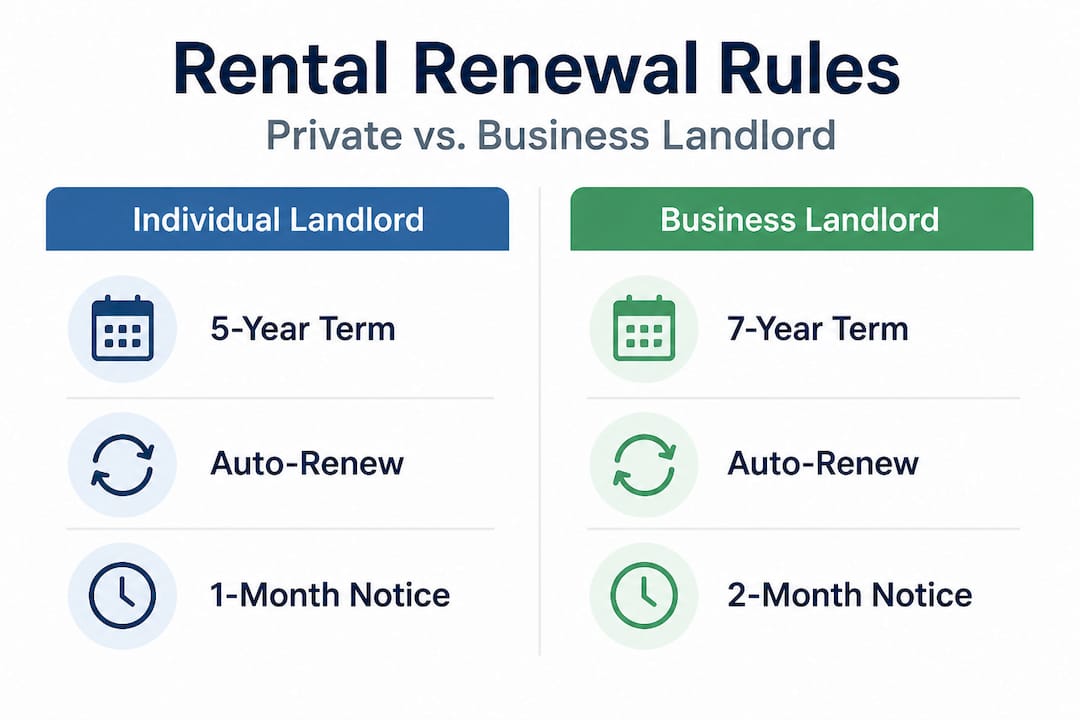
One of the most important things to know is that contracts auto-renew annually up to 5 years for individual landlords or 7 years for company landlords, followed by a 3-year tacit extension if neither party acts. This has major implications for both sides. Explore the different rental agreement types available in Spain to understand which structure best fits your situation, and check out the full rental services overview for additional context.
If no contract exists or it is missing key sections, you’re in a grey zone. Disputes over maintenance, damage, or early departure become complicated and costly to resolve, often ending up in court.
Main clauses of a Spanish rental agreement
Once you understand what the contract is, you need to understand what’s inside it. Every clause in a contrato de alquiler carries real consequences. Ignoring them is not an option.
Here are the standard sections you will encounter, and what they mean:
1. Rent and payment conditions
This clause defines the monthly rent, the payment method, and the due date. It should also specify whether rent can be increased annually and by how much. In Spain, rent adjustments are often tied to the CPI (Consumer Price Index) or another agreed index.
2. Security deposit
Spanish law requires a deposit of one month’s rent for residential rentals. The landlord must hold this in a regulated account in most Spanish regions. The contract must explain the conditions under which deductions can be made.

3. Duration and renewal
This is arguably the most important clause. The initial term is set by agreement, but the legal minimums and automatic extensions governed by Spanish law still apply regardless of what the contract says.
4. Termination and exit conditions
What happens when you want to leave? Tenants can exit after 6 months with 30 days’ notice, but may be subject to a penalty clause of up to one month’s rent per remaining year on the contract. This is something both parties need to understand before signing.
5. Maintenance and repairs
Who pays for what? Generally, the landlord covers structural repairs and major appliance failures. Tenants cover minor day-to-day upkeep. The contract should be specific about the line between the two.
6. Subletting
Most standard contracts in Spain prohibit subletting without written landlord consent. Violating this clause can be grounds for contract termination.
Here’s a quick comparison of standard versus custom clauses:
| Clause type | Standard contract | Customized contract |
|---|---|---|
| Rent increase | Tied to CPI | Fixed rate or capped |
| Maintenance split | General terms | Room-by-room specifics |
| Early exit penalty | Default law applies | Negotiated terms |
| Subletting | Prohibited | Conditions specified |
| Renewal notice period | 30 days | Adjusted by agreement |
Steps for reviewing a contract before signing:
- Read the entire document before agreeing to anything
- Verify all personal details are correct (names, IDs, property address)
- Confirm the deposit amount matches the legal requirement
- Check all duration and renewal clauses against Spanish law minimums
- Clarify any vague maintenance clauses in writing before you sign
- Ask for any verbal promises to be added in writing
Pro Tip: Pay special attention to any clauses labeled “additional agreements” or “special conditions.” These sections are where non-standard terms often appear, such as unusual break clauses, fees for routine services, or restrictions that go beyond what the law permits.
Also explore the different rental agreement types to understand how these clauses may vary depending on the contract structure you choose.
How Spanish rental terms work: Duration, renewals, and exit rules
Timing matters enormously in Spanish rental law. Many tenants sign a one-year contract thinking they are only committing to twelve months. In reality, they may be entering a relationship that lasts up to eight years or more under automatic renewal rules.
Here is how the standard rental timeline works under Spanish law:
| Landlord type | Initial term | Automatic renewals | Tacit extension |
|---|---|---|---|
| Individual (private person) | Typically 1 year | Annually up to 5 years | +3 years if no notice given |
| Company or legal entity | Typically 1 year | Annually up to 7 years | +3 years if no notice given |
This means contracts renew automatically unless either party provides advance written notice. For tenants, the notice period is typically 30 days before the end of each annual period. For landlords, the rules are stricter, especially if they want to reclaim the property for personal use.
Tenants who want to leave early can do so after the first six months of the contract, but they must give 30 days’ written notice. The contract may include a penalty, capped at one month’s rent for each remaining year of the agreement. So if you’re in the second year of a five-year contract and you leave early, the maximum penalty could be three months’ rent.
These rules protect tenants from abrupt evictions, but they also lock landlords into providing stable housing for extended periods. Understanding which type of landlord you’re dealing with (individual versus company) before signing can affect your long-term flexibility.
Pro Tip: Always ask your landlord whether they are signing as a private individual or as a business entity. This changes the maximum duration of automatic renewals and can significantly affect your rights as a tenant. A practical rental management checklist can help you keep track of key dates and obligations throughout your tenancy.
Key rights and obligations for tenants and landlords
Understanding who is responsible for what is essential to a healthy landlord-tenant relationship. Spanish rental law gives both sides specific protections, but it also imposes obligations that cannot be avoided or waived in the contract.
Tenant rights include:
- The right to a habitable property in good condition at the start of the tenancy
- Protection of the security deposit, which must be held in a regulated account
- Stable occupancy for the legally defined minimum duration
- Proper notice before any rent increase or contract non-renewal
- The right to make minor improvements to the property with landlord consent
Landlord rights include:
- Receiving rent on time as agreed in the contract
- Recovering the property at the end of the legally defined period with proper notice
- Claiming compensation for damage beyond normal wear and tear
- Refusing sublet requests without written consent
- Recovering possession of the property for personal use under specific legal conditions
Common obligations shared by both parties:
- Maintain open and documented communication about repairs and issues
- Follow proper legal procedures for contract termination or non-renewal
- Respect agreed-upon payment schedules and conditions
- Comply with local and national housing regulations
In Q1 2025, Spain saw 7,334 evictions, with 76.9% due to rent default. That same quarter recorded 592 squatter-related lawsuits, a 5.2% increase year-over-year. These figures show what happens when agreements break down or go ununderstood.
Many of these situations could be avoided with clear contracts and proper knowledge. Understanding your rental insurance options is one way tenants and landlords can protect themselves against these exact risks. Also consider how different tenancy models compare in our breakdown of long-term vs. holiday rentals.
Pro Tip: Always verify that your contract is consistent with the current version of Spain’s Ley de Arrendamientos Urbanos (Urban Leases Law). Laws are updated periodically, and a contract drafted five years ago may not reflect current tenant protections.
Market risks: Why understanding your agreement matters in 2026
The Spanish rental market is under enormous pressure right now. Contract knowledge is no longer just a formality. It could be the difference between stable housing and a very expensive surprise.
Here is what is driving current uncertainty:
- 1.6 million contracts are set to expire in 2026, leaving millions of tenants potentially exposed to sharp rent hikes or non-renewals
- 43% of landlords are reportedly considering exiting the long-term rental market due to regulatory pressures and unprofitable returns
- Squatter-related lawsuits rose 5.2% year-over-year in Q1 2025
- Urban rental prices in coastal and city areas have surged significantly
For tenants, expiring contracts mean negotiations from a weaker position. Landlords in high-demand areas may refuse to renew at old rates. Without a clear understanding of your contract’s renewal clauses, you may find yourself scrambling to find new housing in a very competitive market.
For landlords, the pressure goes the other way. Regulatory restrictions on rent increases in designated “stressed zones” (areas officially classified as high-tension rental markets) mean reduced flexibility. Some landlords are switching to vacation rental services as an alternative, which operate under a different legal framework with more pricing freedom.
What reduces your risk right now:
- Know your contract end date and mark renewal notice windows in your calendar
- Understand rent increase caps in your municipality or region
- Document everything including the property’s condition at the start of the tenancy
- Take professional legal advice before signing or renewing any contract
- Compare agreement types using our guide to holiday rental insights to assess all your options
Knowledge of your contract is one of the most practical tools available for navigating this volatile market.
Our perspective: Why a solid contract is your best defense in a volatile market
Here is something that most guides won’t tell you directly. Boilerplate contracts downloaded from the internet are not enough in the current Spanish rental environment. They were often written years ago, may not reflect regional law updates, and almost certainly don’t account for the specific risks in your local market.
We have seen this repeatedly. A landlord uses a generic template and misses a clause about the tacit extension period. Three years later, they are legally obligated to maintain a tenancy they expected to end long ago. Or a tenant signs without reading the early exit penalty clause and loses two months of rent when circumstances force them to move.
The uncomfortable truth is that both parties often want a fast, easy contract because the property transaction itself is stressful enough. But taking shortcuts at the contract stage is where the real problems begin. Customizing your agreement to match your specific situation is not overcautious. It is essential.
The current market makes this even more urgent. With so many contracts expiring simultaneously in 2026, landlords who have not reviewed their legal position and tenants who do not know their rights are both at serious risk. A properly written, thoroughly reviewed contract that reflects today’s legal and market conditions is worth far more than any generic template.
Our advice is simple. Treat the contract review as seriously as you treat the property search itself. If you are not fluent in Spanish legal terminology, work with someone who is. The cost of professional guidance is a fraction of what you could lose in a poorly structured agreement.
Looking for expert support with your Spanish rental agreement?
Navigating Spanish rental law on your own is possible, but working with experienced professionals removes a lot of the uncertainty and risk. Whether you are a tenant trying to understand what you’re signing or a landlord wanting to protect your investment, getting expert support from the start saves you time, money, and stress.

At SteraM Flats, we work with both tenants and landlords across Spain, offering guidance on contract structure, legal compliance, and rental agreement types that fit your specific needs. Whether you’re navigating a long-term tenancy or exploring vacation rental services as an alternative, our team combines real legal knowledge with hands-on market experience in southern Spain. Reach out today to ensure your contract works in your favor, not against you.
Frequently asked questions
Is a rental agreement mandatory in Spain?
Yes, a written rental agreement is strongly advised in Spain to protect both parties’ rights and outline all terms clearly. Spanish law sets minimum rights that no contract can override, making written documentation the safest approach.
How long does a standard rental agreement last in Spain?
Most contracts start with a one-year term, but auto-renew annually up to 5 years for individual landlords or 7 years for company landlords, with a further 3-year tacit extension possible if neither party acts.
Can a tenant leave a rental agreement before it ends?
Yes, tenants can typically leave after 6 months with 30 days’ notice, but the contract may include a penalty of up to one month per remaining year of the agreement.
What risks do tenants face when contracts expire in 2026?
With 1.6 million contracts expiring in 2026, tenants could face significant rent increases or non-renewals, especially as 43% of landlords are considering exiting the long-term rental market entirely.
Recommended
- SteraM Flats | Rental Agreement Types in Spain: Guide for Landlords
- SteraM Flats | Rental management checklist: Essential steps for landlords in Spain
- SteraM Flats | Insurance in Spanish Rentals: Guide for Landlords & Tenants
- SteraM Flats | How to book holiday rentals in Spain: a step-by-step guide
- Diritti del locatore: come tutelarsi nell’affitto