Figuring out how to rent out property without making expensive mistakes is harder than most people expect. You have legal obligations to meet, a market to understand, tenants to screen, and a lease to get right before anyone hands over a key. Skip a step and you could end up with a bad tenant, an unenforceable lease, or a legal penalty that wipes out months of rental income. This guide walks you through the entire process, from preparing your property and setting the right rent price, to marketing, screening tenants, and managing the tenancy once it starts.
Table of Contents
- Key Takeaways
- How to rent out property: legal requirements first
- Getting your property ready and pricing it right
- Creating a listing that actually fills vacancies
- Screening tenants and managing your lease
- Ongoing management: maintenance, communication, and compliance
- What I have actually learned from renting out property
- Let Steramflats take the complexity out of renting
- FAQ
Key Takeaways
| Point | Details |
|---|---|
| Legal compliance comes first | Research landlord-tenant laws, licensing rules, and deposit regulations before listing your property. |
| Price with data, not guesswork | Use market comparables and seasonal trends to set a competitive rent that attracts quality tenants fast. |
| Your listing is your first filter | A detailed, well-written listing on the right platforms screens out poor-fit applicants before they apply. |
| Tenant screening protects your investment | Credit checks, background checks, and reference calls reduce the risk of late payments and property damage. |
| Documentation prevents disputes | A signed move-in checklist and a lawyer-reviewed lease are your strongest defenses if problems arise. |
How to rent out property: legal requirements first
Most landlords want to jump straight to listing their property. That instinct makes sense, but it can cost you. Legal missteps early in the process have a way of compounding, especially when a dispute or eviction eventually forces everything into the open.
Before you market the property, work through these key legal areas:
- Fair housing laws. Federal, state, and local laws prohibit discrimination based on race, religion, national origin, sex, familial status, disability, and other protected classes. Violations can result in significant fines and lawsuits.
- Licensing and registration. Many cities and counties require landlords to register rental properties or obtain a rental license. Check your local municipality’s requirements before advertising.
- Deposit rules. In England, for example, tenancy deposits are capped at five weeks’ rent for annual rents below £50,000, and deposits must be protected in a government-approved scheme. Similar caps exist in other jurisdictions, so check the rules for your specific location.
- Rent-in-advance restrictions. Under UK law, landlords cannot request rent before the tenancy agreement is signed, and rent paid in advance is capped at one month post-signing. Know where your local rules draw that line.
- Eviction procedures. You cannot simply remove a tenant who stops paying. Legal eviction requires proper notice, documentation, and in most cases a court order. Cutting corners here will get you in trouble fast.
- Lease agreement validity. A lease you download for free online may not be enforceable in your jurisdiction. Use a lawyer-reviewed or legally compliant template specific to your area.
Pro Tip: Before drafting your lease, check whether your local authority requires specific clauses or disclosures. Missing a mandatory disclosure can void parts of your agreement and weaken your position in any dispute.
The Renters’ Rights Act has made deposit protection even more consequential. Court possession orders now depend directly on whether you’ve handled deposit protection correctly. Non-compliance isn’t just a technical problem. It can block you from evicting a problem tenant entirely.
For landlords operating in Spain, Steramflats has published a thorough breakdown of rental agreements and legal tips that covers country-specific compliance requirements worth reviewing before you draft any contract.
Getting your property ready and pricing it right
Once your legal foundation is solid, shift your attention to the physical property and the numbers. These two areas determine whether you attract good tenants quickly or sit with a vacancy for months.
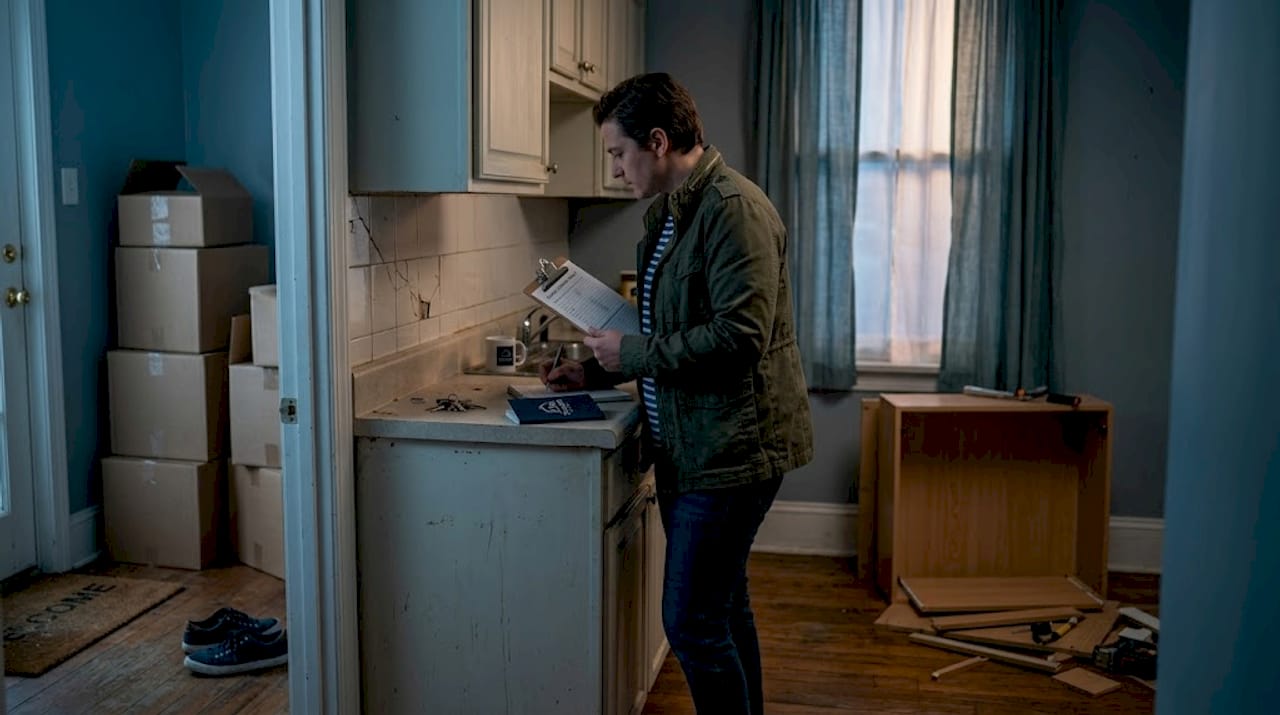
Start with a systematic inspection. Walk through every room and fix anything broken, worn, or unsafe. Replace outdated smoke detectors, fix leaking faucets, and deal with any damp or mold. Safety compliance is both a legal requirement and a signal to prospective tenants that you take the property seriously.
Pricing is where many first-time landlords either leave money on the table or price themselves out of the market entirely. The first-time landlord process consistently identifies rent-setting as one of the steps with the highest risk of error. Here is how to do it right:
- Search for comparable rentals in your immediate neighborhood, not just your city.
- Filter by property type, size, and condition to find genuine comparables.
- Factor in seasonal demand. In tourist-heavy areas like Torremolinos, summer rental demand can spike significantly compared to winter months.
- Account for included amenities. Parking, laundry, air conditioning, and furnished spaces all justify a higher price point.
- Revisit your price every six months against current market listings.
Pro Tip: Do not anchor your price to what you need to cover your mortgage. The market does not care about your costs. Price based on comparable demand and adjust your other expenses around the market rate, not the other way around.
On the insurance front, check that your standard homeowner’s policy covers rental use. Most do not. Landlord insurance typically covers property damage, liability, and loss of rental income. You should also require tenants to carry renters insurance as a condition of the lease.
Creating a listing that actually fills vacancies
A well-priced property still sits empty if your listing is weak. The goal of marketing rental property is not just exposure. It is attracting the right tenant, fast, with minimal back-and-forth from people who were never a realistic fit.
Here is a process that works:
- Choose the right platforms. List on major rental portals relevant to your area, and consider best-performing listing platforms for maximum reach. Syndication tools can push your listing to multiple sites simultaneously.
- Write a specific, detailed description. Mention square footage, number of bedrooms, type of flooring, kitchen appliances, outdoor space, and proximity to public transport or schools. Vague listings attract vague inquiries.
- Set screening criteria upfront. State your minimum income requirement, whether you accept pets, and any other requirements directly in the listing. This reduces applications from unqualified tenants before they even contact you.
- Use high-quality photos. Listings with professional or near-professional photos get significantly more inquiries. Shoot in natural light, clear out personal items, and photograph every room including the bathroom and kitchen.
- Promote across multiple channels. Share your listing on social media, neighborhood groups, and local community boards. Referral traffic from personal networks often produces the most reliable tenants.
Filling vacancies faster comes down to specificity and visual quality. Listings that answer every obvious question upfront consistently outperform generic ones, regardless of platform. The 7-step listing framework from rental management research reinforces that competitive pricing, strong photos, and multi-channel promotion are the three pillars of a high-performing listing.
Screening tenants and managing your lease
This is the step most landlords rush. Do not. The tenant you choose will determine the quality of your experience for the entire tenancy. Spending two extra days on screening is always worth it.
A solid screening process includes:
- A written application. Collect employment history, income details, rental history, and references.
- Credit check. Look for consistent payment behavior, not just a score. Patterns of late payment or collections in the rental category are red flags.
- Background and eviction check. Prior evictions are one of the strongest predictors of future tenancy problems.
- Reference calls. Contact previous landlords directly. Ask whether they would rent to this tenant again. A hesitant “yes” tells you as much as a clear “no.”
For a detailed walkthrough of what to look for in each application stage, the tenant application checklist from RentTrust is a solid reference.
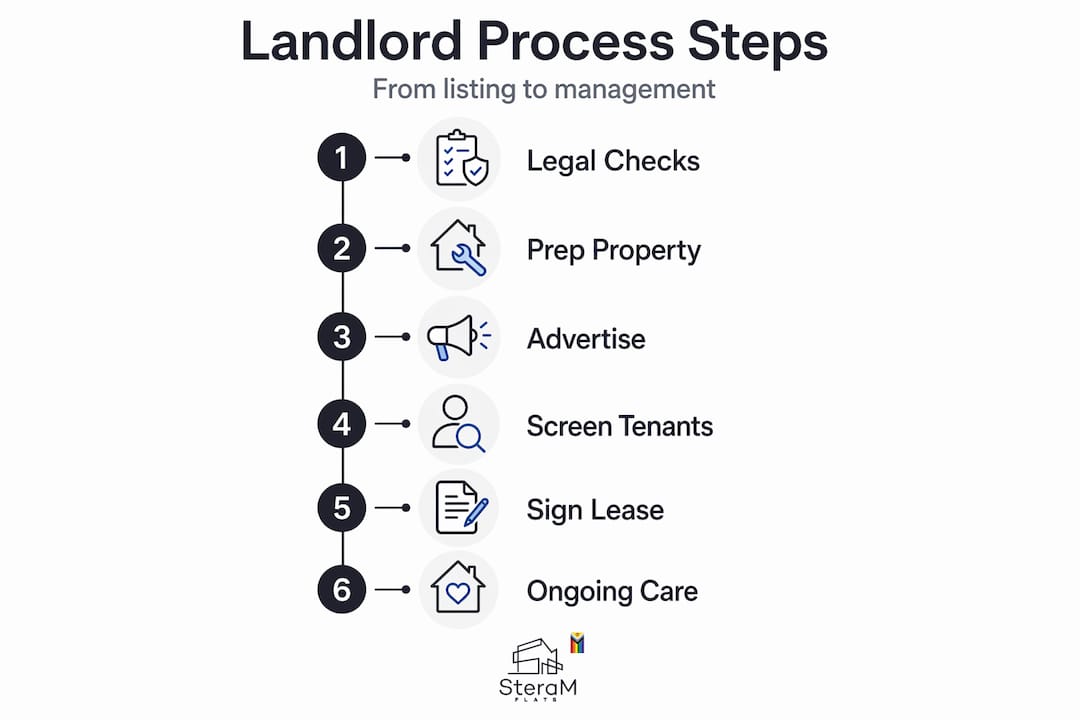
Once you have chosen a tenant, documentation becomes your priority. Completing a signed move-in checklist with the tenant before they take possession is one of the best practices in property management. Photograph and document every surface, appliance, and fixture. Have the tenant sign it. This single document prevents the majority of deposit disputes at the end of a tenancy.
Here is a quick comparison of how lease management approaches differ by risk level:
| Approach | Risk level | What it affects |
|---|---|---|
| Generic online lease template | High | Enforceability, local compliance |
| Jurisdiction-specific legal template | Medium | Compliant but may miss nuances |
| Lawyer-reviewed, custom lease | Low | Strongest protection in disputes |
For rent collection, set up a clear, documented process from day one. Specify the due date, accepted payment methods, and late fees in the lease. Consistent enforcement from the first month trains tenants to pay on time.
Ongoing management: maintenance, communication, and compliance
Once the tenancy is running, your job shifts to keeping it running well. This means maintaining the property, responding to issues promptly, and staying on top of legal obligations as laws change.
Build a system for tracking maintenance requests and repairs. A simple shared inbox or a property management app works. What matters is that requests get acknowledged quickly and resolved within a reasonable timeframe. Tenants who feel ignored become tenants who stop caring for the property.
Rent increases require careful handling. Under the Renters’ Rights Act, landlords must provide formal notice using the correct form and give at least two months’ warning before any rent increase takes effect. Skipping this process exposes you to legal challenges that will delay any increase anyway.
Keep records of everything. Maintenance requests, rent payments, communications about repairs, and any lease violations. If a dispute ever reaches a tribunal or court, your documentation is your case.
Pro Tip: Consider outsourcing property management only after reading the contract line by line. Reports from 2026 show that payment delays of 5 to 8 months have occurred when landlords handed over management without embedding strong payment and reporting terms in the contract. Protect your cash flow before you sign.
For landlords managing properties in Spain, the rental management checklist from Steramflats covers the ongoing compliance and operational steps specific to the Spanish rental market.
What I have actually learned from renting out property
In my experience, the mistakes landlords regret most are not the big obvious ones. They are the small process failures: skipping the move-in checklist because the tenant seemed trustworthy, using a lease downloaded from an outdated forum, or charging rent before the tenancy agreement was signed because the tenant asked nicely.
I have seen landlords lose entire deposit disputes because they could not prove the condition of the property at move-in. That is a painful and entirely avoidable outcome. A signed checklist with dated photos takes thirty minutes and eliminates that risk completely.
The other lesson I keep coming back to is that deposit and rent-in-advance compliance is not just paperwork. It is what determines whether you can successfully evict a problem tenant. Courts look at this closely. The legal consequences of deposit non-compliance can block possession orders entirely, leaving you stuck with a non-paying tenant while the dispute drags on.
My honest take is this: the best way to rent out your home is to treat it like a business from day one. That means written processes, legal templates, and documented communication. The landlords who struggle are the ones who try to keep it informal until a problem forces them to formalize everything in a hurry.
— Steramflats
Let Steramflats take the complexity out of renting
Managing the legal requirements, marketing strategy, and tenant screening process alone is a significant undertaking, especially if this is your first time renting out a property or you are operating in the Spanish market with its specific regulatory environment.

Steramflats offers landlords a practical path forward. You can list your property for free and reach a broad audience of qualified tenants across Spain. Beyond visibility, Steramflats provides legal document guidance, rental management checklists, and full property management services for landlords who want professional support without the overhead of managing every detail themselves. Whether you own a long-term rental or a vacation property in a location like Torremolinos, the team at Steramflats is built to reduce your workload while keeping you compliant. Review the full legal documents checklist to start on the right foot.
FAQ
What are the first steps to rent out property legally?
Research your local landlord-tenant laws, register your property if required, obtain landlord insurance, and use a legally compliant lease agreement. Skipping any of these early steps can create costly problems later.
How do I price my rental property competitively?
Compare your property to similar rentals in your immediate neighborhood, accounting for size, condition, amenities, and seasonal demand. Base your price on what the market will support, not your ownership costs.
How do I find good tenants for my rental property?
Run a credit check, background check, and eviction history search on every applicant. Call previous landlords directly and ask whether they would rent to the tenant again. Never rely on first impressions alone.
What should a move-in checklist include?
Document the condition of every room, appliance, fixture, and surface with photos before the tenant takes possession, then have the tenant sign the checklist. This is your primary defense against deposit disputes at the end of the tenancy.
How do I handle rent increases legally?
Follow the legally required notice period for your jurisdiction. In England, the Renters’ Rights Act requires the correct form and at least two months’ notice before any rent increase takes effect.