Choosing commercial property in Spain is defined as the process of matching a business or investment objective to a physical asset that meets legal, financial, and operational requirements. The criteria for selecting commercial property in Spain go well beyond price per square meter. You need to assess location yield, zoning compliance, ownership structure, and due diligence before signing anything. This guide gives entrepreneurs and business owners a clear framework for making that decision in 2026’s market.
How to choose commercial property in Spain: location first
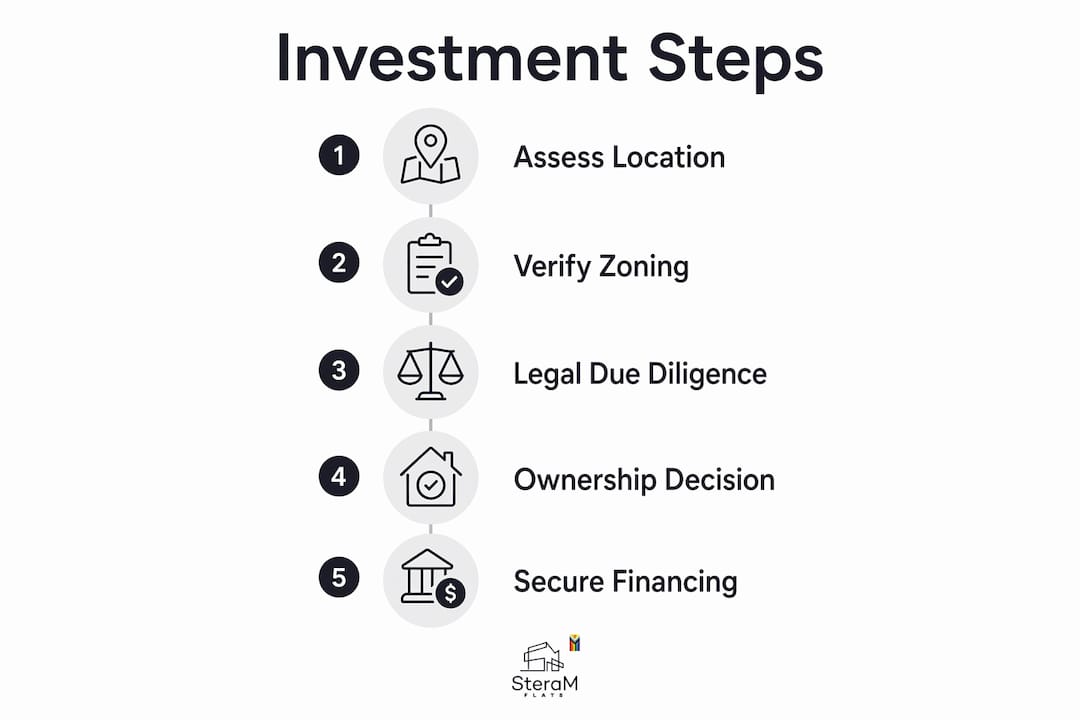
Location is the single most powerful variable in commercial real estate returns. Prime retail yields in Madrid and Barcelona city centers range between 3.5%–4.5%, while secondary cities offer 7%–9% yields. That gap tells you something critical: higher returns come with different risk profiles, not just different postcodes.
Prime office rents in Madrid’s central business district reach approximately €43/m²/month. Valencia’s top-quality buildings yield between 5.50%–6.50%, sitting between prime and secondary market performance. These numbers matter because they set the ceiling on what you can charge tenants and the floor on what you need to pay to acquire the asset.

Institutional and private investors are increasingly targeting secondary cities like Zaragoza, Málaga, and Valencia due to scarcity and pricing pressure on prime assets. That shift creates both opportunity and competition in markets that were once considered lower priority. If you are buying to operate a business rather than purely invest, visibility, foot traffic, and transport links matter as much as yield.
Key location factors to evaluate before committing:
- Foot traffic and visibility: Retail and hospitality properties live or die by daily pedestrian volume.
- Transport infrastructure: Proximity to metro, rail, or highway access directly affects staff recruitment and logistics.
- Local market demand: A saturated office corridor in Barcelona is a harder bet than an undersupplied light industrial zone in Zaragoza.
- Liquidity risk: Prime assets sell faster in downturns. Secondary market assets may sit longer if you need to exit.
Pro Tip: Check the municipal urban development plan (Plan General de Ordenación Urbana) for your target area. Planned infrastructure upgrades can dramatically shift a location’s commercial value within five years.
How do business needs influence commercial property type selection in Spain?
The type of commercial property you need depends entirely on what your business actually does. Spain’s commercial real estate market breaks into four main categories: offices, retail premises, industrial and logistics units, and hospitality or mixed-use commercial spaces. Each category carries different zoning classifications, licensing requirements, and cost structures.
Zoning and municipal regulations in Spain strictly govern which businesses can operate from commercial premises. A property classified as commercial does not automatically permit every type of commercial activity. A restaurant requires health and safety licenses, noise compliance certificates, and ventilation approvals that a standard retail unit does not need.
- Offices: Suited to professional services, tech firms, and administrative functions. Look for fiber connectivity, parking ratios, and air conditioning systems.
- Retail premises: Require high street or shopping center positioning. Check anchor tenant mix and footfall data from the property manager.
- Industrial and logistics: Prioritize ceiling height, loading dock access, and proximity to distribution routes. Málaga and Valencia are growing logistics hubs.
- Hospitality and mixed-use: Bars, restaurants, and gyms face the most complex licensing requirements. Budget for additional permits and potential structural modifications.
Pro Tip: Before you make an offer, ask the local town hall (Ayuntamiento) for a written confirmation that your intended business activity is permitted under the current zoning classification. Verbal assurances from sellers carry no legal weight.
What legal and due diligence checks are vital before acquiring commercial property?
Due diligence on commercial property in Spain is the buyer’s responsibility, not the notary’s. Spanish notaries ensure legal validity of deeds but do not conduct due diligence on planning compliance, outstanding debts, or commercial risks. That distinction costs buyers money every year when they skip independent legal counsel.
Follow this sequence before signing any purchase agreement:
- Verify title at the Land Registry (Registro de la Propiedad). Confirm the seller holds clean title and check for mortgages, liens, or easements attached to the property.
- Confirm the “Licencia de Primera Ocupación.” This first occupation license confirms the building was constructed and approved for its stated use. Missing or irregular licenses create serious legal exposure.
- Check zoning compliance. Verify that your intended business activity aligns with the property’s municipal classification. Due diligence must verify planning compliance and permitted commercial use before signing any agreement.
- Obtain community fee and IBI tax certificates. Buyers inherit outstanding community fees and property tax arrears if not verified before closing. Request a certificate from the building administrator and confirm IBI receipts are current.
- Review the energy efficiency certificate. Energy efficiency ratings materially impact running costs and net yields. A G or F rating signals high operational expenses and reduces the property’s investment attractiveness.
- Engage independent legal counsel. A solicitor or abogado specializing in commercial real estate handles risk assessments the notary will not touch. This is not optional for a sound acquisition.
Skipping independent legal review on a commercial property purchase in Spain is the single most expensive mistake buyers make. The notary validates the deed. Only your lawyer protects your interests.
You can find a detailed walkthrough of the property search process in Spain that covers these procedural checks in full. For registration steps after purchase, the property registration guide explains Land Registry requirements for foreign buyers.
How to decide between individual and corporate ownership in Spain?
Ownership structure determines your tax exposure, liability protection, and exit options. Owning commercial property via a Spanish Sociedad Limitada (SL) can improve liability protection and facilitate rental income management, but adds tax obligations and administrative complexity. The right choice depends on your residency status, business model, and long-term exit plans.
| Factor | Individual ownership | Corporate ownership (SL) |
|---|---|---|
| Liability | Personal assets at risk | Limited to company assets |
| Rental income tax | Personal income tax rates | Corporate tax (currently 25%) |
| Capital gains | Personal rate on sale profit | Corporate rate, with reinvestment options |
| Administrative burden | Lower, fewer filings | Higher, annual accounts required |
| Estate planning | Inheritance tax exposure | Shares can transfer more efficiently |
| Financing | Simpler for smaller purchases | May require corporate guarantees |
Non-resident buyers operating through a foreign company face additional compliance layers, including Spanish non-resident income tax filings and potential permanent establishment issues. A tax advisor with cross-border experience is not a luxury here. It is a prerequisite. The 2026 investor roadmap covers ownership structuring in detail for foreign buyers entering Spain’s commercial market.
What financing and market timing factors affect your investment?
Securing a commercial mortgage in Spain is more demanding than residential financing. Financing commercial property often requires personal and corporate guarantees, detailed business plans, and confirmation of licensing to secure bank approval. Spanish banks typically lend 60%–70% of the commercial property’s appraised value, leaving buyers to fund a substantial equity position.
Market timing in 2026 requires understanding where the cycle sits. Prime assets have compressed yields and remain liquid, while obsolete properties require significant capital expenditure or repositioning to retain value. Buying a dated office building cheaply only works if you have the budget and expertise to reposition it.
Key financing and timing considerations:
- Assess your equity position early. Banks move slowly on commercial deals. Know your loan-to-value ceiling before you start negotiating.
- Factor in CAPEX from day one. Obsolete commercial stock needs ESG upgrades or use changes to stay competitive. Budget for this before you finalize your offer price.
- Understand yield compression in prime markets. Paying a premium for a Madrid CBD asset means accepting a 3.5%–4.5% yield. That only works if capital appreciation is part of your return model.
- Secondary markets offer yield but demand patience. Higher returns in cities like Zaragoza come with longer marketing periods if you need to sell or re-let.
- Get your licenses confirmed before finalizing financing. Banks will not release funds on a commercial property where the intended use is unconfirmed.
Key Takeaways
Choosing commercial property in Spain requires verifying location yield, zoning compliance, legal title, and ownership structure before committing capital.
| Point | Details |
|---|---|
| Location drives returns | Prime city yields run 3.5%–4.5%; secondary cities offer 7%–9% with higher risk. |
| Zoning must match your business | A commercial classification does not guarantee your specific activity is permitted. |
| Due diligence is the buyer’s job | Notaries validate deeds only; hire independent legal counsel for all risk checks. |
| Ownership structure affects tax and liability | A Spanish SL limits personal liability but adds corporate tax and compliance costs. |
| Financing requires preparation | Banks demand business plans, guarantees, and licensing confirmation for commercial loans. |
What I’ve learned from watching buyers get Spain’s commercial market wrong
The most common mistake I see is entrepreneurs treating commercial property like a residential purchase. They fall in love with a location, rush the legal checks, and discover afterward that the property carries a planning irregularity or that their business activity requires a license the building cannot support.
The second mistake is underestimating the gap between purchase price and operational readiness. A retail unit in a secondary city might look like a bargain at €200,000. Add fit-out costs, licensing fees, community fee arrears you missed, and an energy efficiency upgrade to meet tenant expectations, and the real cost is closer to €280,000. That changes your yield calculation entirely.
My honest advice: build your professional team before you start viewing properties. You need a commercial property lawyer, a tax advisor who understands your residency situation, and an agent who knows the specific submarket you are targeting. Trying to assemble that team after you find a property you want puts you under time pressure at exactly the wrong moment.
Spain’s commercial market in 2026 rewards preparation. The buyers who move quickly and confidently are the ones who did the groundwork months before they made an offer.
— YellowRock
Steramflats can support your commercial property search in Spain
Finding the right commercial property in Spain takes more than a search filter. Steramflats operates as a full-service real estate and property management platform across Spain, with deep expertise in southern Spain’s commercial and investment markets.

Steramflats supports buyers and investors through property valuation, legal documentation coordination, licensing assistance, and project management for renovations. Whether you are acquiring a retail unit in Torremolinos or an office in Málaga, the team handles the complexity so you can focus on your business. You can list your commercial property for free on the platform, or explore the full range of real estate services available to buyers, sellers, and investors across Spain.
FAQ
What are the best locations for commercial real estate in Spain?
Madrid and Barcelona offer the most liquid prime markets, with yields between 3.5%–4.5%. Secondary cities like Valencia, Zaragoza, and Málaga deliver higher yields of 7%–9% and are attracting growing investor interest.
Do I need a lawyer when buying commercial property in Spain?
Yes. Spanish notaries validate the deed but do not investigate planning compliance, debts, or commercial risks. Independent legal counsel is the only way to protect your interests before signing.
What is a Licencia de Primera Ocupación and why does it matter?
It is the first occupation license confirming a building was legally constructed and approved for its stated use. Buying a property without this license creates serious legal and operational exposure.
Should I buy commercial property in Spain as an individual or through a company?
A Spanish Sociedad Limitada (SL) limits personal liability and can simplify rental income management, but adds corporate tax obligations and annual compliance costs. The right structure depends on your residency, business model, and exit strategy.
How do I verify there are no outstanding debts on a commercial property in Spain?
Request a certificate from the building administrator confirming no community fee arrears, and check IBI tax receipts directly. Outstanding debts transfer to the buyer at closing if not verified beforehand.