Selling a flat in Torremolinos usually means budgeting for IRPF on your capital gain, the municipal plusvalía, agency commission, notary and registry fees, and, if you are a non-resident, a mandatory 3% withholding on the sale price. Combined, these deductions typically represent a moderate portion of the sale price depending on your gain and whether you qualify for exemptions. The Agencia Tributaria and Torremolinos Town Hall set the rules, and real estate agencies help local sellers map out the real numbers before they list.
TL;DR:
- Your taxable gain falls when you add documented purchase taxes, acquisition fees, and structural improvements to the purchase price; routine repairs do not qualify.
- Torremolinos calculates the municipal land value tax using its own coefficients, so request an estimate before setting your asking price; IBI is usually prorated by agreement.
- Nonresident sellers face a 3% buyer withholding within one month, then must file Form 210 to settle actual tax and claim any excess back.
- Residents over 65 may qualify for a home sale exemption; younger residents need to reinvest all proceeds within two years, while nonresidents generally do not qualify.
- Order the energy certificate before advertising and check façade rules with town hall, since planning changes could require work on some older buildings.
Table of Contents
- How IRPF on capital gains works when you sell in Spain
- Torremolinos municipal charges: plusvalía, IBI and local fees
- Notary, registry, gestor and agency fees you’ll need to budget
- Non-resident sellers: the 3% withholding and how refunds work
- Estimate your net proceeds: a worked example
- Local insight: Torremolinos planning updates sellers should check
- Filing obligations for non-residents beyond the 3% withholding
- Capital gains exemptions for primary residences and long-term owners
- Selling a co-owned or jointly held property
- Disclosure documents and condition reports sellers must provide
- Selling an inherited or gifted property
- Legal representation costs for sellers in Torremolinos
- Seller checklist: what to do first to avoid delays
- How Steramflats helps Torremolinos sellers navigate the numbers
- FAQ
- Sources
How IRPF on capital gains works when you sell in Spain
Your taxable gain is the difference between the transmission value (what you sell for, minus selling costs) and the acquisition value (what you paid, plus acquisition taxes and documented improvements). Agencia Tributaria guidance on capital gains from property sales confirms that improvement invoices and acquisition fees can be added to your original purchase price, which lowers the taxable base.
To support that calculation, keep these documents on hand:
- Your original purchase deed showing the acquisition price and date.
- Invoices for structural improvements, not routine maintenance or repairs.
- A current nota simple from the Land Registry confirming ownership and any charges.
- Receipts for taxes paid at purchase, such as transfer tax or VAT.
Residents in Spain report the gain through their annual IRPF return. Non-residents file separately through Modelo 210, the standard non-resident income tax form, after the 3% buyer withholding has already been paid on account. Savings gains like this are taxed at progressive rates under the national savings tax scale, and the exact bracket depends on the size of the gain, not on your income from other sources.
Torremolinos municipal charges: plusvalía, IBI and local fees
Municipal plusvalía (IIVTNU) taxes the increase in land value during your ownership, calculated from the cadastral value of the land portion of your property and a coefficient set by each town hall. Torremolinos applies its own coefficient table, so the figure can differ from a flat in Málaga or Fuengirola even for a similar sale price. Because the calculation is municipality-specific, request a plusvalía simulation directly from Torremolinos Town Hall before you price your listing.
Two other local items matter at sale time:
- IBI, the annual property tax, is prorated by agreement between buyer and seller when the sale happens mid-year.
- Rubbish collection and other small municipal charges should be checked for outstanding balances before completion, since unpaid local taxes can delay signing.
Torremolinos is also advancing a new aesthetics ordinance and urban plan, which may affect façade standards on some buildings. Checking this before listing avoids surprises if a buyer’s survey flags non-compliance.
Notary, registry, gestor and agency fees you’ll need to budget
Several transactional costs sit alongside your tax bill, and who pays what follows long-standing Spanish practice rather than a fixed law.
- Notary fees scale with the deed’s declared value and complexity, and are typically split or negotiated between buyer and seller depending on local custom.
- Land Registry fees cover updating ownership records and are usually paid by the buyer, though sellers sometimes contribute if a mortgage cancellation needs registering first.
- Gestor or legal fees cover paperwork handling, tax filings and coordination, and are generally paid by whichever party hires that professional.
- Agency commission is a percentage of the sale price, commonly in the 3% to 5% range for a market-rate sale, and is paid by the seller.
- Mortgage cancellation costs apply if you still have an outstanding loan, since the bank and registry both charge to formally lift the charge, and this should be requested well before completion.
- Energy certificate and cédula de habitabilidad are documentation requirements you must order ahead of listing, since a sale cannot legally proceed without a valid energy certificate.
Pro Tip: Keep every invoice for improvements you’ve made to the property. Documented renovation costs increase your acquisition value and directly reduce the IRPF you owe on the sale.
Non-resident sellers: the 3% withholding and how refunds work
When the seller is a non-resident, Spanish law requires the buyer to withhold 3% of the sale price and pay it directly to the Treasury using Modelo 211, within one month of the transmission date.
- This 3% is a payment on account, not your final tax bill: your actual IRPF liability may be lower or higher.
- If the withholding exceeds what you actually owe, you can claim the difference back by filing Modelo 210 with supporting documentation of your acquisition costs.
- Refunds can take time to process, so starting the paperwork early, ideally with a gestor handling your Modelo 210 filing, helps you recover funds faster.
Estimate your net proceeds: a worked example
Here is a simplified example for a Torremolinos flat selling at $250,000, with figures chosen only to illustrate the math, not as market data.
- Sale price: $250,000.
- Subtract agency commission at 4%: minus $10,000.
- Subtract notary and registry costs: minus $1,200.
- Subtract estimated IRPF on a $60,000 gain at an illustrative 21% rate: minus $12,600.
- Subtract an estimated municipal plusvalía: minus $1,800.
- Subtract energy certificate and minor documentation fees: minus $300.
- Net proceeds: roughly $224,100.
Combined deductions in this example represent a notable portion of the sale price, though your own figure depends heavily on your actual gain, years of ownership and whether exemptions apply.
To run your own version, gather your original purchase price, documented improvement invoices, years of ownership, your cadastral reference and your outstanding mortgage balance. You can check current Torremolinos price per square meter benchmarks to sanity-check your expected sale price before estimating costs.
Local insight: Torremolinos planning updates sellers should check
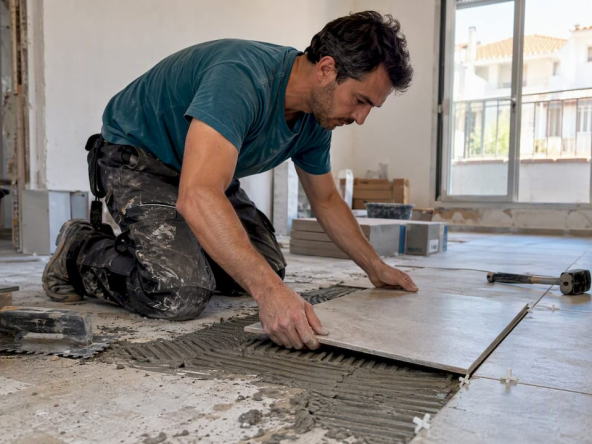
Torremolinos is actively advancing a new Plan de Ordenación Urbana and a dedicated aesthetics ordinance, which touches façade appearance and building presentation standards.
- Some buildings may need façade adaptation work before a sale closes smoothly, particularly in older blocks.
- The municipality has signaled budget lines for façade rehabilitation, which may include bonifications on ICIO, the local construction tax, for qualifying works.
- Checking your building’s status with the town hall before listing avoids last-minute costs that catch sellers off guard during negotiation.
— YellowRock
Filing obligations for non-residents beyond the 3% withholding
The 3% withholding is only the first step for a non-resident seller, not the end of your tax obligations. After the sale, you must still file Modelo 210 to declare the actual capital gain and settle the difference between what was withheld and what you actually owe.

Non-resident sellers also need to confirm whether they have any outstanding annual non-resident income tax filings tied to the property itself, since owning Spanish real estate as a non-resident typically triggers a yearly imputed income tax return even before any sale occurs. Any unpaid prior-year filings can surface during the conveyancing process and should be resolved before completion.
If you were renting the property out before selling, rental income filings for non-residents follow separate rules and deadlines from the capital gains return, so these are two distinct obligations rather than one combined filing.
Because the paperwork spans several forms and strict deadlines, many non-resident sellers appoint a fiscal representative or gestor in Spain to handle filings and correspondence with Agencia Tributaria, which also helps when a refund claim on the 3% withholding needs following up months after completion.
Capital gains exemptions for primary residences and long-term owners
Spanish tax law includes relief for certain sellers, though the conditions are specific rather than automatic. Residents over 65 who sell their habitual residence can be exempt from IRPF on the gain entirely, regardless of what they do with the proceeds.
Residents under 65 selling their primary home can also exempt the gain if they reinvest the full proceeds into a new primary residence within two years, a mechanism known as reinversión en vivienda habitual. Partial reinvestment allows a proportional exemption rather than the full amount.
These reliefs generally apply to residents in Spain rather than non-residents, since the primary residence exemption is tied to habitual use and tax residency status. Non-resident sellers should not assume these exemptions apply to their situation without confirming their specific circumstances with a fiscal advisor, since misapplying an exemption can trigger penalties later.
Long-term ownership itself does not create an automatic discount on the gain under current rules, so the main paths to reducing your IRPF bill remain documented acquisition and improvement costs, plus any applicable primary residence exemption.
Selling a co-owned or jointly held property
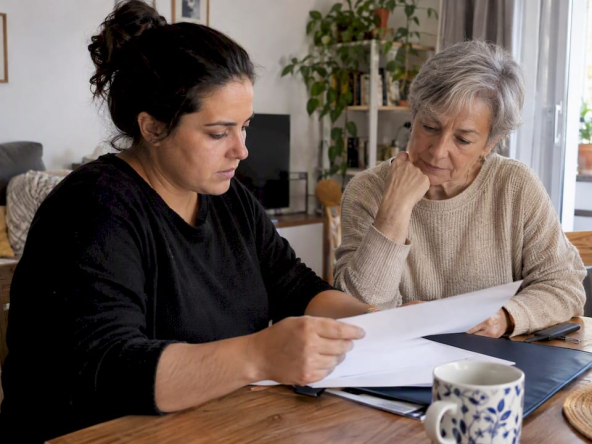
When a flat is held by more than one owner, whether spouses, family members or unrelated co-owners, each owner calculates and declares their own share of the capital gain separately, based on their percentage of ownership on the title deed.
This matters because each co-owner’s personal tax situation, residency status and exemptions apply individually. One co-owner might be a resident eligible for a primary residence exemption while another is a non-resident subject to the 3% withholding on their share of the proceeds.
Before listing, co-owners should agree in advance on how the net proceeds will be distributed and confirm that all parties are available to sign at notary, since a missing co-owner can delay or block completion.
If the co-ownership arose from a divorce settlement, inheritance or a family arrangement, it is worth confirming the title deed reflects current ownership shares accurately before marketing the property, since discrepancies can surface during the buyer’s due diligence and stall the sale.
Disclosure documents and condition reports sellers must provide
Spanish law requires sellers to provide certain documents before a sale can proceed, and gathering them early avoids delays once you have a buyer.
The energy certificate is mandatory and must be commissioned from a qualified technician before the property is advertised, not just before signing. The nota simple from the Land Registry confirms ownership and discloses any charges, liens or mortgages against the property, and buyers’ lawyers will request an updated one close to completion.
The cédula de habitabilidad, where required by the relevant Andalusian regulations, certifies the property meets habitability standards. Depending on the building’s age and history, obtaining or renewing this document can involve a technical inspection.
Sellers are also expected to disclose known defects or issues affecting the property’s condition, since Spanish civil law holds sellers liable for hidden defects not disclosed at the time of sale. There is no single standardized “property condition report” required nationally as in some other markets, but the combination of energy certificate, nota simple and cédula functions as the practical documentation package buyers and notaries expect to see.
Selling an inherited or gifted property
Selling a property you inherited or received as a gift involves an extra layer beyond standard capital gains tax, since the property transfer itself was already subject to inheritance or gift tax (Impuesto sobre Sucesiones y Donaciones) when you received it.
For calculating IRPF on the eventual sale, your acquisition value is generally the value declared for inheritance or gift tax purposes at the time you received the property, not what the original owner paid for it decades earlier. This means the gain you report is typically the difference between your sale price and that inherited or gifted valuation.
It is worth confirming that the inheritance or gift tax itself was properly settled and that the property was correctly registered in your name at the Land Registry, since an incomplete prior transfer can complicate or delay the current sale. If multiple heirs inherited the property jointly, the co-ownership rules above apply to how proceeds and costs are split.
Because inheritance tax rates and allowances vary by autonomous community, and Andalusia has its own specific reductions, it is worth confirming your original inheritance tax settlement was calculated correctly before assuming your acquisition value for the sale.
Legal representation costs for sellers in Torremolinos
Hiring a lawyer or gestor to represent you through a Torremolinos sale is not legally mandatory, but it is common practice, particularly for non-residents, inherited properties or co-owned flats where paperwork complexity is higher.
Legal fees are typically charged either as a fixed fee for the transaction or as a percentage of the sale price, and the exact figure depends on the complexity of your situation, how many parties are involved and whether the lawyer also handles tax filings like Modelo 210. A straightforward sale by a single resident owner generally costs less in legal fees than a cross-border sale involving inheritance, multiple heirs or outstanding mortgage complications.
Many sellers choose to combine legal representation with gestor services for tax filings, since the two roles often overlap on a property sale. Regional guidance from the Junta de Andalucía on property sale procedures outlines the typical steps where legal support is most useful, including verifying charges on the property and coordinating with the notary.
Seller checklist: what to do first to avoid delays
Order your energy certificate and nota simple early, request your mortgage payoff figure before listing, and hire a gestor or fiscal advisor before completion if you are a non-resident or have a complex ownership structure. Contact a local real estate agency for a valuation if you want local coordination from the start.
How Steramflats helps Torremolinos sellers navigate the numbers
Real estate agencies can handle the parts of a sale that take the most time to get right: a realistic valuation, coordination with notaries and gestores, documentation support for your energy certificate and nota simple, and guidance through non-resident tax requirements if they apply to you. Commission models often only apply when a sale completes, with no hidden fees or permanence contracts.

- Property valuation and market positioning for Torremolinos flats.
- Coordination with gestores and notaries to keep your paperwork on schedule.
- Documentation support, including energy certificates and Land Registry checks.
- Guidance for non-resident sellers navigating the 3% withholding and Modelo 210.
If you’re preparing to sell, visit our full range of services to see how we can coordinate your sale from valuation through to completion.
FAQ
How much are total selling costs for a flat in Torremolinos?
Combined deductions, including IRPF, plusvalía, agency commission and notary or registry fees, typically represent a significant portion of the sale price, depending on your gain and whether exemptions apply. Non-residents also see a temporary 3% withholding at completion, which is settled later against the actual tax owed.
Who pays the plusvalía municipal tax when selling in Torremolinos?
The seller is responsible for the municipal plusvalía (IIVTNU), which is calculated from the land’s cadastral value and a coefficient set by Torremolinos Town Hall. Requesting a simulation directly from the town hall gives you the exact figure for your property.
Is the 3% non-resident withholding my final tax bill?
No, the 3% withheld under Modelo 211 is a payment on account, not your final liability. If it exceeds your actual capital gains tax, you can claim the difference back by filing Modelo 210 with supporting documentation.
Do I pay capital gains tax if I sell my primary residence in Spain?
Residents over 65 selling their habitual residence are generally exempt from IRPF on the gain. Residents under 65 can also qualify for exemption if they reinvest the full proceeds into a new primary residence within two years.
Do I need a lawyer to sell property in Torremolinos?
A lawyer is not legally required, but many sellers hire one, especially for non-resident, inherited or co-owned properties where paperwork is more complex. Legal fees are usually a fixed amount or a percentage tied to the transaction’s complexity.
Sources
- Agencia Tributaria – Modelo 211 IRNR (instrucciones)
- Agencia Tributaria – Ganancias patrimoniales derivadas de la venta de inmuebles
- Junta de Andalucía – Trámites compraventa vivienda (practical guide)